Articles by admin

No Image

Recruiters Use 'Geofencing' To Target Potential Hires Where They Live And Work

Companies are trying geofencing, which uses GPS and radio frequency identification to set up a virtual, wireless perimeter so that cellphone users in that area receive messages or advertisements on their phones.

Rawpixel/Getty Images/iStockphoto

hide caption

toggle caption

Rawpixel/Getty Images/iStockphoto

Carol McDaniel has a perennial challenge: Attracting highly specialized acute-care certified neonatal nurse practitioners to come work for Johns Hopkins All Children’s Hospital in St. Petersburg, Fla.

They are “always in short supply, high demand, and [it is a] very, very small group of people,” says McDaniel, the hospital’s recruitment director.

So, about six months ago, McDaniel says, the hospital started using a new recruitment tactic: It buys lists of potential candidates culled from online profiles or educational records. It then uses a technology to set up a wireless fence around key areas where the coveted nurses live or work. When a nurse with the relevant credentials enters a geofenced zone, ads inviting them to apply to All Children’s appear on their phones.

The system also automatically collects data from the user’s cellphone so it can continue to advertise to them, even after they leave the geofenced area.

The result? She’s getting responses from three to four job candidates a week; she got almost none before.

As the unemployment rate falls and fewer people are jobless, recruiters are using increasingly aggressive and innovative ways of trying to get the attention of potential job seekers — and mobile phones are becoming a key part of how that is done.

Geofencing uses GPS and radio frequency identification to set up a virtual, wireless perimeter — around an event, a zip code, a neighborhood — so that people in that area receive messages or advertisements on their cellphones. The technology is perhaps best known for its use sending coupons to potential customers passing by stores.

McDaniel says she loves how targeted the technology is. She even tries to poach workers by sending ads to nurses as they go to work at rival hospitals. And because it’s so targeted, she says, it’s far more cost-effective.

“We have invaded their space in which they live and work, so it’s a much better use of our dollars,” she says. “We’re not just throwing out a wide net and seeing who comes through the pipeline.”

McDaniel admits it’s a bit creepy and “Big Brotherish,” but says people who respond say they’re flattered because, unlike a general advertisement, it’s directed at them. And, if they don’t like it, they can simply opt out.

“A lot of people look at it as a compliment, and it makes them kind of feel good for the day. ‘Wow, Johns Hopkins reached out to me,’ ” she says.

Salt Lake City trucking firm C.R. England has been using the technology for a couple of years, setting up geofences around truck stops and other areas where it needs to recruit more drivers, who are always in short supply.

C.R. England competes with much bigger companies, and drivers might switch employers over a slight increase in pay, or an extra rest day between runs. So reminding drivers of opportunities at the company is key, says Wayne Cederholm III, vice president of driver recruitment.

“There’s not a lot that differentiates these carriers, so the smallest thing can make a big difference,” he says. Also, because 75 percent of job applications come via mobile phones these days, that has become central to recruitment, Cederholm says.

That is especially true for those recruiting among the younger workers, whose gateways to the world are their phones.

“People really don’t spend nearly as much time on the traditional job boards,” says Jacob Rhoades, vice president of marketing for Parker Staffing Services in Seattle. The company saw a 40 percent increase in Web traffic and an uptick in resumes after it set up geofences this spring at area college graduations.

“It’s tough for a small business, especially in the Seattle hiring market, to get our name out there, considering we compete against companies like Amazon,” Rhoades says.

And the price is unbeatable. His latest experiment in geofencing was more effective and cheaper — as little as half a cent per view — than traditional campaigns he’s done before.

Let’s block ads! (Why?)


No Image

Tennis Pros Complain Of Unsafe Conditions At Unusually Hot Wimbledon

Conditions at Wimbledon have been unusual this year. Unusually warm weather has led to players complaining of unsafe court conditions and, for a few hours this week, swarms of flying ants descended on players and spectators alike.

ROBERT SIEGEL, HOST:

This week, while many Americans were celebrating Independence Day on the Fourth of July, many people in the U.K. were also marking a special occasion. Wednesday was Flying Ant Day.

DAVID WALDSTEIN: I was standing outside, and a couple of flying ants landed on my phone. And I didn’t think much of it. And then I was looking at Twitter. I saw somebody make reference to Flying Ant Day. And I put two and two together (laughter).

KELLY MCEVERS, HOST:

That’s David Waldstein. He’s a sports correspondent for The New York Times, and he’s currently in London covering Wimbledon.

SIEGEL: Yes, Flying Ant Day happens once a year, usually in July. That’s when the urge to breed strikes and the flying ants swarm.

WALDSTEIN: It’s the first day of their mating season. And it can vary how intense it is. But for a while, it was a pretty big one.

MCEVERS: Usually, it’s just an annoying thing people in the U.K. deal with. British websites offer plenty of tips on how to get rid of them.

SIEGEL: But Flying Ant Day is getting worldwide attention this year because a swarm happened right in the middle of Wimbledon.

WALDSTEIN: They were all over the courts. And some of the players said that they were getting in their eyes while they were serving, going up their noses and into their (laughter) equipment bags and pretty much everywhere.

SIEGEL: Photos and videos posted online show grass courts crawling with the bugs, players and umpires swatting them away.

MCEVERS: Here’s what British tennis player Johanna Konta told the BBC.

(SOUNDBITE OF ARCHIVED RECORDING)

JOHANNA KONTA: There was quite an army of flying ants, wasn’t there? And I think I’ve definitely taken home a few as a souvenir in my belly and in my bags (laughter). I’ve definitely ate a few.

MCEVERS: As with all things, Flying Ant Day had to come to an end. The New York Times’ David Waldstein says it didn’t last very long.

WALDSTEIN: I’d say about three hours later, they were pretty much gone, not to have been seen since.

SIEGEL: And Waldstein says aside from being a nuisance, he doesn’t think the ants caused too many problems for the players at Wimbledon.

WALDSTEIN: I don’t think anybody lost because of it. But it was certainly distracting for a while. And I think (laughter) – I don’t know. I guess they’re all just sort of happy that it came and went.

MCEVERS: Now the players can focus on more important things like beating their next opponent.

(SOUNDBITE OF JAMES CLARKE’S “SECOND CUT”)

Copyright © 2017 NPR. All rights reserved. Visit our website terms of use and permissions pages at www.npr.org for further information.

NPR transcripts are created on a rush deadline by Verb8tm, Inc., an NPR contractor, and produced using a proprietary transcription process developed with NPR. This text may not be in its final form and may be updated or revised in the future. Accuracy and availability may vary. The authoritative record of NPR’s programming is the audio record.


Let’s block ads! (Why?)


No Image

Trump Administration Appoints Dr. Brenda Fitzgerald As New CDC Director

Dr. Brenda Fitzgerald has been appointed as the new director of the Centers for Disease Control and Prevention in Atlanta. She is an obstetrician-gynecologist who’s led the Georgia state health department for six years. She succeeds Dr. Thomas Frieden.

KELLY MCEVERS, HOST:

Now to someone who is joining the federal government. The Trump administration has named a new director to head the Centers for Disease Control and Prevention. Dr. Brenda Fitzgerald comes from Georgia, where she’s led the state’s public health department and where the CDC is located. She takes the helm at a time when the agency could face budget cuts. Elly Yu of member station WABE in Atlanta has more.

ELLY YU, BYLINE: Fitzgerald replaces Dr. Tom Frieden, who left the CDC in January at the end of the Obama administration. The 70-year-old is an OB-GYN and led Georgia’s Public Health Department for the past six years. There, she’s overseen efforts like preventing Zika and coordinating the state’s response to Ebola. In 2014, several Americans who got the disease were treated at Emory University in Atlanta. Here she is at a press conference about efforts to contain Ebola in the state.

(SOUNDBITE OF ARCHIVED RECORDING)

BRENDA FITZGERALD: We intend that if patients are treated here, we want to absolutely make sure that the medical people treating them are absolutely safe.

YU: During her time as public health commissioner, she’s made early childhood development and tackling childhood obesity priorities. Fitzgerald also has deep political ties. She ran for Congress as a Republican twice in the 1990s and lost and served as health adviser to former House Speaker Newt Gingrich. Tom Frieden, her predecessor, says right now there are a number of public health challenges in the U.S. and globally she’ll face as director. Those include the opioid epidemic and drug-resistant diseases. But his worries are also elsewhere.

TOM FRIEDEN: The biggest challenge Dr. Fitzgerald will face is the budget.

YU: President Trump’s budget proposal cuts funding to the CDC by $1.2 billion in fiscal year 2018. Bills in Congress also call to eliminate the Prevention and Public Health Fund, which helps fund the agency. If that happens, Frieden says…

FRIEDEN: CDC would have to retreat from protecting Americans in this country and around the world. It would leave Americans more vulnerable to infectious diseases and other health threats. It would drive up health care costs. And quite frankly, it would mean avoidable deaths.

YU: Dr. Georges Benjamin leads the American Public Health Association. He, like others in the public health community, praised Fitzgerald’s pick. He says he’s hopeful of her ties with Health and Human Services Secretary Tom Price, who was a congressman from Georgia.

GEORGES BENJAMIN: You know, I hope that trusting relationship will allow her to make a really informed case for improving the CDC’s budget situation.

YU: Fitzgerald says in a statement she’s humbled by the challenges that lie ahead and is confident her experience in Georgia will guide her work at the CDC. Today’s her first day on the job. For NPR News, I’m Elly Yu in Atlanta.

(SOUNDBITE OF JUNGLE SONG, “BUSY EARNIN'”)

Copyright © 2017 NPR. All rights reserved. Visit our website terms of use and permissions pages at www.npr.org for further information.

NPR transcripts are created on a rush deadline by Verb8tm, Inc., an NPR contractor, and produced using a proprietary transcription process developed with NPR. This text may not be in its final form and may be updated or revised in the future. Accuracy and availability may vary. The authoritative record of NPR’s programming is the audio record.

Let’s block ads! (Why?)


No Image

July Movies Calendar: In Theaters, on Blu-ray, New VOD and More

We want to make it easier for you to digest an entire month’s worth of movies in one sitting, so we’ve created these groovy little calendars you can use to get caught up on the month’s most notable movie releases, both in theaters and at home (note: the VOD dates may vary by platform). We’ve also littered our nerdy calendar with a few memorable events that took place during some of your favorite movies.

Check out our July calendar below!

Click image to enlarge

Let’s block ads! (Why?)


No Image

France Plans To Ban Sale Of Diesel And Gas Vehicles By 2040

France’s environment minister, Nicolas Hulot, photographed on Wednesday, announced an ambitious plan on Thursday to ban the sale of all diesel and gas vehicles in France by 2040.

Michel Euler/AP

hide caption

toggle caption

Michel Euler/AP

As part of a set of ambitious new environmental goals, France expects to do away entirely with the sale of diesel and gas vehicles by 2040.

Environment Minister Nicolas Hulot announced the proposal on Thursday as part of the country’s renewed commitment to the Paris climate deal, reports the BBC.

Hulot said that financial assistance would be available to lower-income drivers to replace their gas vehicles with cleaner ones.

He admitted that doing away with the sale of all fossil-fuel-powered cars in the world’s sixth-biggest economy would be challenging, even to the point of constituting a “revolution,” but he said French carmakers would be up to the task, according to Reuters.

French car manufacturer PSA Group, which makes Peugeots and Citroëns, said the plan is in line with its goal of having hybrid or electric cars make up 80 percent of its fleet by 2023, reports The Associated Press.

PSA spokeswoman Laure de Servigny said that even if France’s pledge to ban the sale of diesel and gas vehicles is made official, the company will continue to produce them for sale in foreign markets.

The BBC says vehicles that use fossil fuels make up the vast majority of the European market — about 95 percent.

Diesel vehicles are blamed for much of the pollution that is choking France’s capital, and Paris’s mayor wants them banned by 2020, reports the AP.

Hulot announced other targets Thursday, including a proposed new ban on oil and gas drilling, ending coal-powered plants in France by 2022 and reducing nuclear power to half of total output by 2025.

But while high in ambition, Hulot’s speech was short on details about how exactly the goals could be reached.

Hulot — a longtime environmental activist — was tapped by newly elected President Emmanuel Macron as environment minister less than two months ago.

Macron has doubled down on his support of the Paris climate agreement and urged President Trump to “make our planet great again,” following Trump’s decision last month to remove the U.S. from the accord.

Hulot’s announcement comes one day after Volvo said that by 2019 all of its new models will be either electric or hybrid.

Let’s block ads! (Why?)


No Image

Wisconsin Primary Care Doctor Describes Challenges Of Prescribing Opioids

A new report from the Centers for Disease Control and Prevention says opioid prescriptions are down, but still way too high. While doctors are prescribing lower doses, they are still doing so for longer than CDC guidelines say are safe. NPR’s Robert Siegel talks to Dr. Alan Schwartzstein, who has worked as a family doctor for 28 years in rural Wisconsin, about the issues surrounding prescribing pain medication.

ROBERT SIEGEL, HOST:

Well, as we’ve heard, the last year of data included in the CDC’s report was 2015. Since then, the agency has released guidelines for prescribing opioids. They’re meant for primary care physicians like Dr. Alan Schwartzstein. He’s been a family physician for over 30 years. He works in rural Walworth County, Wis. And he’s a member of the board of the American Academy of Family Physicians. Welcome to the program, Dr. Schwartzstein.

ALAN SCHWARTZSTEIN: Thank you, Robert.

SIEGEL: Are you prescribing fewer opioids than you used to?

SCHWARTZSTEIN: Yes, I am, absolutely.

SIEGEL: And how many opioid prescriptions do you write now as opposed to five, 10 years ago?

SCHWARTZSTEIN: Well, approximately 15 years ago there was a lot of encouragement from patient advocacy groups, people that had chronic pain, as well as some government organizations for us to prescribe more and do a better job of treating chronic pain. It’s just in the last four to six years that we’ve recognized a significant increase in opioid prescribing. And so during that time I prescribe less. I do shorter prescriptions. And in the last year, I’ve actually – am actively working with all my patients who are on this to wean them back off, that or use other modalities.

SIEGEL: Are you at all concerned that the pendulum with regard to painkillers might be swinging too far? That is, that doctors might be overly reluctant right now to prescribe opioids to patients who are dealing with chronic pain?

SCHWARTZSTEIN: It’s possible. Family physicians have to run a thin line between providing adequate treatment for chronic pain and limiting opioids. I don’t think it’s going to go too far, Robert. I’m optimistic.

SIEGEL: I have heard from doctors who practice in rural areas that the question of how many pills you prescribe is a tricky one because if you give too few pills, your patient isn’t like someone in the city who can check back with you in a few days and have another visit with the doctor. The patient may be 60 miles away from your office. Is that a problem for you in Walworth County, Wis., and how do you deal with it?

SCHWARTZSTEIN: For people that I’m treating with opioids for chronic pain, generally the prescriptions I’m giving them and that I’m refilling for them are for a 28-day period. However, for acute pain, I’m beginning to prescribe shorter durations, actually only three days for someone that comes in with a bone injury or some other reason for pain. And they only needed those three days. And after that they relied on acetaminophen and Ibuprofen and the like.

SIEGEL: In addition to seeing patients at your practice, you also hear from patients who are seeking emergency care. Do you hear different kinds of problems related to opioids there?

SCHWARTZSTEIN: Well, I do. Patients don’t generally come in there seeking to get off an opioid. They usually come in on weekends asking for a refill on their medication either because their own physician is out of the office or it’s the weekend and they ran out. Generally we get to understand when we should be prescribing for a few days to get them through and when this probably is not an appropriate prescription. And I’ve had at least three people over the last six months in the urgent care when I declined to write a prescription say, you know, doc, I can go on the street and get heroin or this medicine for cheaper anyway.

SIEGEL: What do you say to someone who says that?

SCHWARTZSTEIN: I hear what you’re saying, but ethically I don’t feel this is the right medication for you. What you do when you leave is up to you. But I also say to them, you know, if this has become an issue with you of overusing the medication or you feel it might be a problem, I’d like to get you connected with somebody that can help you deal with this and control your addiction.

SIEGEL: What is the opioid situation in Walworth County, Wis.? Do you think the county ranks as one of those with a very large problem or in the middle or a small problem?

SCHWARTZSTEIN: I would say we’re probably in the middle. It is a rural county, and we have a large population that is unemployed or underserved. And so opioid addiction and use of opiate medication tends to increase in those areas. And I see that in the area.

SIEGEL: Dr. Schwartzstein, thank you very much for talking with us today.

SCHWARTZSTEIN: Thank you, Robert.

SIEGEL: Alan Schwartzstein is a family physician in southeast Wisconsin.

Copyright © 2017 NPR. All rights reserved. Visit our website terms of use and permissions pages at www.npr.org for further information.

NPR transcripts are created on a rush deadline by Verb8tm, Inc., an NPR contractor, and produced using a proprietary transcription process developed with NPR. This text may not be in its final form and may be updated or revised in the future. Accuracy and availability may vary. The authoritative record of NPR’s programming is the audio record.

Let’s block ads! (Why?)


No Image

Halle Berry Goes After Her Son's Abductors in New 'Kidnap' Trailer

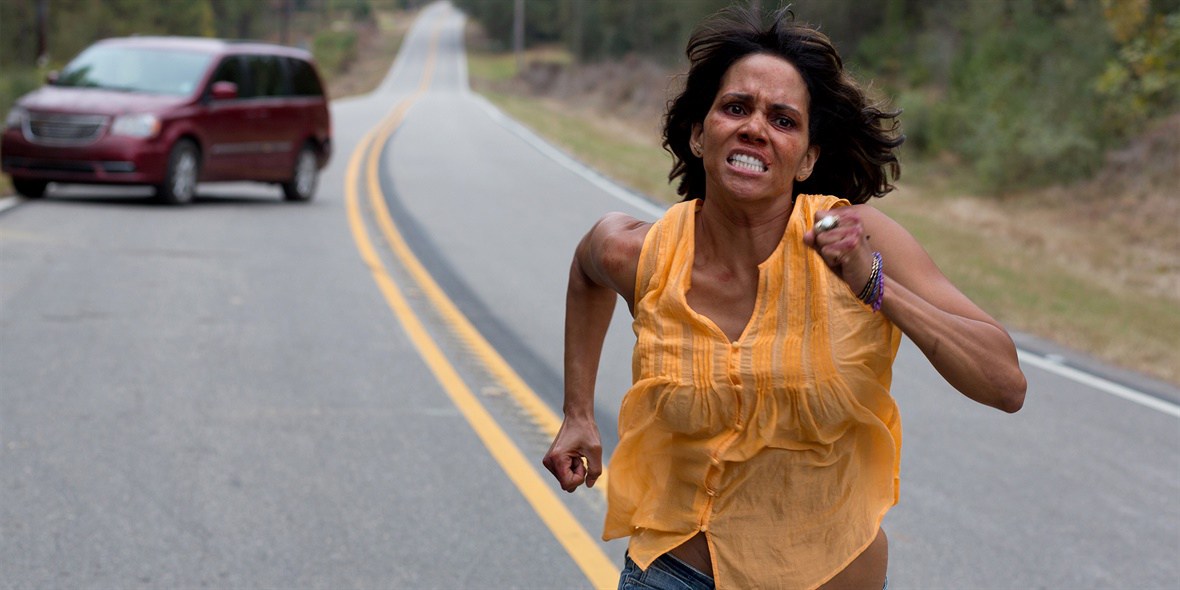
Oscar winner Halle Berry has been relatively absent from the big screen in recently years, but she could be in for a serious comeback with Kidnap. The thriller stars Berry as a mother whose young son (Sage Correa) is kidnappped. Confronted with the reality that few abducted children are ever found, she takes the law into her own hands, and a wild chase ensues. The movie seems like Liam Neeson territory, except it’s even more intense because, as everyone knows, you don’t mess with a mama bear’s cubs.

The new trailer for Kidnap barely shows the son or the bad guys. It’s a real showcase for Berry, who has proven in movies as diverse as Monster’s Ball and X-Men that she has great dramatic chops as well as the makings of an action hero. And here, she combines the two. Interestingly enough, this movie is written by Knate Gwaltney, who also worked on the script for the upcoming X-Men spin-off New Mutants. The director is Luis Prieto (Pusher), and the release date for this is August 4.

Watch the new trailer for Kidnap below.

[embedded content]

Let’s block ads! (Why?)


No Image

U.S. Hospitals Struggle To Protect Mothers When Childbirth Turns Deadly

A joint NPR and ProPublica investigation finds the U.S. medical system can be unprepared when the complications of childbirth turn deadly. NPR reports on healthy mothers who developed one highly treatable complication — preeclampsia — and how it killed them.

KELLY MCEVERS, HOST:

NPR and ProPublica have spent months investigating why it is that the number of mothers dying from complications of pregnancy and childbirth has been rising in the U.S., why that death rate is now higher than any other industrialized nation, why American women are three times likelier to die than women just across the border in Canada.

ROBERT SIEGEL, HOST:

As NPR’s Renee Montagne and ProPublica’s Nina Martin have reported, 60 percent of these deaths could have been prevented. Today we hear about a woman who had a complication unique to pregnancy and childbirth. Renee looks at what her experience tells us about the system that allowed her to die.

RENEE MONTAGNE, BYLINE: This is the story of Lauren Bloomstein. We heard it one rainy day in the New Jersey home of Larry Bloomstein looking onto a child’s playroom filled with princess dresses and a big plush unicorn.

LARRY BLOOMSTEIN: Come here.

MONTAGNE: Hi, cutie.

HAILEY BLOOMSTEIN: Hi.

BLOOMSTEIN: Can you say hi?

HAILEY: Hi.

MONTAGNE: Hi.

BLOOMSTEIN: I have a question for you. Where did you get these beautiful green eyes?

HAILEY: Mommy Lauren.

BLOOMSTEIN: From Mommy Lauren, yeah.

MONTAGNE: Hailey knows Lauren through stories and photographs. A favorite of Larry’s shows Lauren, slender and tan, standing in the foam of a pale blue sea with a barely swelling belly.

BLOOMSTEIN: Lauren loved the beach.

MONTAGNE: Etched in the sand is the name Hailey.

BLOOMSTEIN: She looks, I’d say, like the happiest and most alive the whole time I knew her. I remember her talking to Hailey through her tummy. I remember, like, 28 weeks saying, just don’t come out too soon.

MONTAGNE: As a neonatal nurse at a large medical center near the Jersey Shore, Lauren knew how vulnerable preemies can be.

BLOOMSTEIN: So she made it all the way to 40 weeks, like, really no problem. She was entirely, entirely healthy.

MONTAGNE: What neither she nor Larry, an orthopedic surgeon himself, considered was that Lauren might not survive her own baby’s birth. Yet as we’ve reported, every day in America on average, two or three women die from pregnancy-related causes. Complications include hemorrhage, blood clots, infection, heart failure and the syndrome that killed Lauren Bloomstein, preeclampsia, a disorder of the placenta, the organ that delivers oxygen and nutrients to the fetus. There are an array of symptoms – persistent swelling and headache and dangerously high blood pressure. Preeclampsia affects about 5 percent of all pregnant women in America. It’s highly treatable, but it can turn deadly if that treatment comes too late.

In Lauren Bloomstein’s case, her medical charts during labor record high blood pressure readings, though her nurses did not alert her doctor. And in a home video taken minutes after birth, Lauren is glowing, tearing up in wonder at her tiny newborn. Then Hailey was whisked away to be weighed and measured. Lauren would never see her again.

BLOOMSTEIN: Lauren didn’t touch any of the food that they brought her, and she started describing, like, really one of the worst pains she’s ever felt, and she was pointing with one finger right in the center of, like, the bottom of her sternum. And she didn’t know how to get rid of that pain.

MONTAGNE: Lauren’s blood pressure had begun spiking, and that upper gastric pain – it’s a key symptom of severe preeclampsia. Yet her medical records show her obstetrician ordering a common antacid. Acid reflux, heartburn is a leading misdiagnosis when it comes to preeclampsia.

BLOOMSTEIN: Being around patients in a hospital, you can tell when someone looks sick. And she looked really bad, and I wasn’t sure what to do because the OB seemed confident that this was nothing, and I was not trying to overstep my bounds and assume the system knew what it was doing.

MONTAGNE: Untreated, Lauren’s preeclampsia progressed to a far more dangerous syndrome. Known by the acronym HELLP, it can lead to kidney and liver failure after a breakdown of blood cells and a dramatic loss of the blood’s platelets, which help stem bleeding. Lauren’s medical records show her writhing in agony for hours as the doctors treated her pain but failed to accurately put together her symptoms. Finally this – patient states, quote, “do anything to stop this pain.” Larry was by now frantic that Lauren’s high blood pressure wasn’t being treated. Her obstetrician responded with a call for morphine.

BLOOMSTEIN: I was like, you know, maybe another doctor should see her. But while I’m talking to Lauren, I looked at her face, and I realized that she is not moving her whole face. She just suddenly looks really calm and comfortable. And I’m like, Lauren, smile for me. And when she smiled, only the right side of her face – only the right side went up. So then I actually said to the OB, you have to call a neurosurgeon. And he didn’t know why. He asked me, why? And I was like, ’cause she’s had this blood pressure for so long that’s so high, she now has a stroke. She burst a blood vessel in her brain. She has a huge bleed. It needs to be evacuated.

And the obstetrician was like, you know, she just got morphine; this is going to be some weird, adverse reactions to the morphine. It’s not going to be a stroke. And I was thinking, like, I don’t see how that’s going to be true, but I’ll pray for a miracle here. And I remember watching her CAT scan come up on the screen, and there’s an enormous bleed in her brain. So it’s like – I was like, all right, well, we’ll still have her. She might be paralyzed. She might be partially paralyzed, but we’ll see.

MONTAGNE: Eleni Tsigas has been hearing stories like this for 20 years after she was rushed to the hospital with severe preeclampsia. She survived. Her baby did not.

ELENI TSIGAS: It was a perfectly normal pregnancy until it wasn’t.

MONTAGNE: Tsigas now heads the preeclampsia foundation focused on a complication many say should never lead to the death of a mother. Preeclampsia kills up to 70 women in the U.S. each year. Great Britain once had similar statistics until it instituted a system of uniform responses, the kind of protocols not followed in Lauren’s case. With British medical teams basically on high alert for preeclampsia, Britain brought its numbers down to nearly zero, on average one death a year.

TSIGAS: It’s the disorder of the placenta, right? And when it’s not functioning properly, it’s going to affect both mom and baby. And what a lot of science is really trying to push for now is understanding what is it that’s breaking down in the placenta that causes this to happen?

MONTAGNE: Even though it’s little understood what causes the placenta to become dysfunctional, there are drugs for the high blood pressure and seizures associated with it. Traditionally one important treatment is simply giving birth. But the widely held notion that expelling the placenta is the cure is a myth.

TSIGAS: And the problem with that myth that delivery is the cure is it mentally, emotionally, intellectually – like, it just releases you from, like, anything else that could go wrong is not going to go wrong. And that’s not true.

MONTAGNE: In a 2015 deposition after her death, Lauren Bloomstein’s own obstetrician was asked how to treat or cure preeclampsia. Twice he answered delivery, the third time, quote, “delivery is the only cure.” In fact 80 percent of all deaths from severe preeclampsia occur after birth, as happened with Lauren. It wasn’t until after a code stroke was called that the most basic treatment for severe preeclampsia, magnesium sulfate, was initiated.

Lauren had finally gotten the correct diagnosis, but now she needed surgery to relieve the pressure on her brain caused by the bleed and also a much higher level of platelets. Remember; they help clot the blood. As a surgeon, Larry new platelets could be transfused, and yet…

BLOOMSTEIN: They had none. They were able to call to another hospital and have platelets brought, but that takes all night. And in the meantime, Lauren has this bleed. So we just sat overnight.

MONTAGNE: And by the time the platelets arrived the next morning, it was too late.

BLOOMSTEIN: She did something called doll’s eyes where they – if you take someone’s head and basically turn it side to side and the eyes just move with the head and don’t deviate, it’s the beginning of brain death. And I remember watching him – sorry – do that to her. And so they took her to the operating room, and the neurosurgeon – they operated for I think about four hours, and when he came out, he said that she’s still alive. She’s on – basically on life support, but she’s braindead. So at that point, we decided to withdraw care. And then I brought Hailey in one last time. And I just put Hailey in Lauren’s arms. Then they withdrew care, and she passed away.

MONTAGNE: Days later, Larry held Hailey in his arms when they buried Lauren. He never returned to live in the red brick house they had just bought. When Hailey was nearly three, Larry remarried, and he and his wife Carolyn had another daughter. Yet on a day devoted to Hailey’s birth and Lauren’s death, it’s clear the hurt is always there.

BLOOMSTEIN: I can’t. Like, I literally can’t accept it. The amount of pain she must have experienced in that exact moment when she finally had this little girl – I can’t fathom it. The timing is just so incredibly cruel.

MONTAGNE: NPR and ProPublica found many of the mistakes that lead to maternal death stem from a medical system that bases care on the idea that it’s rare for a woman to die in childbirth. It’s a system where funding and resources are directed mostly at saving babies.

BARBARA LEVY: The assumption is pregnancy and delivery is a normal process, and bad things don’t happen.

MONTAGNE: Dr. Barbara Levy handles health policy at the American College of Obstetrics and Gynecologists.

LEVY: But we worry a lot about vulnerable little babies, and we don’t pay attention I think to those things that can be catastrophic for women.

MONTAGNE: And those catastrophes are not a thing of the past. In May, not far from Larry Bloomstein, Joe Dellavalle watched his wife, Jessica, die in terrible pain nine days after giving birth in an emergency caesarian to their third child, a daughter, stillborn. Doctors told them her placenta had torn away from the womb due to severe preeclampsia HELLP, a syndrome neither Jessica nor Joe had ever heard of.

JOE DELLAVALLE: We were asking a lot of questions. You know, what is happening? Why is she so swollen? And then every single day, either the OB team – each one explained to us that the baby had come out of her system, and you know, that was the cure, and it was just a matter of days until the HELLP syndrome worked its way through her system.

MONTAGNE: Jessica was advised early on to chew gum to get rid of gas. For days she was given pain medication, abdominal surgery, an array of treatments without addressing the syndrome that she would die of.

DELLAVALLE: I was just stunned that we lost her. I can’t – I think that, you know, Jessica and I and the children could have moved on from the baby, so we would have grieved together as a family. But losing my wife is a completely different story. To me, it’s so much more impactful to not only me but my children to lose Jessica.

MONTAGNE: Jessica Dellavalle’s Facebook page is a poignant reminder of what has been lost. A little girl and boy smile shyly out from behind their mother’s pretty profile photo. And her very last post at the end of a seemingly perfect pregnancy – a do-it-yourself video on how to fashion cupcake liners – yellow and pink and lavender – into a bright bouquet for Mother’s Day. Renee Montagne, NPR News.

(SOUNDBITE OF AKIRA KOSEMURA’S “INSIDE RIVER #1”)

Copyright © 2017 NPR. All rights reserved. Visit our website terms of use and permissions pages at www.npr.org for further information.

NPR transcripts are created on a rush deadline by Verb8tm, Inc., an NPR contractor, and produced using a proprietary transcription process developed with NPR. This text may not be in its final form and may be updated or revised in the future. Accuracy and availability may vary. The authoritative record of NPR’s programming is the audio record.

Let’s block ads! (Why?)


No Image

Volvo Moves To Phase Out Combustion Engine For Electric Motors Starting In 2019

With a pledge to move on from the internal combustion engine, Volvo announced Wednesday that it’s going all electric. The company says all the vehicles it makes will be electric or hybrid starting in 2019. The development comes as Tesla prepares to sell its first mass market electric car later this month.

ROBERT SIEGEL, HOST:

Volvo, the maker of sturdy, boxy, safe, if sometimes boring cars is going electric. The Swedish car company says all of its vehicles will have electric technology by 2019. NPR’s Sonari Glinton has more.

SONARI GLINTON, BYLINE: There are essentially three big stories in the car business right now – electric cars, China and self-driving. And this one story has all three. Here’s Volvo’s CEO, Hakan Samuelsson, to kick off the electric part of this story.

HAKAN SAMUELSSON: We are making a strategic change in the future of our development. All cars released to the market after 2019 will be electrified.

BRIAN MOODY: Well, it is a big deal on the one hand. But on the other hand, it sort of depends on what they mean by all-electric.

GLINTON: Brian Moody is with Autotrader. Now, Volvo says it’s not exactly going to be Tesla overnight. Essentially the company will move to have all its cars be fully electric plug-in hybrids or hybrids. The company is easing away from the internal combustion engine. And Moody says increasingly we probably won’t notice.

MOODY: It will begin even more so the idea of mainstreaming electric cars to the point where we’re just thinking of the car and how it works regardless of how it’s powered.

GLINTON: OK, now the China part. Joel Levin is with Plug In America. It’s a group that advocates for electric car drivers. Volvo has a Chinese owner, Geely. And Levin says China right now is full steam ahead when it comes to electric cars.

JOEL LEVIN: My expectation is that a lot of these cars that Volvo is going to be producing are intended for the Chinese market, not for the U.S. market. So partly, Volvo is making a deeper commitment to the Chinese market with electric cars.

GLINTON: All right, let’s count here – electric, China. Oh, Brian Moody with Autotrader says if the cars are electric, it’s easier for them to drive themselves.

MOODY: The self-driving car leader needs to have a certain amount of electrification in the car. The more crude a car is, the more analog, for lack of a better word, that a car is, the harder it’s going to be to produce these systems that will make it drive by itself.

GLINTON: The analysts say Volvo won’t move to electric cars immediately. It’ll be gradual. They’ll slide in there. Sonari Glinton, NPR News.

(SOUNDBITE OF SONG, “ELECTRIC BOOGIE”)

MARCIA GRIFFITHS: (Singing) You got to feel it.

UNIDENTIFIED SINGERS: (Singing) It’s electric.

Copyright © 2017 NPR. All rights reserved. Visit our website terms of use and permissions pages at www.npr.org for further information.

NPR transcripts are created on a rush deadline by Verb8tm, Inc., an NPR contractor, and produced using a proprietary transcription process developed with NPR. This text may not be in its final form and may be updated or revised in the future. Accuracy and availability may vary. The authoritative record of NPR’s programming is the audio record.
Let’s block ads! (Why?)


No Image

Miami's Marlins Park Will Host Baseball's 2017 All-Star Game Next Week

The Major League Baseball season will pause for its All-Star break. Rachel Martin talks to ESPN’s Jessica Mendoza, who breaks down the season. The Houston Astros are sending five players to the game.

RACHEL MARTIN, HOST:

The Major League Baseball season is a grind. It’s about six months, 162 games. So now that we’re about halfway through, these guys deserve a few days rest, right? They’re getting it. Next week, it’s the All-Star break, and the brightest stars from the National and American Leagues face off Tuesday night in Miami. This year, the Houston Astros are sending five players to the All-Star Game. That’s a lot of players. That’s a big deal. It is a historic turnaround.

The Astros have had a terrible record for years. They lost 111 games in 2013 alone. This year, they have turned the tables. They are the top team in baseball with the LA Dodgers on their heels. Now I have to confess, I don’t watch a whole lot of baseball, so I called Jessica Mendoza to explain. She is a former Olympic softball player and now a broadcaster for ESPN. And she says the Astros managed to turn those rough years into an advantage. In Major League Baseball, the worst teams get first dibs on bright young players in the draft.

JESSICA MENDOZA: So what the Astros were able to do is, because they were bad for so long, they went and got them a Dallas Keuchel, who’s their starting pitcher and has been ridiculous – Carlos Correa, who is probably the best young shortstop in a huge fleet of young players that have been stars.

MARTIN: Switching gears a bit, the All-Star game, as we mentioned, is coming up, and the rosters for that game have been announced. This is, like, the best of the best who play each other. So who were some of the other players – you mentioned a few that you’re watching from the Astros – but who are some other players who are having breakout seasons?

MENDOZA: Aaron Judge who’s on the Yankees. I mean, first of all, he’s the biggest player that we’ve ever seen in the sport. OK? So this guy is 6-foot-7, 280 pounds. We have never had someone this size and weigh this much be able to play the game. But what’s impressive about him is the fact that he’s been able to adjust his swing and change from where he was last year – struggling, not able to make a lot of contact – to now being the most powerful home run hitter we’ve seen since pretty much Babe Ruth.

MARTIN: All right, you’re winning me over. I might have to tune into this thing.

MENDOZA: (Laughter).

MARTIN: But there is a change, though, to how the All-Star Game works this year. In the past, the teams competed for what was a pretty big prize. The team that won – the league that won would have home-field advantage in the World Series. That is going away this year, so what are these guys playing for, just pride and glory?

MENDOZA: Of course. I mean, you have to remember, too – high-level athletes – I mean, if you’ve been around, I mean, pretty much anybody that’s competitive (laughter), you’re going to want a win. But I like that they’ve made this change because you think about it – the majority of the players that are on the field aren’t going to compete in the World Series. The reason I like the All-Star Game is you see the stars be able to kind of let loose a little bit, you know. Like, it’s actually fun. You want to see them compete, but you see them compete every time they’re on the field. I like to see them actually joke around with each other, be able to pick each other’s brains. I mean, that’s the stuff you really get into.

MARTIN: That’s when you want those mics that pick up those conversations…

MENDOZA: Right?

(LAUGHTER)

MARTIN: …That happen between those two players in that moment.

MENDOZA: Yes.

MARTIN: Jessica Mendoza of ESPN, thank you so much.

MENDOZA: Thanks, Rachel.

(SOUNDBITE OF PUBLIC SERVICE BROADCASTING SONG, “THE PIT”)

Copyright © 2017 NPR. All rights reserved. Visit our website terms of use and permissions pages at www.npr.org for further information.

NPR transcripts are created on a rush deadline by Verb8tm, Inc., an NPR contractor, and produced using a proprietary transcription process developed with NPR. This text may not be in its final form and may be updated or revised in the future. Accuracy and availability may vary. The authoritative record of NPR’s programming is the audio record.

Let’s block ads! (Why?)