Sen. John McCain, R-Ariz., leaves a meeting of GOP senators in the U.S. Capitol on June 22.
Chip Somodevilla/Getty Images
hide caption
toggle caption
Chip Somodevilla/Getty Images
The Senate will postpone its consideration of the GOP bill to repeal and replace the Affordable Care Act until Sen. John McCain returns to Washington.
The Republican senator from Arizona is recovering from brain surgery performed Friday to remove a nearly 2-inch blood clot from above his left eye. The surgery was described as a “minimally invasive craniotomy with an eyebrow incision.”
“The Senator is resting comfortably at home and is in good condition,” according to his doctors at the Mayo Clinic Hospital in Phoenix, relayed in a statement from McCain’s office. He’s in “good spirits” after the “surgery went ‘very well.’ “
The tissue that was removed is undergoing analysis, and McCain’s office says results should be available within the next several days.
Thanks to @MayoClinic for its excellent care – I appreciate your support & look forward to getting back to work! https://t.co/eUkFr7jKYB
Shortly after McCain’s office released the statement, Senate Majority Leader Mitch McConnell clarified what the news meant for the vote on the Republican health care bill planned for next week.
“While John is recovering, the Senate will continue our work on legislative items and nominations, and will defer consideration of the Better Care Act,” McConnell said in a statement he posted to Twitter.
McConnell had been in a rush to get the bill to a vote, in part because it was thought more time wouldn’t help and could hurt the chance for passage.
And the Republican senator’s absence from the Capitol next week would have complicated the already tight math surrounding a planned Senate health care vote to repeal and replace the Affordable Care Act.
Two Republican senators have already announced opposition to the measure, Sen. Rand Paul of Kentucky and Sen. Susan Collins of Maine. With McCain away, unless one of those two senators changes their mind, Senate Republican leaders are unlikely to meet the 50-vote threshold needed to begin debate on the bill.
A chorus of senators weighed in on McCain’s recovery via Twitter, including the Democratic leader Chuck Schumer.
U.S. Olympic swimmer Ryan Lochte has been cleared by a Brazilian court of criminal charges for filing a false robbery during the 2016 Olympics in Rio de Janeiro.
Matt Hazlett/Getty Images
hide caption
toggle caption
Matt Hazlett/Getty Images
Almost a year after U.S. swimmer Ryan Lochte fabricated a story about being robbed at gunpoint during the Rio Games, a Brazilian court has dismissed a criminal case against the 12-time Olympic medalist.
Lochte had been charged with filing a false robbery, a claim he made to NBC’s Matt Lauer, as the Two-Way Blog reported.
According to the Associated Press, the court this week tossed the case after “determining that Lochte’s robbery claim did not constitute the filing of a fake report.”
In a statement emailed to NPR, Lochte’s lawyer, Jeff Ostrow said:
“We are pleased that the Court has finally dismissed the criminal prosecution against Mr. Lochte, while also acknowledging that he committed no crime while in Brazil. We are hopeful that the prosecution accepts the Court’s decision so that this story can finally be put to rest.”
As NPR’s Greg Myre reported during the 2016 Olympics in Rio de Janeiro, Lochte told NBC that he and three other U.S. swimmers, Gunnar Bentz, Jack Conger and Jimmy Feigen were robbed while in a taxi on their return to the Olympic Village from a party on Aug. 15:
“We got pulled over, in the taxi, and these guys came out with a badge, a police badge — no lights, no nothing, just a police badge — and they pulled us over,” Lochte told NBC. “They pulled out their guns, they told the other swimmers to get down on the ground — they got down on the ground. I refused, I was like, we didn’t do anything wrong, so — I’m not getting down on the ground.”
Days later, however, Rio de Janeiro Civil Police Chief Fernando Veloso said, “There was no robbery.”
His announcement came after video from surveillance cameras emerged that showed the swimmers during their stop at a gas station in Barra da Tijuca, where they got into a confrontation with security guards — on their way back to Olympic Village.
As NPR’s Lulu Garcia-Navarro reported then:
“Referring to that video, Veloso says multiple witnesses have described a scene in which the swimmers vandalized the bathroom, were asked to pay for it, and got testy. He added that the video supports that version of events.
“The police did confirm one element that’s common to all versions of the events that transpired around 6 a.m. local time this past Sunday: that the group of U.S. swimmers had a gun pointed at them. But instead of a robbery, it seems that the guns were wielded by security guards who kept the swimmers from leaving.
“Contrary to some earlier reports, the police say there was no physical violence between the swimmers and workers at the gas station who reportedly wouldn’t let the Americans leave without paying for damages.”
Lochte later said he was drunk and that this led to the confrontation. He apologized for his behavior, which resulted in a 10-month suspension from the U.S. national swim team. His suspension ended June 30.
A day later he tweeted, “It’s been a long suspension but it’s over, I’ve learned and became a better man from it…. now let’s go.”
Lochte was scheduled to return to competition last Friday but according to Flo Swimming, he decided to forgo the Los Angeles Invitational, citing:
“I’m scratching from the meet this weekend because I have not been able to train the way I feel I need to train because of Caiden being born. My family, Kayla, and Caiden is my first priority and my goal is to be at an elite level by Pan Pacs next year. Thank you all for your support.”
Had the charges held, under Brazilian law, the penalty for filing a false crime report is a maximum of 18 months in prison.
Alfred Angelo filed for Chapter 7 bankruptcy after closing dozens of its stores, leaving brides and bridesmaids struggling to get dresses they’ve paid for.
Bebeto Matthews/AP
hide caption
toggle caption
Bebeto Matthews/AP
Days after dozens of Alfred Angelo Bridal stores closed with little or no warning, brides and their loved ones have been struggling to track down dresses they’ve paid for — and making contingency plans if they can’t find them.
Alfred Angelo reportedly closed all of its 61 bridal stores at the end of business Thursday night as part of its plan to file for bankruptcy, infuriating customers and leaving employees in the lurch. The lawyer handling the case says she has received more than 7,000 emails about it.
To help those who might not get their dresses, some former brides are now offering up dresses for free — and member station KPCC in Southern California is using the #dressmatchmaker hashtag to orchestrate dress exchanges.
KPCC reports from the scene of the West Covina location:
“[Employees] would not speak to reporters, but told a group of worried customers to contact the law firm listed on the door and that the company had not paid them for work this week.
“Local brides and bridesmaids milled in front of the store for hours, each one peering nervously through the windows and knocking on the glass. Many said their dresses were inside the store and already paid for. No information was available on whether dresses would be shipped to customers or if refunds would be given out.”
In the face of a desperate need for information, there’s been no mention of the closings on the Alfred Angelo website or social media accounts. Its “customer care” account hasn’t tweeted since July 5.
The Miami bankruptcy lawyer who’s handling the case for Alfred Angelo is Patricia Ann Redmond; she told The Miami Herald that she’s received “about 7,300 emails” since Thursday.
It is Redmond’s email address, not one belonging to the bridal retailer, that is on notices that were taped to the front doors of stores that were shut down this week. Redmond said she wanted it that way, to be sure customers got a response.
“I’ve been prioritizing them by the dates of their weddings,” Redmond said.
Faced with looming wedding dates, brides, their mothers and other members of wedding parties are using Alfred Angelo’s Facebook page to discuss how to retrieve dresses they’ve already paid thousands of dollars to purchase. The hottest tips relate to the names and phone numbers of third-party seamstresses who’ve been working to alter dresses — and who might be able to unite dresses and their recipients.
“Wow, I’m in a wedding in October and the bride and ALL the bridesmaids have already paid for their Alfred Angelo Bridal dresses,” Sara Cretser wrote on the Facebook page, “and now we are left with no dresses and no refund.”
Employees at Alfred Angelo’s store in Tulsa, Okla., opened on their own Friday morning to help people get their dresses, several customers on the store’s Facebook page said. A bride-to-be said the store’s staff is treating any dresses that were under deposit to be fully paid — and that they’re using FedEx to ship out dresses.
“I would like to say thank you to the staff at the Tulsa Oklahoma location, they didn’t have to be here today to take care of all the people that bought dresses,” Maegan Alyssa Fletcher wrote, adding that the employees aren’t likely to be paid for their work.
Others who weren’t so lucky shared another strategy: going to a competitor (several are offering discounts to Alfred Angelo’s customers) — and contacting credit card companies to try to claw back payments.
Bridesmaid Natalie Buck, who’s in a wedding in October, told KPCC that when she called Visa about the situation, “They said that if the company doesn’t follow through then they will give me my money, and they will go after Alfred Angelo.”
Alfred Angelo is based in Delray Beach, Fla., north of Boca Raton. The company has been in business for some 80 years — but it has now filed for Chapter 7 bankruptcy, which means it wants to liquidate its assets and go out of business rather than seek to restructure its debt. Under that plan, any creditors would be left to split whatever proceeds are collected from selling the company’s assets.
In addition to bankruptcy proceedings, the South Florida Business Journal reports that the bridal chain’s headquarters are also the subject of an eviction lawsuit.
Need a quick recap on the past week in movie news? Here are the highlights:
BIG NEWS
Quentin Tarantino has a surprising new project: Quentin Tarantino’s next movie will be about the Manson Family murders, and word has it he’s looking at Brad Pitt, Jennifer Lawrence, Samuel L. Jackson and Margot Robbie to star, the last as slain actress Sharon Tate. Read morehere.
GREAT NEWS
Joe Pesci joins Martin Scorsese’s The Irishman: Martin Scorsese’s next gangster movie, The Irishman, is turning out to be a Raging Bull–Goodfellas–Casino reunion as Joe Pesci has joined the cast, which already includes Robert De Niro. Meanwhile, Harvey Keitel, who starred with De Niro in Mean Streets and Taxi Driver, is in talks, as are Al Pacino, Bobby Cannavale and Ray Romano Read more here and here.
FIRST LOOKS
New photos from the most anticipated movies: Ahead of Comic-Con, a lot of movies have been sharing first look images and new photos with Entertainment Weekly, including Ready Player One, A Wrinkle in Time and Tomb Raider. See and read more here and here and here.
EXCLUSIVE SCOOP
Christopher Nolan on Steven Spielberg’s influence on Dunkirk: We talked to Christopher Nolan about his new movie Dunkirk and how he was loaned Steven Spielberg’s own print of Saving Private Ryan for initial inspiration. Read all about it here.
MUST-WATCH TRAILERS
Gary Oldman is Winston Churchill in Darkest Hour: If you’re hoping Gary Oldman gets an Oscar one day, you’ll want to see his good prospects on display in Darkest Hour, in which he nearly unrecognizably portrays iconic British Prime Minister Winston Churchill. Watch it here:
[embedded content]
Gerard Butler is A Family Man: In the upcoming A Family Man, Gerard Butler plays an overworked guy who finally makes some time for his loved ones when his son becomes sick. Check out the trailer here:
[embedded content]
Pilgrimage shows a very different side of Tom Holland: Now that he’s a big star as Spider-Man, Tom Holland gets to show his more dramatic side in movies like Pilgrimage, which also stars Jon Bernthal and Richard Armitage. Watch its first trailer below.
Venus Williams and Spain’s Garbine Muguruza each compete in the 2017 Wimbledon Championships at The All England Lawn Tennis Club in Wimbledon, southwest London. Williams will face Muguruza in the women’s singles final on Saturday.
Adrian Dennis and Frank Augstein/AFP/Getty Images
hide caption
toggle caption
Adrian Dennis and Frank Augstein/AFP/Getty Images
Venus Williams is facing off with Garbine Muguruza of Spain in the Wimbledon Final on Saturday.
If Williams, 37, takes home the championship, she’ll become the oldest woman to win a Grand Slam title in the Open era — surpassing her sister Serena Williams for the honor.
Meanwhile, on the men’s side, Roger Federer will meet Marin Cilic of Croatia. If Federer, 35, wins, he’ll be the oldest Wimbledon champ (though not the oldest Grand Slam champ) of the era.
The Williams sisters and Federer, along with Rafael Nadal, have changed the face of tennis in a way that is “almost unheard of,” as FiveThirtyEight reported in January. Instead of fading away, they’re remaining dominant as the years tick by — raising the overall age of tennis champions as they go.
Venus Williams’ impressive performance comes after a battle with an auto-immune disease. And, as Reuters notes, she’s heading into the final “an almost unthinkable 17 years after her first” Wimbledon title.
NPR’s Bill Chappell offered a preview of Williams’ competition:
“Williams will face Garbiñe Muguruza, 23, who had little trouble dispatching Magdalena Rybarikova 6-1, 6-1, on the strength of a reliable first serve and profitable ventures to the net: Muguruza won 18 of the 24 points in which she approached the net.”
Williams is playing for her 6th Wimbledon title and 8th Grand Slam title. Muguruza has one title to her name, the 2016 French Open.
The Associated Press had this to say about Federer’s face-off with Cilic on Sunday:
“This is Federer’s second major final of 2017. After losing in the Wimbledon semifinals last year, he took the rest of 2016 off to let his surgically repaired left knee heal. He came back fit and refreshed and won the Australian Open in January for his record-extending 18th Grand Slam title and first anywhere in 4½ years. …
“[Cilic and Federer] met in the Wimbledon quarterfinals last year, when Cilic took the opening two sets and even held a match point before Federer came all the way back to win, improving to 6-1 head-to-head. …
” ‘I still know that it’s a big mountain to climb,’ Cilic said. ‘Roger is playing maybe (some) of his best tennis of his career at the moment.’ “
Federer has 18 Grand Slam titles, including seven at Wimbledon. Silic has one, the 2014 U.S. Open.
President Trump hinted this week that he may impose tariffs or quotas on imported steel. Economists warn that could spark a trade war.
KELLY MCEVERS, HOST:
President Trump is back in the U.S. after a quick trip to France, where he celebrated Bastille Day and a hundred years since the U.S. entered World War I. Along the way, the president hinted to reporters he is weighing new limits on imported steel. Critics are warning that could trigger a worldwide trade war, as NPR’s Scott Horsley reports.
SCOTT HORSLEY, BYLINE: Steel has a special place in this president’s heart. Trump often spoke on the campaign trail about revitalizing steel mills and other heavy industries, a theme he picked up again at the Transportation Department last month.
(SOUNDBITE OF ARCHIVED RECORDING)
PRESIDENT DONALD TRUMP: Watch new sparks light our factories as we forge metal from the furnaces of our Rust Belt and our beloved heartland which has been forgotten. It’s not forgotten anymore.
HORSLEY: The domestic steel industry has been struggling. Scott Paul is with the Alliance for American Manufacturing, which represents steelmakers and the Steelworkers union. He says over the last three years, the U.S. has lost some 15,000 steelmaking jobs.
SCOTT PAUL: It’s not because they don’t know how to make steel or they don’t know how to make it profitably. They certainly do. But they’ve been faced with a wave of imports, many of which have been dumped or subsidized by government-run steel industries.
HORSLEY: Commerce Secretary Wilbur Ross puts much of the blame for that wave of cheap imports on China. That country operates far more steel mills than it needs to supply its own demand. Ross says the glut of excess Chinese steel depresses prices and idles mills all over the world.
(SOUNDBITE OF ARCHIVED RECORDING)
WILBUR ROSS: So it’s a very serious impact on the domestic industry. The domestic industry is only operating at about 71 percent of capacity.
HORSLEY: During his flight to Paris this week, Trump complained the U.S. has become a dumping ground for imported steel, and he vowed to put a stop to it by imposing quotas, tariffs or both. That would be a welcome move for the steelworkers that Scott Paul represents.
PAUL: If the president is true to his word, the relief will be robust.
HORSLEY: But that’s a big if. The president’s push for new limits on steel imports is reportedly being hotly debated within the White House itself.
DOUG HOLTZ-EAKIN: Any decision made by the president of the United States is a hard decision. The easy ones don’t get to the president.
HORSLEY: That’s Doug Holtz-Eakin, a former White House economist who now leads a conservative advocacy group called the American Action Forum. He drafted a letter to the president opposing a crackdown on imported steel, and he got 15 economists who served both Republican and Democratic presidents to sign on.
HOLTZ-EAKIN: People say economists can’t agree on anything. And this is a bipartisan agreement on a very simple question. So it was nice to see.
HORSLEY: Holtz-Eakin says while slapping tariffs or quotas on imported steel might help American steelmakers, it would hurt the U.S. companies that use steel and their customers. The import limits would hit not only China but other big suppliers such as Canada, Mexico and South Korea. And many other countries would likely retaliate with restrictions of their own on U.S. exports.
HOLTZ-EAKIN: Europeans have already singled out where they will retaliate, and people know about it. So there are already constituencies in the U.S. who are worried they’ll get caught in the crossfire of this decision.
HORSLEY: U.S. dairy products, orange juice and Kentucky bourbon could all be targets in such a trade war. But Scott Paul says there’s also a political calculation as the White House weighs how to deliver for the downtrodden workers who helped put Trump in the White House.
PAUL: We saw a lot of this pain borne out over the last election cycle in these small mill towns that dot our country’s landscape in states like Pennsylvania and Ohio. And it’s more than a steelworker’s job. It becomes about the community and the social fabric, and it had a direct bearing on our politics.
HORSLEY: Thus far, the president has talked more about protectionist measures than he’s actually done. His decision on steel imports when it comes will help show whether that’s changing. Scott Horsley, NPR News, Washington.
NPR transcripts are created on a rush deadline by Verb8tm, Inc., an NPR contractor, and produced using a proprietary transcription process developed with NPR. This text may not be in its final form and may be updated or revised in the future. Accuracy and availability may vary. The authoritative record of NPR’s programming is the audio record.
To help locals get the health care they need, the 14-bed Copper Queen Community Hospital in remote Bisbee, Ariz., has incorporated Mayo Clinic doctors into its practice — via telemedicine consultations.
Krik Siegler/NPR
hide caption
toggle caption
Krik Siegler/NPR
For Heather Gijanto, going to the doctor means taking a day off work and driving at least 60 miles round-trip from her home in McNeil, Ariz., to the town of Bisbee. And that’s assuming there’s a primary care doctor available in Bisbee to get her in.
“You select one doctor and then you find out a few months later that that doctor is no longer going to be available,” Gijanto says. “So then you have to start the whole process over again. And then you find that doctor and, for whatever reason, that doctor leaves as well.”
Gijanto is frustrated, and says she and her husband and their two young kids have had to change family doctors four times recently. Ideally, she says, the family would have one doctor who knew each member’s medical history, so “I didn’t have to explain my chart every single time, or have to go over medications all the time with each new physician.”
It’s long been hard to recruit new doctors to rural America. They can make a lot more money in metropolitan areas as specialists, and many choose to do that, especially if they’re saddled with mounting debt from student loans.
But the shortage, especially of primary care providers, has gotten steadily worse in recent years. According to the National Rural Health Association, rural areas could be short 45,000 doctors by 2020. And other trade groups warn those numbers of unfilled positions could loom even larger. Since 2010, more than 70 rural hospitals have closed.
The fallout is felt most acutely in small towns like Bisbee, which has a population of 5,400. The Victorian-era town has struggled since the 1970s, when the copper mines closed. Much of its economy now depends on tourists, who come to see the town’s well-preserved old West architecture and scenery, and to enjoy the local arts and music. But that income is largely seasonal. Bisbee’s full-time population has been steadily declining.
Today, says Mayor David Smith, a lot of Bisbee residents are uninsured, or rely on Medicaid. And this region has only about half the doctors it needs.
“Because of the lack of doctors, they actually end up using the emergency room for their normal needs,” Smith says. “They get a bad cold and they end up in the emergency room.”
Located in the mountains about 5 miles north of the border between the U.S. and Mexico, Bisbee is remote. Smith says they’ve worked hard to improve the town’s amenities. Among other things, this summer the public pool is finally reopening.
Still, there is no movie theater. There is only one grocery store left in town, no soccer fields. Little things like these can be a deal breaker when it comes to recruiting new doctors and other professionals.
And though the shortage of doctors all across rural America is a crisis affecting some 90 million Americans, the problem is not even part of the health care debate in Washington right now.
A mountain of mine tailings frame a Bisbee park — a legacy of the copper mines that once fueled the local economy.
Kirk Siegler/NPR
hide caption
toggle caption
Kirk Siegler/NPR
“Rural America is a forgotten America,” says Bisbee’s mayor, who believes the doctor shortage is just part of a broader story of rural neglect.
Smith points to the problem of student loan debt. Leaders in towns like this have long called for more generous debt-forgiveness programs for medical students, so that young doctors actually could afford to come out to underserved areas and work.
The mayor says there’s no sign this is being addressed by national politicians. They talk about rural America, he says, but when they get here they realize it’s complicated, and they leave and wait until the next election.
“Copper from Bisbee, Ariz., is what helped win World War I,” Smith says. “And yet, when we are in need, we are forgotten because it’s not convenient — and because it’s not a whole bunch of people here that are voters.”
Over at Bisbee’s Copper Queen Community Hospital, CEO James Dickson goes further.
He sees the doctor shortage as the latest example of why people in towns like this are feeling left behind, untouched by the economic booms in many American cities. It’s a likely contributor to the country’s growing economic and cultural divide, Dickson says.
“They’re starting to call the rural areas ‘the new inner city’ because we have the same shortages and lack of access to care,” he says.
How do you have a thriving economy if you don’t have access to health care?
“They can’t export a health care system like you all have in [Los Angeles] and other places,” Dickson says. “Doctors don’t come here. Doctors want a reasonable income, and I don’t blame them.”
Dickson’s 14-bed hospital and health clinic sit at the base of a mountain of old mine tailings — a legacy, if a somewhat bitter reminder, of better economic times. Copper Queen is often held up as a success for its low-cost model of high quality, especially when so many other rural hospitals are closing, or facing the threat of closure.
Rural hospitals have relied on foreign-born doctors who work in underserved towns in exchange for green cards, explains James Dickson, CEO of Bisbee’s hospital. But that’s changing. “They cap the number of visas and we can’t get doctors down here,” Dickson says.
Kirk Siegler/NPR
hide caption
toggle caption
Kirk Siegler/NPR
For now, Copper Queen has been able to get around the shortage of family doctors by incorporating telemedicine into its practice. Patients in need of specialty care or other emergency services can get consultations in real time from physicians at the Mayo Clinic. The hospital also has been able to hire more nurse practitioners and physician assistants.
But no one knows if these coping strategies are sustainable. Dickson thinks there’s another big problem, beyond the student loan issue, that’s being ignored: a shifting immigration policy that’s squeezing off the supply of young physicians from outside the U.S.
“They cap the number of visas and we can’t get doctors down here,” Dickson says.
Rural hospitals have relied heavily on foreign-born doctors who do residencies in underserved towns, in exchange for green cards. The cap means Dickson hasn’t been able to recruit a doctor to his hospital or clinic for 18 months.
No one is counting on a more liberal immigration policy under the Trump administration. And there’s a pervasive sense, in Bisbee anyway, that even if the national government weren’t divided, there’s only so much national leaders can do to solve the crisis.
Just as much of the responsibility lies within the local community, the mayor believes. Small towns like Bisbee that used to be wholly dependent on natural resources have struggled to reinvent themselves. Smith foresees some tough conversations.
“A lot of people still think that the mines are going to come back and resurrect this town. And of course that’s not going to happen,” he says. The mining industry has increasingly focused its business in South America. “Business practices have changed.”
It’s been hard for the economy to diversify, especially in a remote border region like this, Smith says. “And that hurts small towns with vision.”
Heather Gijanto, the mother of two who drives many miles to Bisbee for medical care, figures one of the solutions to breathing life into the region is to attract more private investment. She’s had the same job at a local Safeway for 14 years because she hasn’t been able to find much else.
“There’s not that much for people here,” Gijanto says. “There needs to be more options.”
More options, she says — and then maybe the doctors will come.
Speaking of Edgar Wright movies, here’s a video essay from Matt Draper on why Scott Pilgrim vs. The World is the best video game movie ever (via Film School Rejects):
[embedded content]
Fan Art of the Day:
BossLogic is more than a fan, but I don’t know what else to call this piece depicting a religiously paternal sort of relationship between Spider-Man and Iron Man inspired by Spider-Man: Homecoming:
ScreenCrush reminds us why there’s a PG-13 rating with this look at the most traumatic moments in PG movies:
[embedded content]
Supercut of the Day:
Need a hug now? Mr. Nerdista has a bunch in this supercut of the best hugs in movies:
[embedded content]
Vintage Image of the Day:
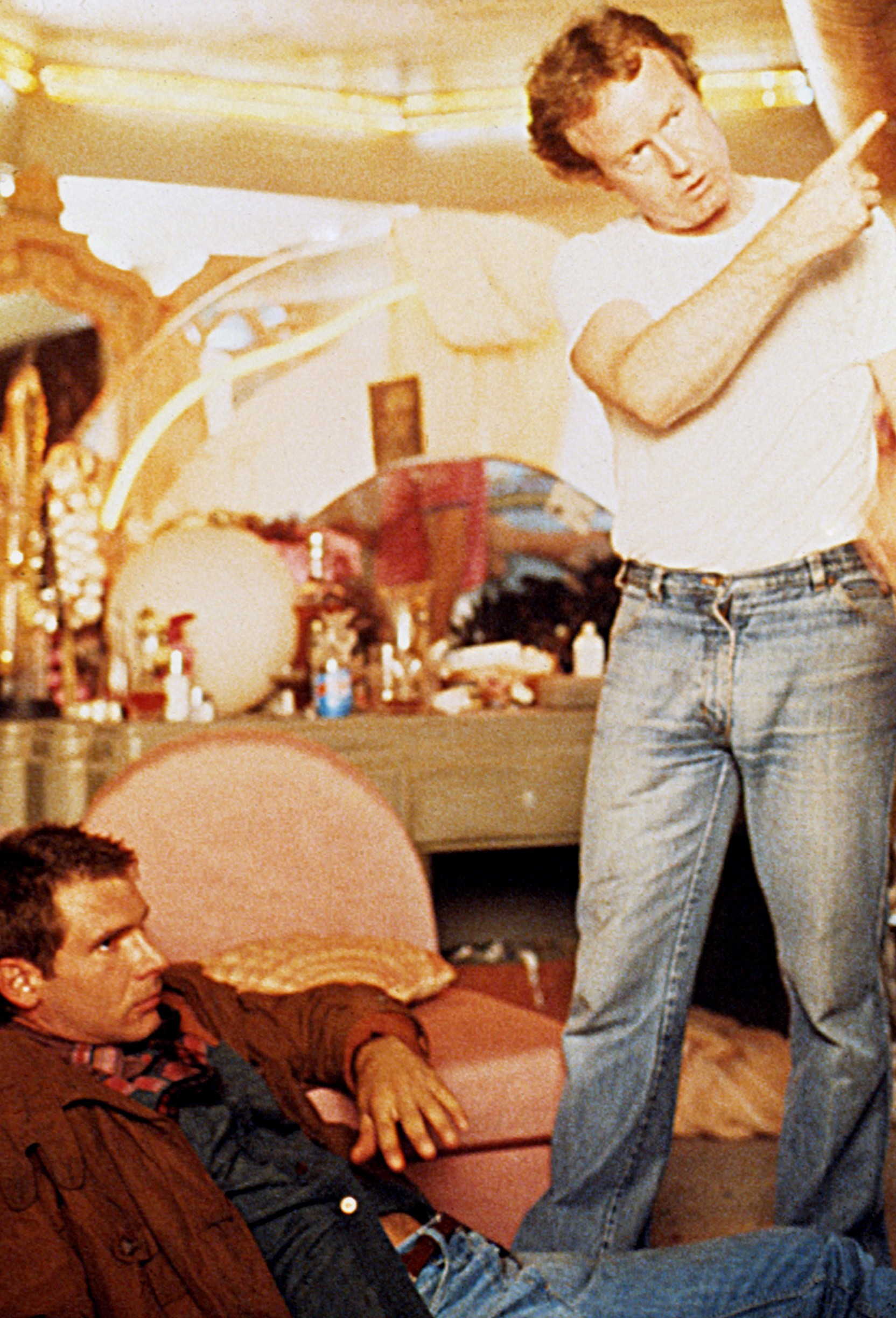
Harrison Ford, who turns 75 today, receives direction from Ridley Scott on the set of Blade Runner in 1981:
Filmmaker in Focus:
Want to make movies as good as Paul Thomas Anderson’s? This video from StudioBinder at least shows how to create a shot list inspired by his work (via Film School Rejects):
[embedded content]
Craftsperson of the Day:
Thelma Schoonmaker and her Oscar-winning work on Raging Bull are honored further in this video from VoorDeFilm:
[embedded content]
Classic Trailer of the Day:
Today is the 40th anniversary of the US release of The Spy Who Loved Me. Watch the original trailer for the James Bond classic below.
President Trump and first lady Melania Arrive At Orly Airport on Thursday in Paris. Trump told reporters on Air Force One that he was considering tariffs on steel imports.
Pierre Suu/Getty Images
hide caption
toggle caption
Pierre Suu/Getty Images
President Trump is hinting that he may impose tariffs, quotas or both on imported steel in an effort to protect the domestic steel industry.
“Steel is a big problem,” Trump told reporters traveling aboard Air Force One en route to Paris, where he landed Thursday. “We’re like a dumping ground, OK? [Other countries are] dumping steel and destroying our steel industry. They’ve been doing it for decades and I’m stopping it.”
“There are two ways,” Trump said, “quotas and tariffs. Maybe I’ll do both.”
The Commerce Department has been conducting a review of both steel and aluminum imports under a rarely used 1962 statute designed to protect industries deemed vital to national security. Secretary Wilbur Ross told reporters in April that imports now account for more than a quarter of the U.S. steel market, while domestic steel mills are operating at just 71 percent of capacity.
The Alliance for American Manufacturing, which represents steelmakers and the steelworkers union, supports new restrictions on imports. “If we don’t step up now, America’s entire aluminum and steel industries could disappear,” the alliance warns on its website, “and we’ll have to rely on Russia and China for our national defense needs.”
Restricting steel imports through tariffs or quotas would be controversial, though. It would potentially raise prices for steel consumers and could spark retaliation from major trading partners.
Although the administration blames China for most of the glut on the global steel market, allies such as Canada, Mexico and South Korea would likely be hard-hit by any import restrictions. Those countries could respond with limits of their own on U.S. exports.
This week, more than a dozen former White House economists signed a letter, urging the president not to take action against steel imports.
“The diplomatic costs might be worth it if the tariffs generated economic benefits. But they would not,” the economists wrote. “Additional steel tariffs would actually damage the U.S. economy. Tariffs would raise costs for manufacturers, reduce employment in manufacturing, and increase prices for consumers.”
Trump’s comments in support of import limits were originally made to reporters “off the record,” but the White House later agreed to make them public.
The GOP’s latest proposal to repeal and replace the Affordable Care Act hews closely to the earlier bill that didn’t win enough support among lawmakers to bring to a vote.
Perhaps the biggest change in the document released Thursday is that it leaves in place the Affordable Care Act taxes on wealthy individuals. It uses that money to reduce the number of people left without insurance coverage by the law’s changes. This latest version adds $70 billion to a fund for states — bringing the total to $132 billion — to help support coverage of low-income people.
It also would allow insurance companies to offer health plans without the consumer protections included in the Affordable Care Act, or Obamacare. That means insurers could sell stripped-down policies that cover fewer conditions and offer fewer benefits than currently allowed under the law.
Loading…
Those plans would very likely be cheaper than the policies currently offered on the Obamacare exchanges. But for people who would like to purchase plans that cover the essential health benefits mandated by the Affordable Care Act, including mental health coverage, addiction treatment, maternity care and prescription drug coverage, costs could go way up.
The nonpartisan Congressional Budget Office hasn’t yet analyzed the new bill. It weighed in on the earlier Senate bill, saying that proposal would result in 22 million fewer people having health coverage in the next 10 years, compared with under the Affordable Care Act. Of those, 15 million would lose Medicaid coverage. That version was projected to lower the deficit by billions over 10 years — but that may have changed as the latest version offers billions more for state grants and also doesn’t repeal as many of the Obamacare taxes.
Yet this new variant is the same as its predecessor when it comes to subsidies to help individuals pay for insurance. It would mostly reduce subsidies and cause out-of-pocket costs to rise, as the CBO said about the previous bill. It’s not yet clear how the state grants would alter that dynamic.