Articles by admin

No Image

With So Many Obamacare Repeal Options In Play, Confusion Reigns

An illustration of index cards showing the Affordable Care Act, the Affordable Health Care Act, the Better Care Reconciliation Act and the Senate's repeal-only plan

Alyson Hurt/NPR

On Thursday, the Senate unleashed yet another iteration of its effort to repeal and replace the Affordable Care Act, also known as Obamacare, and with it came another analysis from the nonpartisan Congressional Budget Office. If your head is spinning, you’ve got plenty of company, us here at Shots included.

Here are the key versions of repeal and/or replace legislation so far this year:

The American Health Care Act, the House bill passed on May 4. The Senate chose to write its own bill rather than amend this House version.

Better Care Reconciliation Act (BRCA), the Senate bill:

  • The original: Introduced June 22. It differs from the House bill in key ways, see the chart below.
  • Revision #1: Introduced July 13. Added a provision called the Cruz amendment, which would allow insurers to offer skimpier plans and is widely disliked by industry and consumers, but appealing to conservatives. The version also added money for opioid treatment, a provision to give Alaska more federal funding and other, smaller changes.
  • Revision #2: Introduced July 20. Cruz amendment is gone, keeps some taxes the original bill repealed, other smaller changes

The Obamacare Repeal Reconciliation Act, ORRA, a repeal-only bill modeled on the 2015 bill that made it to President Barack Obama’s desk, which he vetoed.

And here’s what’s next: Senate leaders say they want to start debate on a bill next week, but it is not clear which legislation might be destined for the Senate floor.

The two most likely options for consideration right now are the latest BCRA and the ORRA. Both pieces of legislation have met with opposition, but Senate Majority Leader Mitch McConnell is trying to persuade those holdouts to change their mind and vote to bring legislation to the floor. His argument is that the Senate needs to begin debating and amending a bill in order to pass a repeal and/or replacement for the ACA. (Note: Republicans have held no hearings on the bills, where a lot of debate would have already occurred).

Holdouts could stay opposed, and efforts to move a bill to the floor could continue to go nowhere.

But if one of those bills does make it to the floor, there is no way to predict what the final bill will look like.

Any senator can offer amendments, and this is where the Cruz amendment could return, as could any others. It’s called a vote-a-rama.

And a few other proposals may come up: On Jan. 23, Sens. Susan Collins, R-Maine, and Bill Cassidy, R-La., introduced a bill that lets states keep the ACA if they would like to. On July 13, Cassidy and Sen. Lindsey Graham, R-S.C., announced an amendment that would give states a block grant to decide how to spend vis-à-vis the Affordable Care Act. It did not include any changes to Medicaid.

The vote-a-rama usually ends with an amendment by the leader that cleans it all up and kicks out any offending provisions.

Skeptical lawmakers may not want to go this route, because it could easily end with them getting pressured to vote for a bill unlike anything they’ve yet considered and one they may not be happy with.

Loading…

Additional reporting by Susan Davis and Tamara Keith.

Let’s block ads! (Why?)


No Image

'Last Chance U': Netflix Docuseries Follows Troubled Community College Football Stars

Last Chance U is a docuseries on Netflix that takes viewers inside the football program at East Mississippi Community College, where troubled football stars try to work their way back to top schools.

ROBERT SIEGEL, HOST:

The second season of “Last Chance U” begins tomorrow. It’s a documentary series on Netflix that follows the football team at East Mississippi Community College. It’s one of the most successful junior college programs in the nation. But last year, “Last Chance U” showed the team derailed by suspensions after a bench-clearing brawl. NPR TV critic Eric Deggans says the new season depicts the team fighting to live down the reputation it got both on the field and on the screen.

ERIC DEGGANS, BYLINE: I’ll be honest – I don’t particularly watch sports on TV. But I love “Last Chance U.”

(SOUNDBITE OF DOCUMENTARY, “LAST CHANCE U”)

UNIDENTIFIED MAN #1: OK, go. Ten, nine…

DEGGANS: The show’s second season begins with a football squad acutely aware of how bad they looked last time around. And the team, with its mercurial, explosive coach, is determined to put on its best face for Netflix’s cameras this time, at least at first.

(SOUNDBITE OF DOCUMENTARY, “LAST CHANCE U”)

BUDDY STEPHENS: You know, I sat back and I watched it, and I go, I just don’t like that guy.

DEGGANS: That’s Buddy Stephens, the coach of East Mississippi Community College’s football team, the Lions. They dominated their division last season until the team was suspended after a bench-clearing brawl during a game. Stephens, known for his volcanic anger and profanity, screamed at the players once the fight ended.

(SOUNDBITE OF DOCUMENTARY, “LAST CHANCE U”)

STEPHENS: We talked about having more pride, but you didn’t want to. You want to be damn street thugs. So I tell you what – go find another damn school to go to.

DEGGANS: And the Lions, whose players are mostly black, didn’t appreciate Coach Stephens, who is white, calling them thugs.

(SOUNDBITE OF DOCUMENTARY, “LAST CHANCE U”)

UNIDENTIFIED MAN #2: That’s the white man, bro. Welcome to the real world. That’s the white man. Welcome to the real world.

DEGGANS: Especially since the coach had been suspended at a previous game for getting into a fist fight with a referee. As the second season of “Last Chance U” unfolds, Stephens is trying to change. He’s doing pushups any time he curses in practice and encouraging his athletes.

(SOUNDBITE OF DOCUMENTARY, “LAST CHANCE U”)

STEPHENS: I need happy eyes. I need wide eyes. I need having fun because that’s what’s going to happen next Thursday. We’re going to have fun. You are dadgum great athletes, and we’re going to move the ball against them, OK?

DEGGANS: But don’t take bets on how long Buddy’s Mr.-Nice-Guy routine is going to last because “Last Chance U” is what reality TV is supposed to be, filming its subjects intimately and at length until their pretenses fall away and the truth is revealed. The show’s title comes from the nickname for East Mississippi Community College, a school with a powerhouse football team in the tiny town of Scooba, Miss. The best players land at EMCC from bigger schools when they make a mistake, from a quarterback let go by Florida State University for punching a woman in a bar to a defensive lineman ejected by the University of Georgia after his third arrest for marijuana possession.

The real star here is academic adviser Brittany Wagner, a small scrappy lady pushing her players to choose the right classes, show up regularly and get grades good enough to move on.

(SOUNDBITE OF DOCUMENTARY, “LAST CHANCE U”)

BRITTANY WAGNER: I just think it’s going to be a stressful semester. And I’ve got to figure out a way to be like, look, are you going to ruin your whole future for two seconds of camera time? Or are you going to focus on what you’re supposed to be doing?

DEGGANS: As the season progresses, Coach Stephens backslides. He and his staff cut off their wireless microphones at sensitive times. Later, he pushes and kicks at cameras. The second time around, he knows how badly he’s coming off. Still, director Greg Whiteley seems to catch everything, from Wagner’s growing frustration with the coach’s approach to the divide between players and local residents over Donald Trump’s election as president.

He also brings you inside the team’s games with incisive shots that turn every contest into a story of its own, feeding into the bigger question – which of these kids and which coaches will succeed and why? Netflix’s “Last Chance U” digs deep to tell a complex, revealing story about what it really takes to succeed at EMCC and whether that success is truly worth the cost. I’m Eric Deggans.

(SOUNDBITE OF CUMBIAS INSTRUMENTALES CON BANDA SONG, “MAMBO LUPITA”)

Copyright © 2017 NPR. All rights reserved. Visit our website terms of use and permissions pages at www.npr.org for further information.

NPR transcripts are created on a rush deadline by Verb8tm, Inc., an NPR contractor, and produced using a proprietary transcription process developed with NPR. This text may not be in its final form and may be updated or revised in the future. Accuracy and availability may vary. The authoritative record of NPR’s programming is the audio record.

Let’s block ads! (Why?)


No Image

Today in Movie Culture: Movies in the Movies, 'The Disaster Artist' vs. 'The Room and More

Here are a bunch of little bites to satisfy your hunger for movie culture:

Supercut of the Day:

We all love watching movie characters watch movies, and this supercut of cinema in films compiles a bunch of them doing so:

[embedded content]

Movie Comparison of the Day:

See James Franco’s portrayal of Tommy Wiseau alongside the real deal in this comparison between The Disaster Artist and The Room:

If you want to see how good James Franco is at being Tommy Wiseau in The Disaster Artist, here are their performances at the same time pic.twitter.com/rQPvHmgtZW

— Jacob Oller (@JacobOller) July 19, 2017

Mashup of the Day:

Given how much The Graduate obviously influenced Garden State, filmmaker Kentucker Audley recut scenes from the former with the soundtrack from the latter for Talkhouse:

[embedded content]

Fake Poster of the Day:

With rumors going around that The Fast and the Furious 9 will be in space, here’s BossLogic’s fake poster for a futuristic installment:

Leaked #SDCC @FastFurious 9 Poster @vindiesel pic.twitter.com/OtRqui013Y

— BossLogic (@Bosslogic) July 19, 2017

Video Essay of the Day:

Ahead of this fall’s sequel, here’s Rob Ager on the hidden depths of Blade Runner (via Cinephilia & Beyond):

[embedded content]

Vintage Image of the Day:

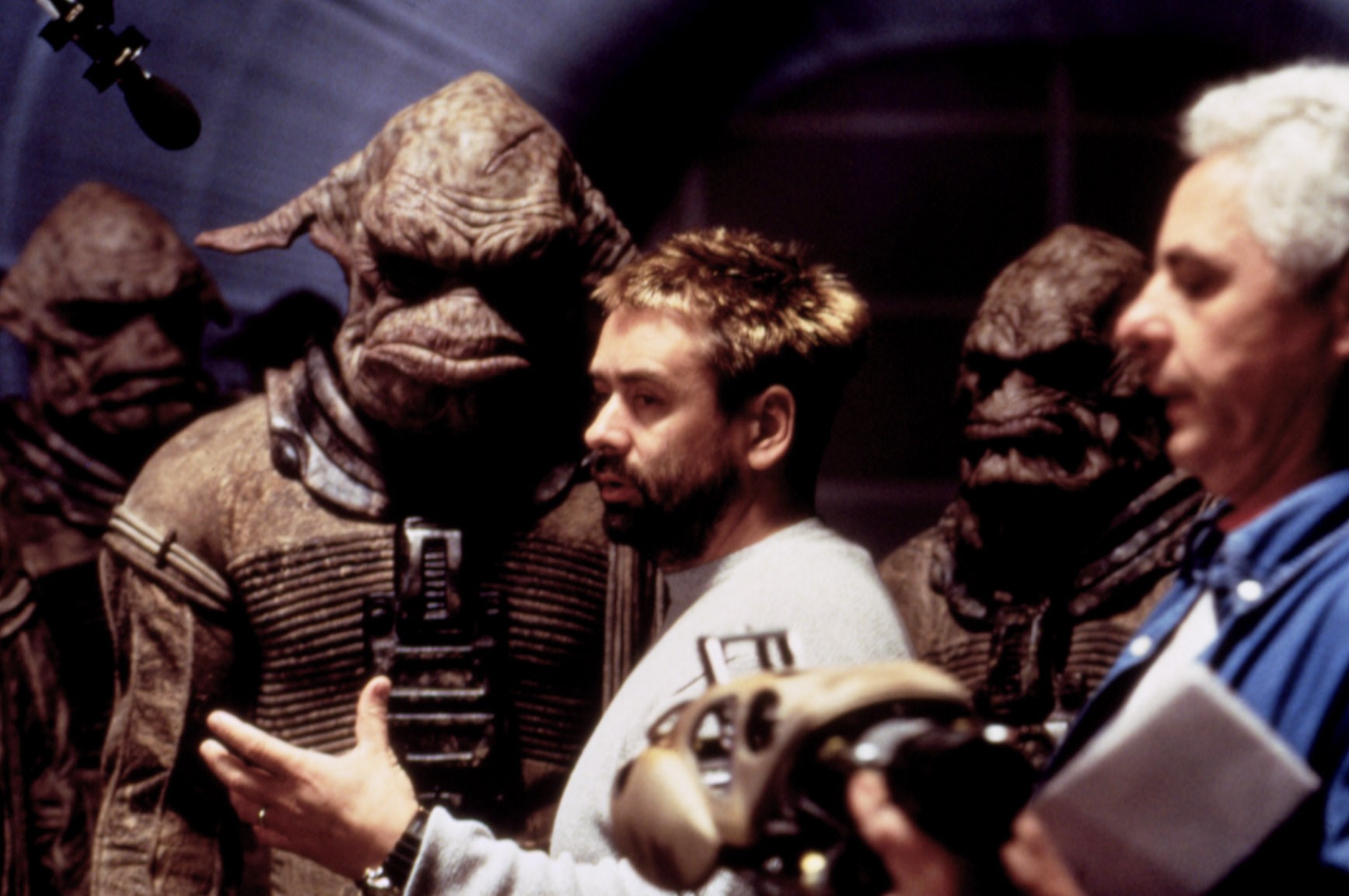
Luc Besson, who returns to space this week with Valernian and the City of a Thousand Planets, directs some costumed exras on the set of The Fifth Element in 1996:

Filmmaker in Focus:

Speaking of Besson, here’s an episode of No Small Parts highlighting his movies’ strong female characters:

[embedded content]

Cosplay of the Day:

As we wait to see the cosplay of this year’s Comic-Con, here’s a cat dressed as a Teenage Mutant Ninja Turtle:

Movie Location Spotlight of the Day:

Fandor highlights appearances of the Griffith Observatory in movies, including Rebel Without a Cause and The Terminator, in this edition of Location Scout:

[embedded content]

Classic Trailer of the Day:

Today is the 15th anniversary of the release of Kathryn Bigelow’s K-19: The Widowmaker. Watch the original trailer for the historical drama below.

[embedded content]

and

Let’s block ads! (Why?)


No Image

Republicans Scramble For A Health Care Endgame Strategy

Senate Majority Leader Mitch McConnell, R-Ky., speaks after a weekly meeting with Senate Republicans on Capitol Hill on Tuesday.

Brendan Smialowski/AFP/Getty Images

hide caption

toggle caption

Brendan Smialowski/AFP/Getty Images

The forecast from the Congressional Budget Office on Senate Republicans’ latest health care strategy isn’t great — but it’s no surprise either.

The CBO estimates that legislation that repeals key pillars of the Affordable Care Act (aka “Obamacare”) would trim $473 billion off the federal deficit, but result in 32 million fewer insured Americans in the next decade. It would also see premiums rise, and likely force private insurers to abandon the individual market.

And nearly every Republican has already voted for it.

Loading…

In 2015, after Republicans had won control of both the House and Senate, Congress enthusiastically sent a bill to President Obama that repealed most of his signature domestic achievement. Obama swiftly vetoed it.

For Republicans, that vote was a political two-fer: it delivered a dramatic confrontation with the Obama White House and it proved to voters Republicans were serious about delivering on their promise to end Obamacare. All they needed was a Republican president to finish the deal.

The legislation was dusted off this week after four Republican senators announced they would oppose a broader bill crafted by Senate Majority Leader Mitch McConnell of Kentucky to repeal much of Obamacare, and replace it with a new system of tax credits and more money for states to control health care spending.

If “repeal-and-replace” can’t pass, McConnell said he would revive the “repeal now, replace later” strategy as a last-ditch effort. The legislation, if enacted, wouldn’t kick in for two years. In theory, that would give Congress enough time and a hard deadline to craft a replacement. Republicans also believe that it would force Democrats to the negotiating table.

The White House appeared to rally around the latest strategy on Tuesday, even though the administration rejected the same strategy when it was first floated back in January.

“President Trump and I fully support the majority leader’s decision to move forward with a bill that just repeals Obamacare and gives Congress time, as the president said, to work on a new health care plan that will start with a clean slate,” Vice President Mike Pence said in a Tuesday speech.

Pence has been the administration’s point man on health care. In the speech, he said “inaction was not an option” and kept public pressure up on the Senate to act. “Congress needs to step up. Congress needs to do their job and Congress needs to do their job now,” he said.

President Trump summoned Senate Republicans to the White House on Wednesday for a private meeting and, for some, a public reprimand. “Look, he wants to remain a senator, doesn’t he?” Trump said, as he was seated next to holdout Sen. Dean Heller of Nevada. “I think the people of your state, which I know very well, I think they’re going to appreciate what you hopefully will do.”

Administration officials are meeting throughout the week to try to find a bill that 50 of the chamber’s 52 Republicans can support.

McConnell is focused first on getting the votes he needs to clear a critical, procedural hurdle to begin debating any health care legislation. He needs 50 senators to vote “yes” on a motion to proceed to the bill. He says the first vote will be on the bill that only repeals most of Obamacare, but that could change if the White House can wrangle a deal before then.

“I think we all agree it’s better to both repeal and replace, but we could have a vote on either,” McConnell said after the White House meeting. “And if we end up voting on repeal only, it will be fully amendable on the Senate floor. And if it were to pass without any amendment at all, there’s a two-year delay before it kicks in.”

The only thing that seems certain — for now — is that the Senate will vote one way or another next week.

“I want to disabuse any of you of the notion that we will not have that vote next week,” McConnell added, “We’re going to vote on the motion to proceed to the bill next week.”

Let’s block ads! (Why?)


No Image

Los Angeles Dodgers Dominate Baseball Halfway Through Season

Just over halfway through the baseball season, the Los Angeles Dodgers are looking dominant. NPR’s Robert Siegel checks in with Jonah Keri of CBS Sports and Sports Illustrated.

ROBERT SIEGEL, HOST:

Over the past four baseball seasons, the Los Angeles Dodgers have spent around a billion dollars on their players. That’s more than any other team. And they haven’t had much to show for it. Their playoff appearances always seem to come up short. Well, this year things look different. Just past the halfway point in the season the Dodgers have the best record in baseball, and they are on a remarkable hot streak. I’m joined once again by Jonah Keri of CBS Sports and Sports Illustrated to talk about this. Hi, Jonah.

JONAH KERI: How are you, Robert?

SIEGEL: And first, how good are the Dodgers this year?

KERI: Phenomenal. This is maybe my favorite stat, I don’t know, maybe ever. I love this. Since June 7 – so that’s a long time, this is almost a month and a half – they have lost one game to a National League team. One loss against a National League team since June 7 – remarkable. They’ve been phenomenal this season.

SIEGEL: It’s not as though they’ve lacked expensive players before. What’s different this year for the Dodgers?

KERI: You know, ironically, it’s not the expensive players that are doing the job. Clayton Kershaw certainly makes a lot of money, but he was a homegrown guy. It wasn’t like he was some sort of, you know, gun for hire. But it’s really their homegrown guys making basically nothing who are just doing great. You look at Corey Seager, who’s their terrific young shortstop. He’s fantastic. He was the rookie of the year last season. You look at Cody Bellinger, he’s the odds-on favorite to win the rookie of the year this year. He might hit 45 home runs. He’s been phenomenal.

And then somebody who doesn’t even get talked about that much in maybe broad circles, but a guy named Alex Wood who was acquired in a three-way trade. And he’s 11 and 0. He’s gotten an ERA in the ones. By the advanced stats he’s been phenomenal. A really great addition to the staff, too. So those are three focal points. And combined they’re making, you know, a couple million dollars, next to nothing in baseball terms.

SIEGEL: Now, I should say this for people who don’t know. Of course, Clayton Kershaw, the great left-handed starting pitcher for the Dodgers, may be the best pitcher in baseball these days.

KERI: Better than Koufax in my opinion.

SIEGEL: Hey, let’s watch it, Jonah. No, never mind. Won’t be getting…

KERI: (Laughter).

SIEGEL: In the other league, the American League, the team with the best record are the Houston Astros. They’ve also been a remarkable club for the past couple years.

KERI: They sure have. And that’s really just a total tear-down. There was such despair, honestly, in Houston for a while. Three seasons in a row with 100 or more losses. This one kills me. They had local television ratings multiple times – this is true – of 0.0, imperceptible television ratings. It was really a disaster for the Astros. And this was because instead of kind of easing into it and maybe we’ll trade this veteran, I mean, they went scorched earth on this thing. They got rid of anything that wasn’t basically bolted to the floor.

But now you’re starting to see the fruits of it. It’s all come together to create a magnificent team and, frankly, one that’s built to last. The core is still very young. Whatever Houston does this year, we could see them back in or near the winner’s circle in 2018, 2019 and so on.

SIEGEL: Well, it’s only mid-July, so how much does the success of the Dodgers in the National League or the Houston Astros in the American League – how well does that track with getting to the World Series and winning the World Series?

KERI: The thing about baseball you always have to remember is it’s quite different than let’s say basketball, for example. At the beginning of the basketball season you can come into it and if you flew in from Mars you would say, you know what? I think the Cavaliers and the Warriors are going in the NBA championship. And you’re right. That’s exactly what happened.

Baseball does not work that way. 2016 was an aberration. The Chicago Cubs, who were clearly the best team all year long, ended up winning the World Series. Usually the team with the best record does not win the World Series for various and sundry reasons. Number one, you have to go through multiple rounds. Number two, baseball is a game that you see things even out over time, but in small samples there can be kind of bumpy results.

A ball hits a pebble. Clayton Kershaw, who is a pitching god, suddenly can’t pitch that well in the playoffs. These things happen. So yes, the Dodgers and the Astros are clearly the two best teams. You would consider them the favorites to go to the World Series. But all kinds of stuff can happen between now and then.

SIEGEL: Jonah Keri of CBS Sports and Sports Illustrated. Thanks.

KERI: Thank you, Robert.

(SOUNDBITE OF ANDREW BIRD SONG, “TRUTH LIES LOW”)

Copyright © 2017 NPR. All rights reserved. Visit our website terms of use and permissions pages at www.npr.org for further information.

NPR transcripts are created on a rush deadline by Verb8tm, Inc., an NPR contractor, and produced using a proprietary transcription process developed with NPR. This text may not be in its final form and may be updated or revised in the future. Accuracy and availability may vary. The authoritative record of NPR’s programming is the audio record.

Let’s block ads! (Why?)


No Image

Congress Struggles To Keep Up With Regulations For Self-Driving Cars

Cars that drive themselves are a thing of the not-so-distant future. But Congress is having a hard time keeping up regulations to go with the technological change.

AUDIE CORNISH, HOST:

The tech industry and major automakers are rapidly pushing ahead on technology for driverless cars. Washington is in the slow lane. That’s because Congress is trying to figure out what safety or other regulations should be put in place. NPR’s Brian Naylor reports.

BRIAN NAYLOR, BYLINE: When it comes to autonomous vehicles, lawmakers in Congress are definitely in drive. Democrat Debbie Dingell, whose Michigan district is home to a big chunk of the auto industry and thousands of auto workers, says it’s an economic imperative.

(SOUNDBITE OF ARCHIVED RECORDING)

DEBBIE DINGELL: Automated vehicles are going to be developed whether we like it or not. The question is whether the United States will remain in the driver’s seat as opposed to China, Japan or even the EU, who are also making significant investments in this space.

NAYLOR: And for a Michigan Republican Fred Upton autonomous vehicles are an animated dream come true.

(SOUNDBITE OF ARCHIVED RECORDING)

FRED UPTON: So we can forget about the Jetsons. The future of the automobile is here.

NAYLOR: Upton and Dingell spoke at a House hearing today that gave initial approval to a bill laying out some rules of the road for driverless cars. So far the Department of Transportation has placed only some voluntary guidelines on the industry while states have been more proactive. The House bill would pre-empt state regulations and give the Department of Transportation broader authority to waive safety standards for industry as it tests autonomous cars. That worries pro-safety groups. Jacqueline Gillan is president of Advocates for Highway and Auto Safety.

JACQUELINE GILLAN: We see autonomous vehicles as a game changer in terms of making some meaningful and lasting reductions in the highway death toll. But we also have millions of vehicles right now that are under recall because of safety defects.

NAYLOR: Gillan says manufacturers should have to meet minimum safety standards before driverless cars can be sold.

GILLAN: There may be a time where we won’t need a steering wheel in your car, but you’re sure going to need that airbag if you’re in a crash.

NAYLOR: This may be a rare issue where bipartisan cooperation is possible. But as lawmakers consider how much to regulate the emerging industry, there could yet be some disagreement about just how much to pump the brakes. Brian Naylor, NPR News, Washington.

Copyright © 2017 NPR. All rights reserved. Visit our website terms of use and permissions pages at www.npr.org for further information.

NPR transcripts are created on a rush deadline by Verb8tm, Inc., an NPR contractor, and produced using a proprietary transcription process developed with NPR. This text may not be in its final form and may be updated or revised in the future. Accuracy and availability may vary. The authoritative record of NPR’s programming is the audio record.

Let’s block ads! (Why?)


No Image

Songs We Love: Mashrou' Leila, 'Roman'

[embedded content]
YouTube

Last year, the band Mashrou’ Leila from Beirut, Lebanon, slayed us with an unforgettable Tiny Desk Concert. Their potent mix of sweet sounds and heady lyrics are beguiling; it’s no wonder that superfans call themselves “Leila Holics.” And to accompany their current U.S. tour, the group has released a thought-provoking video for “Roman.”

Working with an emerging female director from Lebanon named Jessy Moussallem, the all-male members of the band (singer and lyricist Hamed Sinno, violinist Haig Papazian, keyboardist and guitarist Firas Abou Fakher, bassist Ibrahim Badr on bass and Carl Gerges on drums) take a back seat — quite literally — to a group of women.

With dark-hued beats and gorgeous falsetto harmonies haloing Sinno’s ardent tenor, this song will be a welcome find for casual listeners. But as ever with Mashrou’ Leila, there’s a lot of subtlety in both the text and the visuals to “Roman” that challenges stereotypes — from all comers. As the band explains, the women in the video are “styled to over-articulate their ethnic background, in a manner more typically employed by Western media to victimize them. This seeks to disturb the dominant global narrative of hyper-secularized (white) feminism, which increasingly positions itself as incompatible with Islam and the Arab world, celebrating the various modalities of Middle Eastern feminism.”

The women are dressed in an array of figure-hiding Middle Eastern clothing like caftans and abayas, and with many wearing various kinds of veils, from headscarves to the face-covering niqab — these are especially stereotypical outfits, given Lebanon’s diversity and what women there actually wear. While Sinno’s lyrics tend towards the elliptical, the song’s title might also be playing with the idea of cultural divides: Rum is the classical Arabic word for Romans, or Byzantines — i.e., non-Muslims — and later became associated with Christians and Europeans more broadly.

The thrust of the video, however, is one word from the song’s refrain: ‘Aleihum — “Charge!” It’s a cry for self-realization, as Mashrou’ Leila explains: a way of “treating oppression not as a source of victimhood, but as the fertile ground from which resistance can be weaponized.”

Roman” is included on the deluxe version of Ibn El Leil, due July 21 via Shoop! Shoop!

Let’s block ads! (Why?)


No Image

New Movie Posters: 'Star Wars: The Last Jedi,' 'Kingsman: The Golden Circle' and More


No Image

With Entry Into Interest Curation, Google Goes Head-To-Head With Facebook

Google CEO Sundar Pichai talks about the new Google Assistant during a 2016 product event in San Francisco. The voice assistant is one of a number of Google products that will provide user data to the curation service that the company is launching today.

Eric Risberg/AP

hide caption

toggle caption

Eric Risberg/AP

There’s a good chance you’re hungry for information you didn’t even know you wanted, but Google knows — and the tech giant is going to spoon-feed it to you.

Google is following in Facebook’s footsteps, with plans to redesign its popular search page on mobile phones so that you’ll get something similar to the social media site’s Newsfeed. Only Google’s will just be called “feed.”

“Google search should be working for you in the background even when you’re not searching,” says Ben Gomes, vice president of engineering, who spoke at a news conference at Google’s San Francisco offices. “It should be looking for information on the Web to give you information that’s important and relevant for you to further the interest that you have.”

Starting today, if you use the Pixel smartphone or the Google app (for Android and iOS), you’ll see this personalized feed. It will continually draw from what Google has learned about you across its suite of products — such as Search, Gmail, YouTube, Calendar, the Google home assistant and Chromecast.

Google and Facebook — which both make their money by selling advertising — are in a constant tug-of-war. Google has tried and failed to build a hit social network, but this new product could draw more eyeballs.

Engineering leader Shashi Thakur explained how it is fundamentally different from the competition: “It’s not really about what your friends are interested in, which is what other feeds might be.”

Say you have a secret passion for woodworking: Relevant articles will show up in your feed. On the other hand, if you’ve been reading up on herpes that shouldn’t show up in the feed, because Google is using technology to filter out “potentially upsetting or sensitive content.”

When it comes to political interests — take health care overhaul efforts — what you get on Facebook or Twitter is heavily influenced by your social network, which could push you into groupthink. Thakur says the Google feed breaks you out of that, because it’s based on the same search algorithm that crawls and ranks the entire Internet, not just what your friends share.

“We are trying to provide a variety of perspectives on any given topic,” he said. Although in the near future, a spokesperson says Google does plan to add a like button to posts, so that users can actively indicate what they want to see.

Aside from Pixel phones and the Google app, the feed soon will appear in your smartphone browser when you go to Google’s search page. The company does not plan to include this feature on desktop browsers. Gomes and Thakur declined to say if Google would include advertisements in the feed.

Let’s block ads! (Why?)


No Image

Kentucky Residents Express Dissatisfaction With GOP Efforts To Dismantle Obamacare

Hundreds of thousands of people in Kentucky got health insurance under the Affordable Care Act, but the state is also home to Senate Majority Leader Mitch McConnell who’s led efforts to kill the law. With the failure of the latest GOP attempt to replace the ACA, the state’s voters weigh in.

ROBERT SIEGEL, HOST:

One explanation that we’re hearing for why the Senate’s health care bill failed is that it’s hard to take benefits away from people once they get them. That’s the case in Kentucky, home of Senate Majority Leader Mitch McConnell. Many residents there got coverage under the Affordable Care Act even as they voted for politicians promising to get rid of it. Kentucky Public Radio’s Ryland Barton has been talking with Kentuckians about Republican efforts to ditch Obamacare.

RYLAND BARTON, BYLINE: David Caudill is waiting outside of a government office in Lexington. He’s on Medicaid and has a heart condition. He says he wouldn’t be able to afford his medication without the program.

DAVID CAUDILL: Because I’m on some heart medicine that can make my heart slow down. I couldn’t afford my medicine. I’ll say it’s very, very high. I’d probably just lay down and die somewhere.

BARTON: Caudill is one of 460,000 Kentuckians who got coverage after the state expanded Medicaid. He says Republicans’ efforts to cut the program would be hurtful.

CAUDILL: I don’t think it’s good. It ain’t good for nobody.

BARTON: Kentucky’s uninsured rate went down from more than 20 percent to less than 8 percent after the Affordable Care Act became law. But Republicans here say it’s too expensive and doesn’t create better results. Shileka Hill disagrees.

SHILEKA HILL: I think it’s just a bunch of crock because I feel like you’re – they’re trying to take the health care away so they can do like I said because y’all have money freely to tear up these roads and pay for these horses and go overseas and take care of these other people. What about the people who live in your country?

BARTON: Kentucky’s U.S. Senators Mitch McConnell and Rand Paul have been two of Obamacare’s most vocal opponents. Paul has pushed for an all-out repeal of the program while McConnell attempted to preserve aspects of the law in the bills that have stalled in Congress. But now that the most recent Obamacare replacement bill has failed, McConnell says he’s also in favor of an all-out repeal. Richard Ellison, a draftsman from Lexington, says that’s not the right way to go.

RICHARD ELLISON: No, I don’t agree with that. I’m a dead-set Republican, and I don’t agree with it. You’ve got to have a contingency plan. You can’t just kill it.

BARTON: Rick Hartley is a banker who says he used to be a Republican but now describes himself as a conservative. He calls Obamacare a broken system but criticizes both parties’ approach to health care.

RICK HARTLEY: They all play partisan politics. They’re more interested in getting re-elected than they are with doing what they were sent there for, which was to take care of the American people.

BARTON: As for how he thinks Kentucky’s senators have been handling health care, he praises Mitch McConnell for trying to get something done and says Rand Paul is too extreme.

HARTLEY: I don’t know how his ideas are ever going to get implemented because you’re going to have a set amount of the Republican Party that’s not going to go with it, and you’re not going to have a Democrat that’s going to go with it.

BARTON: Meanwhile, Kentucky’s Republican governor, Matt Bevin, is trying to scale back Kentucky’s Medicaid program on his own. He’s applied for a waiver to require most Medicaid recipients to pay monthly premiums and prove that they’re working or volunteering. For NPR News, I’m Ryland Barton in Lexington, Ky.

Copyright © 2017 NPR. All rights reserved. Visit our website terms of use and permissions pages at www.npr.org for further information.

NPR transcripts are created on a rush deadline by Verb8tm, Inc., an NPR contractor, and produced using a proprietary transcription process developed with NPR. This text may not be in its final form and may be updated or revised in the future. Accuracy and availability may vary. The authoritative record of NPR’s programming is the audio record.

Let’s block ads! (Why?)