
Patients, Health Insurers Challenge Iowa's Effort To Privatize Medicaid

Neal Siegel, who lives with his girlfriend, Beth Wargo, is one of six disabled Iowans suing the state over its privatized Medicaid program.
Clay Masters/IPR
hide caption
toggle caption
Clay Masters/IPR
Iowa is one of 38 states that radically changed the way it runs Medicaid over the past few years. The state moved about 600,000 people on the government-run health program into care that is managed by for-profit insurance companies.
The idea is that the private companies would save the state money, but it has been a rocky transition in Iowa, especially for people like Neal Siegel.
Siegel is one of six disabled Iowans suing the state, alleging that Medicaid managed care, as it is known, deprives thousands of Iowans with disabilities the right to live safely in their homes.
Medicaid serves people with disabilities, low income people, and people in nursing homes. A combination of federal and state funds pays for it. It covers 74 million people across the country these days, about half of whom are in Medicaid managed care.
Siegel, a former financial consultant, was in a hit-and-run bicycle crash four years ago that left him with a severe brain injury. He uses a wheelchair and can barely speak.
“I would probably put Neal at about 98 percent cognitive of what’s going on around him, but unfortunately not able to articulate it,” says Siegel’s girlfriend, Beth Wargo. “So it’s being trapped inside your own body.”
After the accident, Siegel qualified for Medicaid. He lived in a rehabilitation center for a while, and the lawsuit, filed in U.S. district court in June, says he was the victim of abuse and neglect while living there.

Neal Siegel and Beth Wargo, in a photo taken after Siegel’s accident in a hit-and-run bicycle crash left him with a severe brain injury.
Clay Masters/IPR
hide caption
toggle caption
Clay Masters/IPR
Eventually he moved home with Wargo, where he’s totally reliant on caregivers to assist him with all activities of daily life.
Then last year, Wargo says, they got a letter in the mail from AmeriHealth Caritas, the company that manages his care. Siegel’s budget for home help had been slashed by 50 percent, Wargo says. Siegel’s face lights up as Wargo talks about the lawsuit, and he manages to say, “Oh yeah,” when she mentions how happy they were that they could be part of it.
Cyndy Miller is the legal director with Disability Rights-Iowa, the advocacy group that spearheaded the lawsuit.
“The system is too stressed right now with the way it’s being managed and it’s not healthy for individuals with chronic or serious disabilities,” says Miller.
According to the lawsuit, the company claimed that spending on Siegel’s case was cut because it had exceeded a limit set in state policy. A spokesman for AmeriHealth Caritas said the company could not comment on ongoing litigation. The state has asked for the lawsuit to be dropped.
In addition to the suit, complaints about Medicaid from hospitals, doctors, and patients have spiked in Iowa.
Iowa’s Department of Human Services Director Jerry Foxhoven defends moving the entire Medicaid population to managed care. He says more taxpayer dollars will be saved under private management.
But he says his agency is willing to make changes, especially for people like Neal with serious disabilities.
“Everything’s always on the table. We’re always looking at everything to say how do we best serve the people we’re trying to serve and be the best stewards of taxpayer dollars,” Foxhoven says.
For their part, the three companies with contracts in Iowa say in statements that the first 18 months have been successful. But they also have said to state officials that reimbursement rates were based on deeply flawed cost estimates provided to them before the project began.
They are now negotiating to get millions of dollars more in state funding.
So where’s the savings? So far, no state has actually done a comprehensive review of whether private companies actually save Medicaid dollars, says Kelly Whitener, an associate professor with Georgetown University who studies managed care.
“You’d really need to be able to see, are you saving money overall or not, and if you are spending less money, are you suppressing services that are needed? Or are you really finding efficiencies and only delivering care that families really need?” says Whitener.
For the moment, those questions don’t have definitive answers.
Meanwhile, Iowa has to balance its books. Republican Governor Kim Reynolds had to tap more than $260 million of the state’s reserve fund this year, and officials expect next year’s budget will be even tougher to negotiate. Medicaid funding will likely be a large part of the discussion.
This story is part of a reporting partnership with NPR, local member stations and Kaiser Health News.
Saturday Sports: Baseball Playoffs

The Major League Baseball Playoffs have started, while in hockey Las Vegas played Dallas after the week’s massacre.
SCOTT SIMON, HOST:
I’m Scott Simon. Just when we need it – time for sports.
(SOUNDBITE OF MUSIC)
SIMON: The Major League playoffs have begun. Who are the defending champion of the world? Oh, I remember. NPR’s Tom Goldman joins us. Tom, thanks so much for being with us.
SIMON: It’s a pleasure.
TOM GOLDMAN, BYLINE: We’ll get to that game last night first. But the AL – the Cleveland Indians have really been handling the New York Yankees so far, haven’t they?
GOLDMAN: You know, Cleveland has that look of magic, doesn’t it?
SIMON: Sure does.
GOLDMAN: The Indians won a thriller yesterday, 9 to to 8 in 13 innings after trailing 8 to 3. They had that 22-game win streak late in the regular season. But Scott, if you’re going to break through and win your first World Series in 69 years, you need luck, too. And Cleveland got that last night in the form of New York manager Joe Girardi making some questionable calls in the Bronx. I’m sure they’re using terms other than questionable.
SIMON: They have another way of saying questionable in the Bronx, yes.
GOLDMAN: Yeah. These calls – in one case, a no call where Girardi didn’t challenge a play on the field – might have helped swing the game Cleveland’s way. You know, in a short series like this, bad decisions mean more. And now the Yanks are one game from elimination.
SIMON: Houston Astros in the AL are two games up on the Boston Red Sox, and a superstar from Venezuela has really broken through, hasn’t he?
GOLDMAN: He has. Houston looked so strong offensively – two wins against Boston, both 8 to 2 thumpings. And that superstar, second baseman Jose Altuve, hit three home runs in the first game. He’s 5′ 6″. He’s the shortest active player in the majors and a huge – sorry – tiny fan favorite…
SIMON: Oh. He’s both.
GOLDMAN: And baseball fans are salivating over what’s looking like a Houston versus Cleveland American League Championship Series in the next round. It could be epic if it happens.
SIMON: Yeah. Nats, Cubs opened last night. And by the way – I hope you’ve seen the video – Representative Steve Scalise threw out the first pitch. It was good to see him. He threw a strike. It was a true pitcher’s duel. Stephen Strasburg of the Nats was untouchable, but stats don’t win ball games, do they?
GOLDMAN: (Laughter) Timely hits helped along by opponents mistakes do, which is what happened when the Cubs finally broke through against Strasburg. You know, for all his greatness, it was Chicago pitcher Kyle Hendricks who ultimately was more effective. He held Washington to two hits. He’s not a guy who throws with blazing speed, but his placement of the ball was nearly flawless. His catcher said Hendricks didn’t miss a spot.
SIMON: Yeah, and not nearly flawless. The opening of the NHL season coincides a terrible crime on the streets of Las Vegas this week. And their first major sports pro team began their history. The Las Vegas Knights had their first game ever against the Dallas Stars in Dallas last night. A sober ceremony on the ice – what a time to step into the story of a city, isn’t it?
GOLDMAN: Very dramatic – and the Golden Knights won 2 to 1 in their first ever game. Winger James Neal scored both goals. He said he hoped he could make the people of Las Vegas smile for one night. You know, the Golden Knight, Scott, were always going to be an interesting story. The first major pro sports franchise in Las Vegas after sports leagues had historically avoided the city because of its connections to gambling, you know, bad optics – but now this hockey team is being embraced by the entire league. There have been tributes surrounding the NHL this season opening week. The home opener for the Golden Knights on Tuesday will be quite a meaningful event for sure.
SIMON: NPR’s Tom Goldman – thanks very much.
GOLDMAN: Thank you.
Copyright © 2017 NPR. All rights reserved. Visit our website terms of use and permissions pages at www.npr.org for further information.
NPR transcripts are created on a rush deadline by Verb8tm, Inc., an NPR contractor, and produced using a proprietary transcription process developed with NPR. This text may not be in its final form and may be updated or revised in the future. Accuracy and availability may vary. The authoritative record of NPR’s programming is the audio record.
The Week in Movie News: Here's What You Need to Know
[unable to retrieve full-text content]
Need a quick recap on the past week in movie news? Here are the highlights:
BIG NEWS
DC movies will mostly be stand-alone efforts: Following the massive success of Wonder Woman, Warner Bros. and DC Entertainment have decided not to focus on creating a Marvel-like interconnective cinematic universe with their movies. Instead they will allow more stand-alone features like the upcoming Joker spin-off. Read more here.
TERRIFIC NEWS
Kate Winslet is joining the Avatar sequels: The Avatar sequels are underway, and now they’ve got another James Cameron veteran joining the cast: Titanic star Kate Winslet. Of course, we know nothing about the character she’s playing yet. Read more here.
GREAT NEWS
Fast and…
Read More
Episode 798: Bad Credit Bureau

Mark Wilson/Getty Images
In 1874, if you wanted to buy groceries on store credit, the cashier would reach under the counter and pull out a little blue book. Inside would be your name, profession and whether you paid your debts on time. It was the beginning of the Equifax business model. And it was never about the regular citizens. It was about the businesses that wanted to lend to them. Regular people are the product. Banks and businesses are the customers.
And in many ways, that makes sense. Businesses do work better if they know something about their patrons. It’s safer to lend money, which means it’s cheaper and easier to get for “creditworthy” customers. Sort of a win-win but for one uncomfortable thing: Today, credit bureaus like Equifax have grown into massive corporations that slurp up virtually every piece of our financial lives. We never signed up for Equifax, or either of the other two companies that monitor just about every non-cash transaction. We never opted in. And it’s hard to opt out.
On today’s show: Why credit bureaus know so much about us, and why lawmakers have been struggling to regulate them for the past fifty years.
Music: “Say It Out Loud” “Acrobatic” and “Assault On Fort Apache.” Find us: Twitter/ Facebook.
Subscribe to our show on Apple Podcasts or PocketCast.
Idle Pharmaceutical Factories In Puerto Rico Raise Concerns Of Drug Shortages
NPR’s Robert Siegel talks with reporter Katie Thomas of The New York Times about how Hurricane Maria may cause shortages of essential drugs due to idled factories.
ROBERT SIEGEL, HOST:
When Hurricane Maria crashed into Puerto Rico, it dealt a powerful blow to the pharmaceutical industry. The island is an important exporter of drugs. Pharmaceuticals are a $15 billion business there. And that includes some medicines that are produced only in Puerto Rico, which raises the prospect of shortages here on the mainland. Reporter Katie Thomas wrote about this in The New York Times, and she joins us from Chicago. Welcome to the program.
KATIE THOMAS: Thank you.
SIEGEL: Put the Puerto Rican pharmaceutical industry in some perspective. How does it rank as a drug producer?
THOMAS: Well, it’s one of the top drug producers in the world. Drug companies and device manufacturers started building plants there decades ago thanks to tax breaks and plentiful available – of skilled labor there.
SIEGEL: You wrote this week that there are 80 pharmaceutical factories in Puerto Rico. Do we know how many of them are up and running at this stage?
THOMAS: We don’t. And I should say that those are a mix of factories. They’re pharmaceutical products. They’re also medical device makers and medical supply manufacturers. And we don’t have an exact tally, at least not one that’s being released. But several of the companies have told me that they’re either not back up and running, or they’re just barely starting to get into limited production.
SIEGEL: What kinds of problems are those people experiencing in Puerto Rico? What have they told you about?
THOMAS: Well, there’s been a host of problems. The biggest one is actually just getting employees to come in to work. These residents have lost their homes. They’re still struggling with many of their basic needs.
The second obstacle is electricity. You know, most of these plants are running on diesel generators. And while the companies say that they’re pretty comfortable and – with the fact that those are up and running and they’re working, there’s questions about how long they will last. If this is a long-term problem, and if it goes on for months, you know, will they run out of diesel fuel? Will the generators start breaking down? So that’s also a big concern.
SIEGEL: What are some of the drugs that are produced in Puerto Rico and, for that matter, only produced in Puerto Rico?
THOMAS: So the first thing I’ll say is that companies generally don’t give a list of which drugs and products they make in certain factories. And that’s been a problem for people in the U.S. and around the world in hospitals who are tracking this and anticipating shortages and trying to plan for it.
So we don’t know who makes these products exclusively in Puerto Rico. But some of the biggest drugs that are manufactured there – although they could be manufactured elsewhere as well – include Humira, which is the world’s top-selling drug, Xarelto, which is a blood thinner that prevents strokes. Even Tylenol is made in Puerto Rico.
SIEGEL: As you’ve said, Puerto Rico is also a place where many medical devices are made. What are you hearing about that?
THOMAS: So the device industry is just as concerned as the pharmaceutical industry is. And I heard today that if conditions continue as they are and they don’t measurably improve, they’re worried that there are some products there that could eventually go into shortage as quickly as three to seven weeks from now. One specific example that I was given was catheters for trauma surgery.
SIEGEL: Well, if, say, production of Humira, which is a rheumatoid arthritis drug – if it were interrupted in Puerto Rico, are pharmaceutical companies equipped to shift production to another place? Do we know if they’re that nimble?
THOMAS: So publicly they say that they are. And in their statements to us, they’ve been putting the most positive spin possible on this. They are mindful of their investors, and this is a very delicate situation for them. But we know that the FDA commissioner, Scott Gottlieb, has testified this week that he’s very concerned about potential critical shortages. He said that there are 40 drugs that are made by 10 firms that they’re closely watching. He didn’t list which drugs those were specifically, but it’s something that everyone is keeping a close eye on.
SIEGEL: That’s Katie Thomas, who covers the health care industry for The New York Times. Thanks for talking with us.
THOMAS: Thank you.
Copyright © 2017 NPR. All rights reserved. Visit our website terms of use and permissions pages at www.npr.org for further information.
NPR transcripts are created on a rush deadline by Verb8tm, Inc., an NPR contractor, and produced using a proprietary transcription process developed with NPR. This text may not be in its final form and may be updated or revised in the future. Accuracy and availability may vary. The authoritative record of NPR’s programming is the audio record.
Today in Movie Culture: Julia Roberts Acts Out Her Movie Career, the Science of 'Blade Runner' and More
Here are a bunch of little bites to satisfy your hunger for movie culture:
Career Retrospective of the Day:
Watch Julia Roberts and James Corden act out her whole career from Mystic Pizza through the new movie Wonder on The Late Late Show:
[embedded content]
Movie Science of the Day:
For Nerdist, Kyle Hill looks at the scientific possibility of implanting memories into a robot a la Blade Runner:
[embedded content]
Celebration of a Movie Location:
One of the most iconic elements of the original Blade Runner is its use of the Bradbury Building, which is spotlighted in this Fandor video:
[embedded content]
Interview of the Day:
Everyone is obsessing over this interview with Harrison Ford and Ryan Gosling to promote Blade Runner 2049 and the interviewer is the best part:
[embedded content]
Vintage Image of the Day:
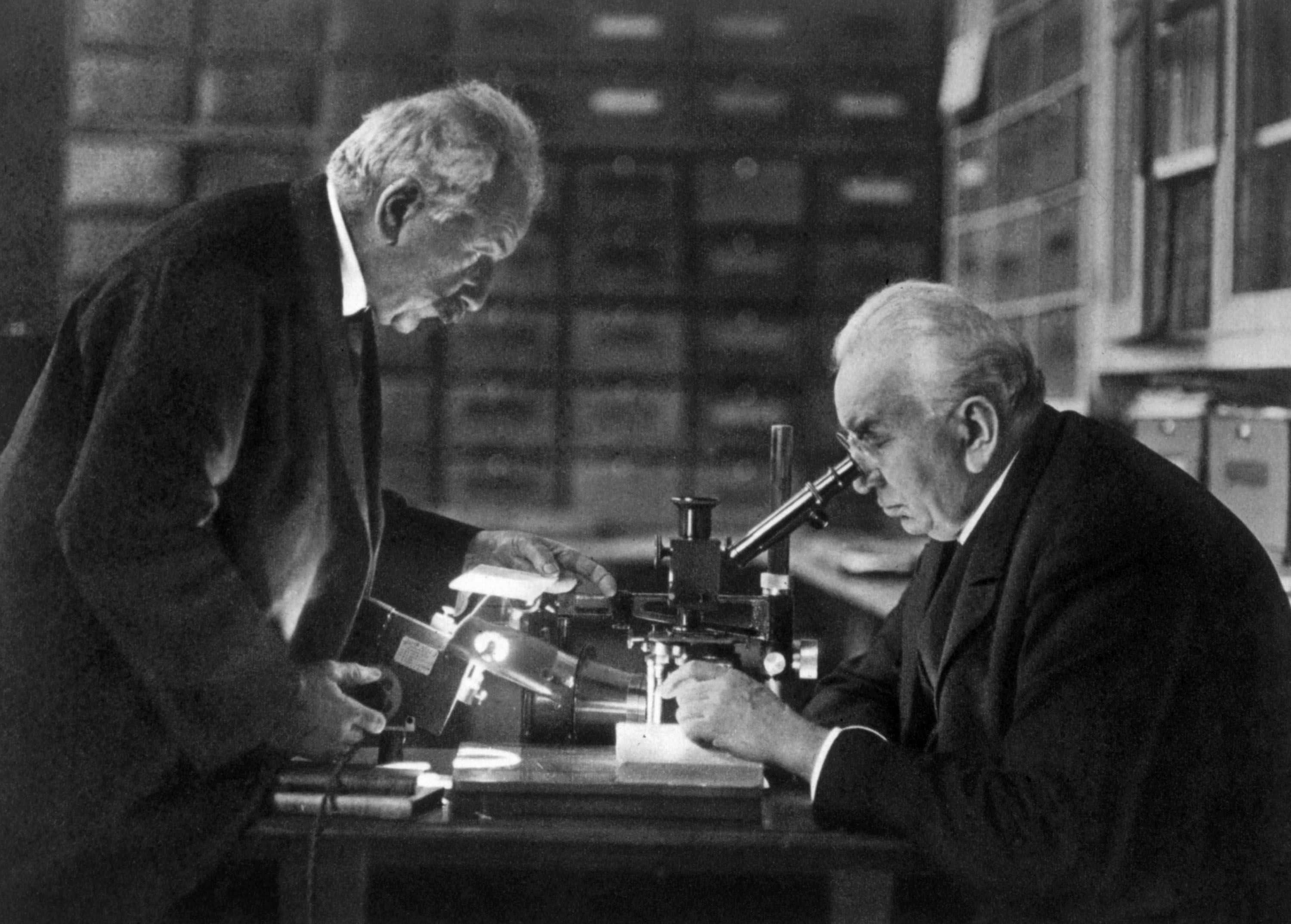
Film pioneer and cinematographe inventors Louis Lumiere, who was born on this day in 1864, with brother Auguste:
Filmmaker in Focus:
This video essay by Gabriela Perez highlights the colors, props and more in the movies of Guillermo Del Toro:
[embedded content]
Actor in the Spotlight:
In honor of Buster Keaton’s birthday yesterday, fan Don McHoul made this video compiling the silent comedy legend’s greatest stunts:
[embedded content]
Cosplay of the Day:
New York Comic Con is in full force and so is this Alien cosplayer in attendance:
Who’s invading @NY_Comic_Con this year? Tweet us your best #Alien cosplay pics & vids for a special shoutout! #NYCC pic.twitter.com/kQkasSdp4I
— Alien (@AlienAnthology) October 5, 2017
Soundtrack Star of the Day:
In memory of Tom Petty, who died this week, Nelson Carvajal compiled some memorable moments of his music in movies (via Film School Rejects):
[embedded content]
Classic Trailer of the Day:
Today is the 10th anniversary of the release of Tony Gilroy’s Michael Clayton. Watch the original trailer for the Oscar-winning drama below.
[embedded content]
and
Amid Harassment Reports, Harvey Weinstein Takes Leave Of Absence

Harvey Weinstein, who heads The Weinstein Co. with his brother, Bob, arrives at the 2014 Oscars in Los Angeles.
Jordan Strauss/Invision/AP
hide caption
toggle caption
Jordan Strauss/Invision/AP
Hollywood mogul Harvey Weinstein is taking a leave of absence from his company following a New York Timesstory that he sexually harassed female assistants, executives and actresses for decades. The Times report also says Weinstein settled complaints with at least eight women.
Weinstein is one of the most powerful men in Hollywood. He co-founded Miramax, which has produced such Academy Award-winning films as Pulp Fiction, Chicago, The English Patient and Shakespeare in Love. He and his brother, Bob, head The Weinstein Co. Along with movies, the Weinsteins have produced a number of Tony Award-winning shows on Broadway.
Harvey Weinstein is also known for his temper and, the Times story says, his inappropriate behavior toward women has been discussed within his companies for years. The story begins with actress Ashley Judd being invited to what she thought was a business breakfast with Weinstein at the Peninsula Hotel in Los Angeles. Instead, she says, she was sent to his room where he asked her to give him a massage or watch him shower.
“How do I get out of the room as fast as possible without alienating Harvey Weinstein?” Judd is quoted as saying in the article.
Weinstein released a statement in response to the allegations. He apologizes for some of his behavior by saying that times have changed since he began in the movie business:
“I came of age in the 60’s and 70’s, when all the rules about behavior and workplaces were different. That was the culture then.
I have since learned it’s not an excuse, in the office — or out of it. To anyone.
I realized some time ago that I needed to be a better person and my interactions with the people I work with have changed.
I appreciate the way I’ve behaved with colleagues in the past has caused a lot of pain, and I sincerely apologize for it.”
At the same time, one of Weinstein’s lawyers, Lisa Bloom, released a statement saying “he denies many of the accusations as patently false.”
Weinstein says he will take time to “conquer his demons.” He also says he will use the time to fight the National Rifle Association. Weinstein is a longtime donor to Democratic candidates and liberal causes.
NFL Star Cam Newton's Controversial Remarks
Football star Cam Newton, quarterback for the Carolina Panthers, made an openly sexist comment regarding a female reporter on Wednesday. The NFL called Newton’s words wrong and disrespectful.
ROBERT SIEGEL, HOST:
NFL quarterback Cam Newton is in the midst of another controversy. Newton made a comment to a female football writer on Wednesday that’s being called sexist by some, simply dumb by others. NPR’s Tom Goldman has our report.
TOM GOLDMAN, BYLINE: Carolina Panthers quarterback Cam Newton has never been the shy and retiring type. He’s generated controversy with his effusive displays after scoring touchdowns. He incurred the wrath of journalists with his sullen and early exit from a post-Super Bowl interview a couple of years ago. Then yesterday he had this interaction with Jourdan Rodrigue. She’s a Panthers beat reporter for The Charlotte Observer. Rodrigue asked Newton about one of his wide receivers.
(SOUNDBITE OF ARCHIVED RECORDING)
JOURDAN RODRIGUE: Devin Funchess has seemed to really embrace the physicality of his routes and making – getting those extra yards. Does that give you a little bit of an enjoyment to see him kind of truck-sticking people out there?
CAM NEWTON: It’s funny to hear a female talk about routes like – it’s funny.
KAVITHA DAVIDSON: My first reaction was really? Really? Like, we’re still talking about this in this way?
GOLDMAN: Twenty-eight-year-old Kavitha Davidson has been an ESPN reporter for the past four years, an era when women have become more of a given rather than an exception in sports journalism. But she says Cam Newton’s comment is indicative of a mentality that still exists.
DAVIDSON: It’s still an anomaly. It’s still weird for men, whether it’s fans or athletes or GMs or coaches, to hear women speak intelligently about sports, and in this case analytically as well.
GOLDMAN: Davidson has interviewed Cam Newton. She likes him. She says he’s a joking person who doesn’t always think before he speaks. And Davidson says he should know better considering the criticism of Newton, who’s African-American, for his on-field celebrations and sometimes testy relationship with reporters.
DAVIDSON: I think some of those criticisms are racially tinged, frankly.
GOLDMAN: After yesterday’s press conference, Jourdan Rodrigue says she talked to Newton and he didn’t apologize for the press conference comment. Rodrigue, however, did end up apologizing today for some racially insensitive tweets she made a few years ago. As for Cam Newton, Dannon yogurt, which has an endorsement contract with him, released a statement saying the company will no longer work with the Panthers quarterback. When asked if it planned to punish Newton, an NFL spokesman said via email it has not fined people for saying something stupid. The league released a statement saying the comments are just plain wrong and disrespectful and don’t reflect the thinking of the league. Tom Goldman, NPR News.
(SOUNDBITE OF WARREN G SONG, “WHAT’S NEXT”)
Copyright © 2017 NPR. All rights reserved. Visit our website terms of use and permissions pages at www.npr.org for further information.
NPR transcripts are created on a rush deadline by Verb8tm, Inc., an NPR contractor, and produced using a proprietary transcription process developed with NPR. This text may not be in its final form and may be updated or revised in the future. Accuracy and availability may vary. The authoritative record of NPR’s programming is the audio record.
Neanderthal Genes Help Shape How Many Modern Humans Look

An employee of the Natural History Museum in London peeks at a model of a Neanderthal male in his 20s on display for a 2014 exhibition.
Will Oliver /PA Images via Getty Images
hide caption
toggle caption
Will Oliver /PA Images via Getty Images
Neanderthals died out some 30,000 years ago, but their genes live on within many of us.
DNA from our shorter, stockier cousins may be influencing skin tone, ease of tanning, hair color and sleeping patterns of those of present-day Europeans, according to a study from the Max Planck Institute for Evolutionary Anthropology published Thursday in the American Journal of Human Genetics.
Scientists estimate that more than a few Homo sapiensran into Neanderthals tens of thousands of years ago in Eurasia. They liked each other well enough to mate, and now Neanderthal DNA is thought to make up between 1 and 3 percent of the genetic code of most people who aren’t indigenous Africans.
African people have very little Neanderthal DNA because their ancestors didn’t make the trip through Eurasia, scientists think.
Computational biologist Michael Dannemann, the lead author on the latest paper looking at the Neanderthal DNA that persists in modern humans, says that he wondered, well, does it do anything?
He and his colleagues looked for associations between Neanderthal DNA and human appearance and behavioral traits. The researchers analyzed information from over 100,000 people in the UK Biobank, a database that contains genetic information and people’s answers to an extensive questionnaire, including questions about physical appearance and behavior.
Dannemann and co-author, Janet Kelso, also at the Max Planck Institute for Evolutionary Anthropology, found genetic material from Neanderthals associated with traits like skin tone, hair color and sleeping patterns.
Interestingly enough, many of the traits have something to do with sun exposure. Dannemann says it’s speculative still, but there may be some logic to it. The paper explains that Neanderthals lived in Eurasia for about 100,000 years before some modern humans arrived, giving them more time to get used to a wider range of daylight and lower UVB levels. According to the paper, skin, hair color, and circadian rhythm — all traits associated in the study with Neanderthal DNA — are linked to light exposure.
But, before making a leap and blaming your Neanderthal genes for your hair color, there’s more to the story.
Dannemann points out that you can look at someone’s genes and have a hard time telling if she’s tall or short — most human traits are determined by multiple genes working together. When it comes to skin tone, he says, several different parts of genetic material impact it, only some of which come from Neanderthals.
“It’s not any single gene that makes a huge difference … It’s not like morning people have one thing and evening people have another,” says anthropologist John Hawks, of the University of Wisconsin–Madison. “It’s many genes. Each of them has some small effect. This study is pointing out that, hey, there’s one of these [genes] that has a small effect coming from Neanderthals.”
Dannemann says they found multiple Neanderthal genes that affected hair and skin tone, some lighter and some darker. He says this suggests that Neanderthals themselves may have had variation in those traits too, meaning, maybe they too had a range of skin and hair tones.
Hawks say that this study reminds us that Neanderthals weren’t so different from us. “My take on this is that it’s showing the ways in which Neanderthal genetics, the genes we inherited from Neanderthals, are part of normal human variation,” he says. “They’re not super weird things that make people different. They’re part of these normal phenotypes.”
He also points out some limitations in the latest work: All the data are from the U.K. Dannemann also says that much of the previous research studied people of European ancestry.
He adds that there’s an increasing number of biobanks and databases like the one in the U.K. that include genetic information along with traits, “I think mining those and learning more about the contribution of Neanderthals to human traits is certainly something that’s still interesting.”
Today in Movie Culture: Which Cut of 'Blade Runner' to Watch, the Many Transformations of Jared Leto and More
Here are a bunch of little bites to satisfy your hunger for movie culture:
Movie Guide of the Day:
Want to catch the original Blade Runner before seeing Blade Runner 2049 this weekend but don’t know which cut to watch? Slate offers a visual explainer:
[embedded content]
Movie Trivia of the Day:
And if you want more information about the original Blade Runner, here’s CineFix with a bunch of things you might know about the 1982 sci-fi classic:
[embedded content]
Filmmaker in Focus:
Blade Runner 2049 director Denis Villeneuve seems to like shooting through windows as evidenced in this compilation by editor Mikolaj Kacprzak:
[embedded content]
Actor in the Spotlight:
For Fandor, Jacob T. Swinney showcases the many transofrmatoins of Blade Runner 2049 co-star Jared Leto:
[embedded content]
Vintage Image of the Day:
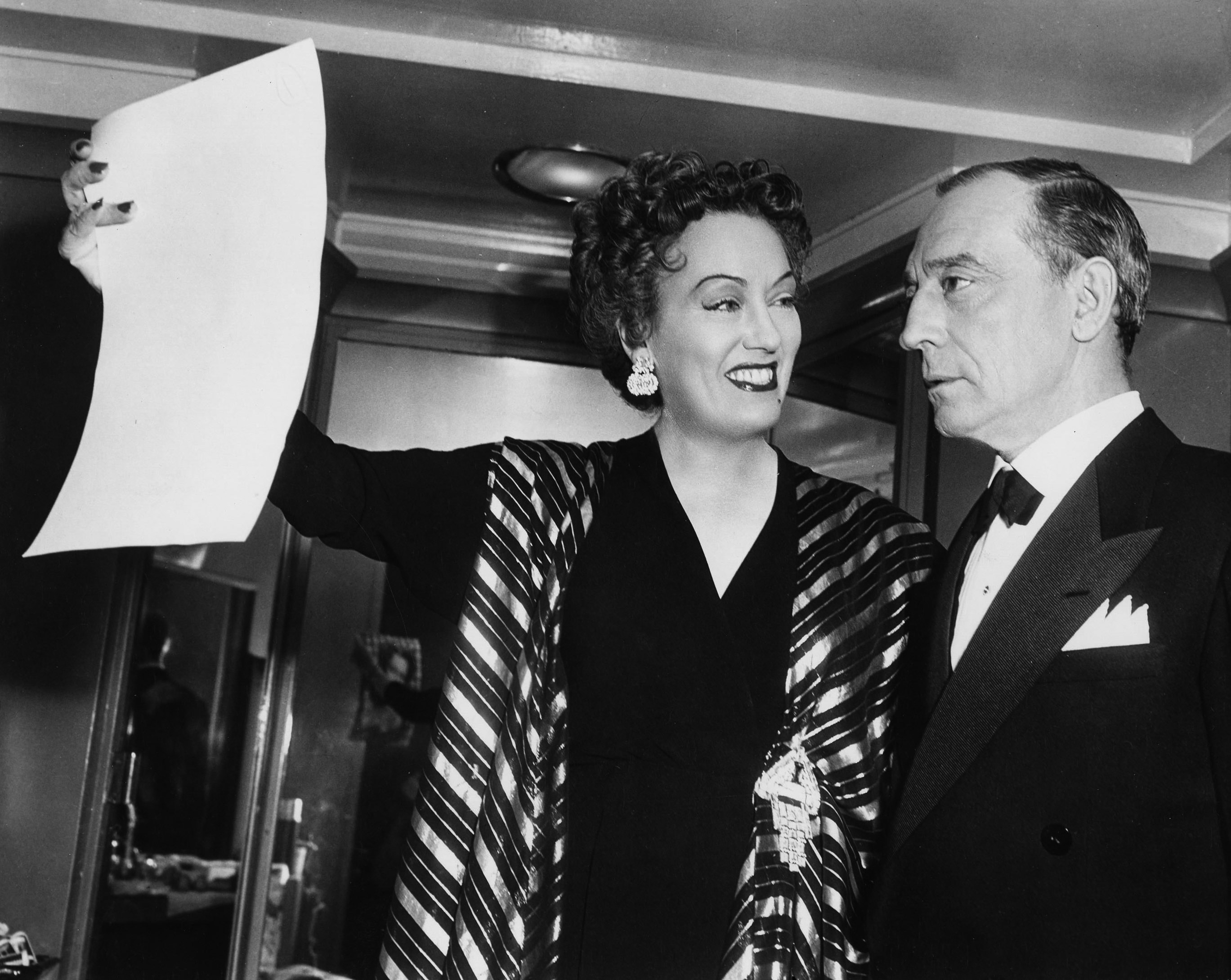
Buster Keaton, who was born on this day in 1895, with Gloria Swanson on the set of 1950’s Sunset Boulevard:
Mashup of the Day:
Deadpool crashes the Justice League party in this fake one sheet made by BossLogic in the style of the DC movie’s character posters:
The final member #justiceleague@VancityReynoldspic.twitter.com/h8DG17sA9P
— BossLogic (@Bosslogic) October 3, 2017
Movie Comparison of the Day:
Speaking of DC movies, Couch Tomato shows 24 reasons why the new Power Rangers was basically a remake of Man of Steel:
[embedded content]
Cosplay of the Day:
They’re gender-swapping all kinds of movie roles lately for remakes, so why not reboot Harry Potter with this fan in the lead?
Harriette Potter ?? I’d like to get a cosplay crew for this! pic.twitter.com/OGNWBbBUPQ
— Bunny Ayumi ?? (@BunnyAyu) October 4, 2017
Custom Car of the Day:
Speaking of cosplay, here’s a Fiat van cosplaying as one of the vehicles from Jurassic Park, and it’s up for auction on eBay:
Custom Painted Jurassic Park Fiat Van For Sale On eBay https://t.co/GjCWLr6Wodpic.twitter.com/EiAlNqXEW7
— Geekologie (@geekologie) October 3, 2017
Classic Trailer of the Day:
Today is the 15th anniversary of the release of the Russo brothers’ Welcome to Collinwood. Watch the original trailer for their pre-Marvel feature debut below.
[embedded content]
and
