Articles by admin

No Image

Congressional Republicans Hope To Pass Tax Overhaul Bill By Dec. 25

Congressional Republicans are working to merge House and Senate versions of a GOP tax bill. They’re hoping to reach their first major legislative milestone by Christmas.

ROBERT SIEGEL, HOST:

There is furious work going on behind the scenes on Capitol Hill so that Republicans can meet their goal of passing a final tax bill before Christmas. The House and Senate passed separate measures over the last few weeks. Members of both chambers will meet formally in a conference committee later this week to hammer out a final bill.

But a lot of that negotiation is well underway, and NPR congressional reporter Kelsey Snell has been keeping watch on Capitol Hill, where she joins us now. Hi.

KELSEY SNELL, BYLINE: Hi there.

SIEGEL: How close are we to seeing a final tax bill?

SNELL: Republicans I talked to say they are very close, but there is a lot still up in the air. They’ve been working behind closed doors all weekend to try to hash out these differences. The goal is to resolve any issues before they formally meet later this week. But there are a lot of fixes that need to be done.

SIEGEL: Yeah, in order to get the Senate bill passed, there were a lot of deals cut with individual Senators. Ron Johnson of Wisconsin wanted benefits for small businesses. Susan Collins of Maine wanted money to shore up the health care market. Are any of those concessions at risk as all this gets negotiated or renegotiated between the House and the Senate?

SNELL: Yeah. There were actually three main agreements during that last-minute haggling. And as of now, they all appear pretty solid. First we talked about Johnson and the small businesses. They really wanted to make sure that there were better breaks for small businesses to keep them better in line with corporations. Those kinds of protections have lots of support in both the House and Senate, but the two bills disagree on the best way to structure those benefits. So it’s unclear right now which side will prevail.

The second one, the deal with Lisa Murkowski of Alaska which involved oil and gas exploration in the ANWR, which is the Arctic National Wildlife Refuge – that also seems pretty solid. She is on that conference committee, and so is Congressman Don Young of Alaska. So they’ll have a lot of power.

And last, there’s Maine Senator Susan Collins. She says she’s confident in an agreement she reached with Senate Majority Leader Mitch McConnell to vote on funding to help the Affordable Care Act exchanges. Here she is speaking to CBS’ “Face The Nation.”

(SOUNDBITE OF TV SHOW, “FACE THE NATION”)

SUSAN COLLINS: I’ve talked to the president three times about this issue. And once again, I have no reason to believe that that commitment will not be kept. After all, who wants to see health insurance premiums become more unaffordable than they already are for individuals who are buying insurance, say, in the individual market?

SNELL: So there’s a lot to take in here, but Collins hasn’t fully committed to voting for the tax legislation. But it does seem clear that the health care measures will likely be part of the year-end spending bill that also needs to get done in the next two weeks.

SIEGEL: Now, it’s been said that the – most of the benefits in the tax bill would go to businesses. Would that change as they’re making these fixes this week?

SNELL: Actually from what I’m hearing, the bill could get better for some businesses. According to my reporting, a major issue, though, is how to handle a parallel minimum tax system for businesses. Companies have been pushing really hard to see that that is repealed. But it was kept in the Senate bill. Getting rid of it could cost hundreds of billions of dollars, and cost is incredibly important here. There are also some more esoteric issues like clearing up a potential conflict with the World Trade Organization. But all that is being worked out right now.

SIEGEL: And the middle-class tax cuts Republicans have promised – will those change?

SNELL: So first and foremost, the focus is still on lowering rates and doubling the standard deduction. But there’s a lot of talk about those state and local taxes that we’ve been hearing about. One option being discussed would be to let people deduct up to $10,000 of any state and local taxes they pay, not just the property deduction that’s allowed under the Senate bill.

SIEGEL: Well, NPR’s Kelsey Snell at the Capitol, thanks.

SNELL: Thank you.

(SOUNDBITE OF RATATAT’S “NOSTRAND”)

Copyright © 2017 NPR. All rights reserved. Visit our website terms of use and permissions pages at www.npr.org for further information.

NPR transcripts are created on a rush deadline by Verb8tm, Inc., an NPR contractor, and produced using a proprietary transcription process developed with NPR. This text may not be in its final form and may be updated or revised in the future. Accuracy and availability may vary. The authoritative record of NPR’s programming is the audio record.

Let’s block ads! (Why?)


No Image

This Year's Christmas Tree Shortage Has Roots In The Recession

Shoppers walk through a forest of Christmas trees on the Snicker’s Gap Christmas Tree Farm in Bluemont, Va., in 2004. This season, a tightened tree supply dates back a decade ago, when fewer trees were planted during the recession.

Joe Raedle/Getty Images

hide caption

toggle caption

Joe Raedle/Getty Images

If you usually ring in the holiday with a freshly cut evergreen, your reality this Christmas could very well be a scrawny Charlie Brown tree instead — or you may wind up paying more for a lush Fraser fir.

This year, there is a tree shortage. Most growers blame the tightened supply on the Great Recession, says Valerie Bauerlein, who covered the story for The Wall Street Journal.

A decade ago, “we were in a global economic malaise,” Bauerlein tells NPR’s Michel Martin. “And Christmas tree growers couldn’t sell the trees that they had cut, and for the price that they had in them, so then they planted less.”

Christmas trees, as magical as they might seem, are still an agricultural crop. “Trees grow about a foot a year,” Bauerlein says. “So eight, 10 years later, there’s a shortage. There’s more demand [now] because the economy’s prospering. And there are fewer trees to meet that demand.” The total acreage in production has dropped at least 30 percent since the early 2000s, she says.

Even if you’ve seen plenty of trees in lots or in cut-your-own tree farms around your area this season, you’ll likely be paying more the farther you live from the biggest tree-producing states. Oregon and North Carolina now face reduced selection and higher prices, Bauerlein says.

There is also been a movement of growers exiting the business. In recent years, “you also saw a lot of dropout of growers themselves, especially smaller growers, in western North Carolina — one of the main producers” of trees, Bauerlein says. “You’re also seeing fewer growers and [less] acreage in Oregon, which is the biggest producer; they account for about 30 percent of the market.” A lot of growers in Oregon are turning to grapes for wine and, a smaller number, to cannabis amid the booming marijuana industry, she says.

The cost of a Christmas tree has more than doubled since 2008, according to data from the National Christmas Tree Association; last year, the average retail value for a fresh-cut tree was $74.70.

This year, Bauerlein says, “it’s the high-end trees that are really coveted: The Fraser firs out of Oregon that are tougher to find, especially at the height of 8 feet or above.”

If this crop complication is dimming your holiday spirits, you can still break out some pine-scented candles, opt for an artificial tree — or jump on an Instagram-friendly trend to get the pine without the needles: Particularly in apartments and smaller spaces, some people have taken to decorating pineapples.

Lawrence Wu and Natalie Winston produced and edited the audio of this story.

Let’s block ads! (Why?)


No Image

Barbershop: Russia Olympic Ban, NFL Hitting And More

On this week’s Barbershop, NPR’s Michel Martin talks sports and culture with journalism professor and sports commentator Kevin Blackistone, CNN’s AJ Willingham, and documentarian Bryan Fogel.

MICHEL MARTIN, HOST:

Now we’re going to head into the Barbershop. That’s where we gather interesting folks to talk about what’s in the news and what’s on our minds. Sitting in the chairs for a shape up today are Kevin Blackistone. He’s a professor of journalism at the University of Maryland and a frequent ESPN commentator. He’s here with us in our studios in Washington, D.C. Kevin, welcome back.

KEVIN BLACKISTONE: Thank you.

MARTIN: Also with us, CNN writer AJ Willingham. She joins us from Atlanta, Ga. AJ, welcome back to you, as well.

AJ WILLINGHAM: Hey, there.

MARTIN: And finally, film director Bryan Fogle. His documentary, “Icarus,” revealed the extent of Russia’s state-run doping program at the 2014 Sochi Olympics. Bryan’s with us from his home in Malibu, Calif. And he’s back with us, as well. Bryan, thank you so much for joining us once again.

BRYAN FOGEL: It’s a pleasure.

MARTIN: So let’s start with this huge story in the world of international sports – the decision by the International Olympic Committee, or the IOC, earlier this week, to bar the Russian Olympic team from the upcoming Winter Games in South Korea. That means the Russian flag won’t be seen at the opening ceremony, the anthem won’t be played.

Russian athletes who do want to compete can do so by proving that they haven’t been cheating by being cleared by an independent panel in compliance with the World Anti-Doping Agency. But even then, the athletes who do compete have to wear neutral uniforms. And the official record books will show that Russia did not win any medals in this upcoming Olympics. Now, this comes after the IOC finished its own investigation and concluded that Russia was guilty of executing an extensive state-run or state-backed doping program.

Now, Bryan, this is your subject. This is a subject of your film. And folks who want to hear, like, the whole story, Bryan was actually on this program earlier this summer where he talked about this in detail. But if you just briefly tell us, for those who didn’t hear that conversation – and I do recommend it – how did they do it?

FOGEL: I got into this story as, essentially, wanting to prove that the anti-doping system in sport was a fraud. And that journey led me to Dr. Grigory Rodchenkov who was running Russia’s World Anti-Doping Agency laboratory at the time. And over about two and a half years of working with Dr. Rodchenkov, a chain of events happened that led him to flee Russia under duress and threat of his life.

He came to Los Angeles and, essentially, blew the whistle and told me and my film team, over seven month’s time, the extent of what is this 40-year operation that cheated every single clean athlete on planet Earth, robbed thousands and thousands and thousands of Olympic medals under the hands of the Russian ministry to which Grigory was in charge of this program.

MARTIN: So let me hear from everybody on this. And, Bryan, I’ll ask you to start. Now, some people are saying, wow, it’s about time. Other people are saying, you know, who gave Russia the 2014 Sochi Olympics to begin with? It’s – this has gone on for so long. You know, how is it possible that, you know, all of a sudden now, these particular athletes are going to pay the price for this? And, Bryan, I just want to hear your thoughts on this.

FOGEL: Well, I think that this is not a question of clean athletes or doped athletes or question of doping. This is a question of a criminal conspiracy to cheat an international sport. And what they did in the Sochi Games was literally break into these untamperable collection bottles and swap out the dirty steroid urine of Russian national team athletes and substitute it with clean urine of that same athlete.

So this isn’t a – what we want to call a Lance Armstrong of it, meaning, hey, everybody’s doing it; and if you can get away with it, then, you know, then is it really cheating because you’re doing essentially what your other opponents might be doing? This is pure outright criminal fraud. And the Olympics finally said, we are not tolerating this and banned Russia because they sent a statement to the rest of the world that this sort of behavior is no longer acceptable. I don’t think that it ever was acceptable.

BLACKISTONE: Kevin, what do you think about this?

BLACKISTONE: Well, first of all, let me congratulate Bryan on his film, the findings of which were actually cited by the IOC in making their decision. But it is farcical in a lot of ways, and it is very problematic. And the interesting thing to me about this is that, for one, we’ve been here before.

We made half a step in the last summer games because the Russian track and field athletes were banned. And the question then was, well, do we not think that the other Russian athletes in other sports were not also part of this state-run program? And, clearly, now we’re arguing that they all are, and they’re going to have to prove their innocence on their own.

MARTIN: AJ, what do you think?

WILLINGHAM: There are two things about this that really intrigue me, Michel. One of the first things is, of course, there are echoes of what’s happening in the global-political climate. You have people all the way from the top down denying that this even is happening. You have Putin denying this is happening. You have a large section of the Russian populace not really believing this is happening. You have calls for, it’s a conspiracy from the West against Russia to try and demean Russia’s power, which is, of course, this rhetoric that we also see in the political sphere.

But the other thing that’s really intriguing about it is that what else is coming in 2018? The World Cup is coming to Russia. And that is a huge sort of referendum, I think, not only on the IOC and just the Olympic sort of community in general, but FIFA. And what are they going to do about the fact that, you know, obviously, it’s being hosted by Russia, and it features Russian players? And this really couldn’t have come at a worse time for anybody involved.

MARTIN: So let me turn a corner now. And I want to bring up another topic that involves sports and, you know, possibly politics. This week, there were several hard hits that were very hard to watch in the NFL. First, the New England Patriots’ tight end, Rob Gronkowski, give a nasty helmet hit to a player who was lying face down on the ground who was defenseless.

Then, on Monday night’s game, between the Pittsburgh Steelers and the Cincinnati Bengals, the Steelers’ linebacker, Ryan Shazier, made a legal tackle and injured his back. Immediately after the hit, it appeared that he couldn’t move his legs. He was taken to the hospital. Apparently, he’s either had or is going to have surgery to stabilize his spine. But that was a very hard thing to watch. And then two players who were involved in these hits – the Bengals’ safety, George Iloka, was fined, and the Steelers’ receiver, JuJu Smith-Schuster, was suspended for a game.

So, AJ, I want to start with you on this one. You know, is this the right response? I mean, people are still talking about that. In fact, I read one column from a columnist in Pittsburgh – said, you know, the reason I’m – you know, forget Colin Kaepernick; the reason I’m not watching football is I don’t want to watch somebody die. And so do you feel that the league is responding appropriately? And what do you think about what just happened last week?

WILLINGHAM: I think, first of all, it’s important to establish that this is the absolute worst of football. You know, a lot of players – there have been a couple Steelers players who have come to Smith-Schuster’s defense and said, you know, this – you know, what are you expecting from this sport? You know, be a man and sort of just go in there. And there’s no doubt that this was an AFC grudge match – that this was a particularly sort of difficult, you know, very heated game. But it’s just – it’s absolutely unacceptable. And I think the league has an opportunity here to create better sort of rules to deal with this.

Look at college football. A lot of people are calling for the NFL to look to college football and say they have a targeting rule that – you know, it’s not perfect. Of course, it’s not perfect. Sometimes it’s enforced unduly. But the targeting rule would – for instance, Smith-Schuster and Iloka would both be punished under that targeting rule. They would be taken out of the game and suspended the first half of the next game.

And so I think that the NFL needs to look at putting in place more consistent rules so that you don’t have things like this happening where, for instance, Iloka was suspended, and then he wasn’t. He was fined, which was bringing that punishment down. And so now you have these Steelers coming in and speaking out against that. And it’s just really inconsistent. And I think the more consistency that the league can get with it, the better we can deal with this overall problem.

MARTIN: Kevin, what about – what do you think? I mean, is this a flare up of some kind? Or is there a bigger problem here that needs to be addressed? I mean, for example…

BLACKISTONE: Right.

MARTIN: …Just to AJ’s point, Ben Roethlisberger, the Steelers’ quarterback, was asked about the game after the Monday game. And he said, well, that’s just AFC football. I don’t know whether he saw what everybody else saw or…

BLACKISTONE: Right.

MARTIN: …What He. Was defending his player but…

BLACKISTONE: You know, he’s expressing the masculinity that’s in the game. You know, I’ll say a couple things. One thing that’s kind of disingenuous on the media’s part is we hype these games as great grudge matches. And we bring up what’s happened in the past between these particular teams. And then we have this shock and awe after something horrible happens.

You know, I went back to look at the statistics over the last few years in terms of penalties for unnecessary roughness, personal fouls and ejections. And, actually, they’ve been down over the last three years, which is a good sign, which means that some of the rules and some of the emphasis on not having egregious violence in the game may be getting through. And so I think that these particular incidents were more anomalies than anything else. But we all see them, and we all focus on them.

The thing that I thought that was really bad was the Gronkowski play because that was – after a play is over, one player is in a vulnerable position and not expecting to be hit. And he gets hit in maybe the most vulnerable spot on the body, which is the back of his head, the back of his neck. The other plays happen within the context of the game. And so I don’t think that they should necessarily be penalized as heavily as Gronkowski. In fact, I – you know, the more and more I thought about it, Gronkowski should have received an even heavier penalty.

MARTIN: Bryan, before we let you go, do – I know this isn’t particularly your expertise. I know that you’re into cycling and other stuff, but do you have any final thoughts about this? I don’t know if you’re a football fan, but do you have any thoughts about this?

FOGEL: You know, I am a football fan. And I think that, you know, it’s all part of the greater sporting thing, which is, you know, sport is essentially gladiator games, and it’s war without the weapons. And so, you know, we can’t have it both ways. I mean, we want these guys to go out there and essentially beat each other up and prove that, you know, New England is stronger than Denver, et cetera. And that is also the risk of sports.

MARTIN: Well, that was Bryan Fogle. He directed the documentary “Icarus” that exposed Russia’s state-sponsored doping program. He was with us from Malibu, Calif. Also with us, sportswriter and journalism professor Kevin Blackistone with us from our studios here in Washington, D.C., and CNN writer AJ Willingham with us from Atlanta. Thank you all so much for speaking with us.

BLACKISTONE: Thank you.

WILLINGHAM: Thank you.

FOGEL: Thank you.

Copyright © 2017 NPR. All rights reserved. Visit our website terms of use and permissions pages at www.npr.org for further information.

NPR transcripts are created on a rush deadline by Verb8tm, Inc., an NPR contractor, and produced using a proprietary transcription process developed with NPR. This text may not be in its final form and may be updated or revised in the future. Accuracy and availability may vary. The authoritative record of NPR’s programming is the audio record.

Let’s block ads! (Why?)


No Image

What About Sexual Harassment On Wall Street?

Many of the recent sexual assault allegations have surfaced in industries dominated by men. NPR’s Michel Martin talks to Wall Street executive Sallie Krawcheck about sexual harassment in finance.

MICHEL MARTIN, HOST:

We’re going back now to a subject that has rattled Hollywood and newsrooms and now Congress. Three members of Congress resigned this past week over allegations of sexual misconduct – Representative John Conyers of Michigan, Senator Al Franken from Minnesota, both Democrats, and Congressman Trent Franks from Arizona, a Republican. Many people who’ve been writing and talking about this have pointed out that these are all industries where men overwhelmingly hold the positions of power.

So that invites the question, what about Wall Street? Sallie Krawcheck has been writing about this topic. She’s the CEO and founder of Ellevest. That’s an investment company aimed at women. But she’s long been on every list of most-influential women in finance, having been CEO at Merrill Lynch Wealth Management and CFO at Citigroup. In a recent op-ed in The New York Times titled “The Cost Of Devaluing Women,” she talks about how she’s navigated through years of lewd behavior and come-ons from supervisors, peers and clients. She’s with us now from NPR in New York.

Sallie Krawcheck, thanks so much for speaking with us once again.

SALLIE KRAWCHECK: Oh, thank you for having me. Pleasure to be here.

MARTIN: Now, you actually said me too back in 2016 when you wrote about male co-workers putting photocopies of their genitals on your desk, you know, a colleague pretending to perform a sex act on you when your back was turned, I mean, even clients thinking that they could proposition you in really crude ways. And I was wondering, what was the reaction when you first started talking about this? Did anybody care?

KRAWCHECK: Yeah, that – you know, it was, yeah, that happens. Yeah, that happens. Wall Street – male-dominated, no female CEOs. Trading floors are 90 percent male. Financial advisers – 86 percent male. There were huge settlements on Wall Street in the ’80s. And so in a way, you almost feel like the rest of government, media, et cetera are catching up because Smith Barney had the boom-boom room and a $150 million settlement. So it had been going on for a while. And when I spoke about it a couple of years ago, it was sort of, yeah, that’s what happens.

MARTIN: But why do you think we’re not hearing more about CEOs and other top executives losing their jobs over this?

KRAWCHECK: Well, it’s interesting. We did have one, you know – over the past couple of days, a gentleman – or maybe not a gentleman (laughter) from Morgan Stanley – who lost his job. But I’ve had a lot of journalists call me and say, where’s the Harvey Weinstein of Wall Street? And he hasn’t shown up yet. And it may be because we still have to wait for him to be revealed.

It may be also, as noted, this has been going on on Wall Street and much money has been paid out for decades, that maybe there isn’t one. Maybe this has been happening all along, so there’s not that one guy. Or maybe it’s not conducive to it. You know, a Hollywood agent can promise a young lady the moon and the stars. I can make you a star. That’s pretty compelling. A Wall Street CEO, I’m going to send you the best trades? Not quite as compelling.

MARTIN: Well, one of the things you’re trying to get at in your piece is not just the tangible and visible costs of, say, lawsuits but also what I think economists would call the opportunity cost, like what are we losing by driving women and people of color out of fields when their ideas and talent are ignored or worse because they just can’t work in an environment that’s so thoroughly demeaning? I mean, is there some way to quantify that?

KRAWCHECK: Yes.

MARTIN: And how would that be?

KRAWCHECK: When you have diversity in these companies, you have higher returns on capital, lower risk, greater innovation. Take a step back. Wall Street, again, our mantocracy (ph) – 90 percent of traders are male. There is research out there that draws a correlation between levels of testosterone and poor risk-taking. When groups are homogenous, they tend to over-trust each other.

MARTIN: Before we let you go, wondering what reaction you got to the Times op-ed. And was there a different reaction when you wrote your most recent piece than when you first started talking about this?

KRAWCHECK: Do you know what I got the most reaction to?

MARTIN: What?

KRAWCHECK: It wasn’t the stuff that I talked about the beginning of my career, the disgusting stuff. It’s actually the story I told at the end, the more recent thing. And that story is that when I was pitching for money out in Silicon Valley this summer, and the venture capitalist – the guy who was making the decisions about money as I was talking through Ellevest – and I mentioned that I plan to hire financial advisers began to give me chapter and verse on how, you know, boy, financial advisers are tough. They’re difficult to manage, the economics. They’re this, this and this.

And I sat there. And for your listeners who don’t know, I ran Merrill Lynch Wealth Management, and I ran Smith Barney. So I’m pretty sure I’ve managed more financial advisers than anybody on the planet, maybe in the universe. And this guy was, as we – as women say, mansplaining to me how to run this business. And the reactions I got from so many women were, well, we’ve been hearing about, you know, this stuff, the chasing around the desk. But my gosh, if you’re getting mansplained by one of those guys, it just shows that even after we name these harassers, how much very further we have to go before we reach a point in which all of us recognize our equality.

MARTIN: That’s Sallie Krawcheck. She’s the CEO and founder of Ellevest. That’s an investment platform aimed at women. Sallie Krawcheck, thanks so much for speaking with us once again.

KRAWCHECK: Thank you so much for having me here.

Copyright © 2017 NPR. All rights reserved. Visit our website terms of use and permissions pages at www.npr.org for further information.

NPR transcripts are created on a rush deadline by Verb8tm, Inc., an NPR contractor, and produced using a proprietary transcription process developed with NPR. This text may not be in its final form and may be updated or revised in the future. Accuracy and availability may vary. The authoritative record of NPR’s programming is the audio record.

Let’s block ads! (Why?)


No Image

Doubts Rise About Sen. Collins' Strategy To Shore Up Insurance Market

Sen. Susan Collins, a Republican from Maine, walks through the Capitol with colleagues in early December.

Aaron P. Bernstein/Bloomberg via Getty Images

hide caption

toggle caption

Aaron P. Bernstein/Bloomberg via Getty Images

Sen. Susan Collins, the Maine Republican whose vote was pivotal in pushing the GOP tax bill forward last week, thought she had a deal to bolster health care protections in exchange for her support.

But it’s now unclear wether her strategy to shore up part of the Affordable Care Act will prevail or that it would produce the results she anticipates.

The tax bill repeals the ACA’s fines for the individual mandate, which requires most people to have health insurance or pay a fine. Collins says she would vote for it if Senate Republicans promised to allow a vote on two other health bills.

One would reinstate payments to insurers in order to cover discounts that the ACA requires those insurers to provide to their lowest-income enrollees for out-of-pocket costs. President Trump ended those “cost-sharing reduction” payments in October. The bill that Collins supports would extend the payments for two years.

The other bill she supports would provide temporary funding for reinsurance pools, which help insurers pay claims for the sickest — and most expensive — customers. Reinsurance would help bring down premium costs for everyone else.

Before the tax vote, Collins said in a statement she was “deeply concerned that the repeal of the individual mandate would almost certainly lead to further increases in the cost of health insurance premiums – premiums that are already too expensive under the ACA.” Senate Majority Leader Mitch McConnell, R-Ky., said on the floor that he would support Collins’ demands.

McConnell added that he would seek to restore the cost-sharing subsidies, “ideally prior to the adoption of any final tax reform conference agreement and certainly before the end of the year.” He also said he would “support passage of your bill” to create the reinsurance program, with the same timing.

But it’s nowhere near that easy.

The tax bill is now the subject of final negotiations between the House and the Senate. First, even if the bills pass the Senate, there is little to suggest that the House Republicans would go along. On Tuesday, House Speaker Paul Ryan, R-Wis., reportedly told other House leaders he was not a party to Collins’ health care deal with McConnell. Ryan had previously expressed opposition to restoring the cost-sharing payments.

In response to Ryan, Collins on Thursday signaled that she might not vote for the tax bill’s final passage.

But would Collins’ changes offset the elimination of the mandate? Some analysts question whether the bill restoring the federal cost-sharing subsidy payments could actually do more harm than good.

“It’s a mess,” says insurance industry consultant Robert Laszewski. Many states allowed insurers to raise premiums to make up for the loss of the federal cost-sharing reduction payments. So passing the law now, at least for 2018, would require insurers to make refunds to individuals and the federal government for those overpayments.

“It’s certainly too late to affect premiums for 2018,” agreed Aviva Aron-Dine, a former Obama administration health official at the Center on Budget and Policy Priorities, a progressive think tank. “It’s also too late to help with market disruption for 2018.”

Open enrollment for 2018 coverage on the federal marketplace ends Dec. 15, although some state-run exchanges have later deadlines.

One irony, Aron-Dine noted, is that state regulators have dealt with the loss of the federal payments in such a way that many customers can get unexpectedly large discounts on premiums, including bronze-level plans for no monthly premium or gold-level plans cheaper than the mid-level silver ones.

Going back to the original payment system, she says, would result in “a whole group of people who would actually see higher premiums.”

In addition, the tax bill’s elimination of the federal health law’s individual mandate penalty would also raise premium costs – beyond the expected yearly increases – by an average of 10 percent, according to the Congressional Budget Office. That’s because the CBO estimates that about 13 million people would give up their coverage by 2027. Fewer people buying insurance means that the insurance pools would have larger numbers of sicker enrollees and would be more expensive for insurers, who would likely raise premiums.

Industry analysts also predict that the loss of the mandate could disrupt the marketplace enough to drive out some insurers.

The elimination of the mandate penalties is permanent, but Collins’ bill would fund the cost-sharing and reinsurance programs for only two years. Because of that, says Timothy Jost, a former law professor and expert on the health law, “I don’t think it’s going to be much of a carrot” to encourage insurers to stay in the individual market.

Analysts were more upbeat about the potential impact of the reinsurance program. The program would be similar to one that existed in the first years of the health law, “and it did in fact reduce premiums by about 10 percent,” Jost says.

But in order to set up such reinsurance programs and be eligible for funding, states would have to apply for special waivers under the health law. Federal officials have been slow about approving those. “States would have to get their act together politically,” says Jost. “And the money might run out before [the federal government] gets to your state.”

At least one organization thinks Collins is onto something.

The consulting firm Avalere Health estimated this week that the combination of funding the cost-sharing reductions and funding a new reinsurance program would offset the impact of the mandate repeal – at least temporarily.

“Funding CSRs and funding reinsurance is expected to decrease average premiums in the market by more than the 10 percent [increase] CBO is projecting” for getting rid of the mandate fines, says Chris Sloan, a co-author of the study.

But he warned that when the funding runs out, “we’re back where we started.”

Kaiser Health News, a nonprofit health newsroom, is an editorially independent part of the Kaiser Family Foundation.

Let’s block ads! (Why?)


No Image

Today in Movie Culture: 'Jurassic World: Fallen Kingdom' Easter Eggs, 'Star Wars' vs. 'Transformers' and More

Here are a bunch of little bites to satisfy your hunger for movie culture:

Easter Eggs of the Day:

You’ve watched the new Jurassic World: Fallen Kingdom trailer, now watch Mr. Sunday Movies humorously highlight the Easter eggs and other things you may have missed:

[embedded content]

Fake Trailer of the Day:

New York Magazine’s Vulture blog imagines what Quentin Tarantino’s version of Star Trek will look like:

[embedded content]

Dream Crossover of the Day:

Optimus Prime and the Autobots go up against Darth Vader and the Galactic Empire in Alex Luthor’s fan-made Star Wars vs. Transformers fan trailer:

[embedded content]

Mashup of the Day:

Liam Neeson’s Taken character and the iconic villain Anton Chigurh from No Country for Old Men have a chat in the latest Phone Fights video:

[embedded content]

Vintage Image of the Day:

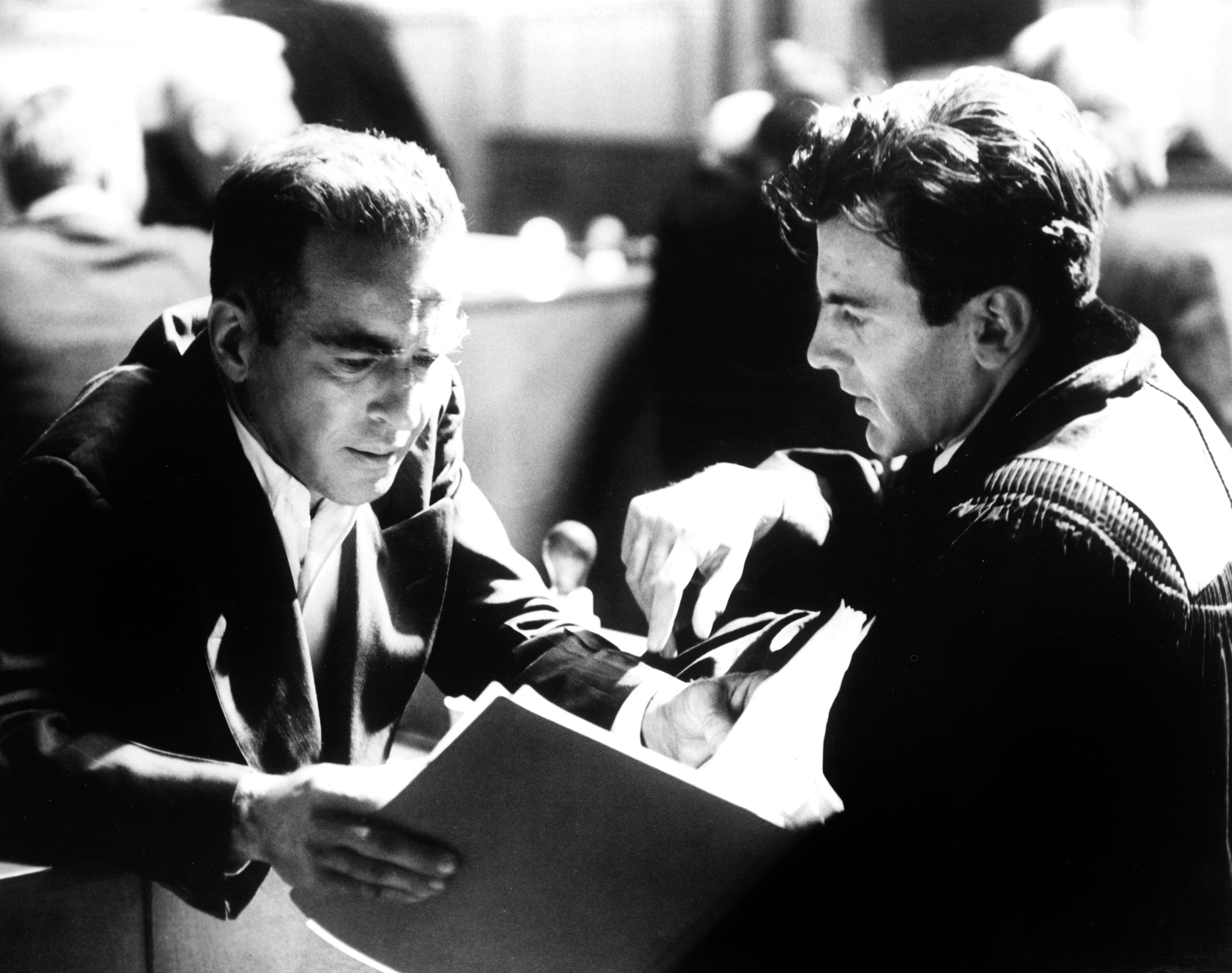
Maximillian Schell, who was born on this day in 1930, and Montgomery Clift rehearse a scene for Judgment at Nuremberg, for which Schell won an Oscar, in 1961:

Actor in the Spotlight:

Ben Stiller also recently had a birthday, so IMDb compiled this montage of his movie roles over the years:

[embedded content]

Year-End Recap of the Day:

Here’s another look at the best movies of 2017 in a video montage cut by Artur Zavgorodnij:

[embedded content]

Reworked Movie of the Day:

What if The Royal Tenenbaums featured only contemporary music of the time on its soundtrack? Filmmaker Kentucker Audley shows us in this silly video:

[embedded content]

Cosplay of the Day:

This is some good quick parody cosplay inspired by today’s release of the Alita: Battle Angel trailer:

I’m on top of this, guys!!! Check out my Alita Battle Angel Cosplay!!! #official#cosplayer#AlitaBattleAngelpic.twitter.com/QkVrTBoFrH

— Kim Horcher (@kimscorcher) December 8, 2017

Classic Trailer of the Day:

Today is the 35th anniversary of the release of Sophie’s Choice. Watch the original trailer for the classic Meryl Streep movie below.

[embedded content]

and

Let’s block ads! (Why?)


No Image

Tax Bill Favors Adding Robots Over Workers, Critics Say

Equipment at the Custom Group in Woburn, Mass., includes automated robotic cutting tools.

Chris Arnold/NPR

hide caption

toggle caption

Chris Arnold/NPR

Republicans call their tax bill the Tax Cut and Jobs Act. But critics say maybe it should have been named the Tax Cut and Robots Act.

That’s because it doesn’t create new tax incentives that specifically encourage companies to hire workers and create jobs, some employers and economists say. But it does expand incentives for companies to buy robots and machines that replace workers.

Republicans say that lowering taxes will boost the economy and spur job creation. But critics say that the tax legislation would create an imbalance favoring machines over workers.

“I think they really need to re-look at the name [of the bill] and add the missing component of the worker,” says Carl Pasciuto, president of Custom Group, a high tech manufacturing company in Woburn, Mass.

Carl Pasciuto, president of the Custom Group, says he needs well-trained workers more than he needs equipment.

Chris Arnold/NPR

hide caption

toggle caption

Chris Arnold/NPR

His factory floor is full of machines that look kind of like enclosed ski gondolas. Inside them, oil is being sprayed on blocks of metal as automated robotic cutting tools zip around shaping the aluminum or steel into precision parts for nuclear submarines, jet planes, and a range of other applications.

There are many more machines here than actual workers. And under the emerging tax bill (there are two versions — one in the House, one in the Senate), companies would have incentives to buy more.

For one thing, they could write the full value of the equipment off their taxes right away.

Pasciuto says he’s definitely OK with that. “Absolutely. We’re always happy to get any break we can get,” he says.

But Pasciuto says he needs well-trained workers more than he needs equipment. “The equipment is readily available. The workforce isn’t,” he says.

The Custom Group creates precision parts for nuclear submarines, jet planes, and a range of other applications.

Chris Arnold/NPR

hide caption

toggle caption

Chris Arnold/NPR

Pasciuto says he has positions that he can’t fill because he can’t find skilled workers. So he’s sometimes forced to buy machines to do the work.

But he says he already has a training facility at his factory. Pasciuto says he and other employers would definitely take advantage of a tax incentive to train workers and it would create more jobs.

“I think that the federal government really needs to look at what they put in the bill and even it out from an equipment side to a training side as well,” Pasciuto says.

And some labor economists agree. Daron Acemoglu is an economist at MIT who researches automation and robots and their impact on the labor market. He says automation is often a good thing. It can increase productivity and be an important part of keeping the U.S. economy competitive.

But, he says, “the problem is when you subsidize heavily the adoption of machines instead of people.”

Then you’re putting your thumb on the scale against workers, Acemoglu says.

He says the Republican tax bills would do that. And here’s how. Suppose a business could buy a machine to replace three workers, but there’s no great cost savings. “That means that machine is not a great machine,” Acemoglu says. “It’s fine, but it’s marginal.”

So if the tax policy was neutral, the business probably wouldn’t buy the machine and it would keep the workers employed. But Acemoglu says even the current law favors machines, and the Republican tax bills tip the scales even more. So if you buy the machine, you’ll get “a huge handout from the government,” he says.

Students enrolled in a training program gather around a computer controlled metal forming machine at the Custom Group. Pasciuto, the company’s president, says he and other companies would take advantage of a tax incentive to train more workers.

Chris Arnold/NPR

hide caption

toggle caption

Chris Arnold/NPR

Like Pasciuto, Acemoglu would like to see incentives for hiring and training.

“To balance the scales it would be good to encourage firms to invest in their workers,” Acemoglu says. Germany “has invested much more in robots than we have,” he says. But it’s done it in a way “that still has kept employment growing in the manufacturing sector.”

Acemoglu says building hiring and training incentives into the tax bill could have helped push the U.S. more in that direction.

Gavin Ekins, a research economist with the conservative leaning Tax Foundation, says it’s OK that the scales are tipped toward machines. “In the long run it’s better for the economy,” he says.

Ekins says some machines kill jobs, but others create jobs. If you buy a backhoe, for example, people have to build it and someone has to drive it. And he says incentives for training programs would be great to have down the road if Congress would design effective ones and pass them into law.

But he says there wasn’t time to devise good incentives for training workers in this legislation.

Ekins does agree with Acemoglu on one thing. The House version of the bill would drastically raise taxes on many graduate students and workers who get free tuition.

And he says in an economy that needs a better-skilled workforce, “taxing the benefit of getting a free education — this is something that really shouldn’t be taxed.”

Ekins hopes the Senate version wins out on that point.

Let’s block ads! (Why?)


No Image

Hope Solo Announces She Is Running For U.S. Soccer Presidency

U.S. goalkeeper Hope Solo during the quarterfinal match against Sweden at the 2016 Rio Olympics, the last match in which she played. Solo announced Thursday she is running for the U.S. Soccer presidency.

Evaristo Sa/AFP/Getty Images

hide caption

toggle caption

Evaristo Sa/AFP/Getty Images

Hope Solo, the goalkeeper who was a key part of winning U.S. teams at the Olympics and World Cup, has announced her candidacy to be the next president of U.S. Soccer.

“What we have lost in America is belief in our system, in our coaches, in our talent pool, and in the governance of US Soccer,” Solo wrote in an extensive Facebook post on Thursday. “We now must refocus our goals and come together as a soccer community to bring about the changes we desire.”

Current U.S. Soccer President Sunil Gulati declared Monday that he would not seek re-election, flinging the race wide open.

In her post, Solo tells the story of her own decades-long experience in the U.S. soccer program, whose women’s national team has often been the best in the world while the men have made only intermittent progress.

“I was just a kid from a lower-middle class family in Richland, WA,” she writes. “My parents gave me a great life but they had no choice but to say ‘no’ time and time again to the outrageous expenses that we would incur with every team, every tournament, and every camp. I was the best player in the state, but I couldn’t afford gas money to drive across the mountains to play in tournaments, stay two nights in the hotel and eat out.”

The cost of youth soccer is often pointed to as one reason the U.S. men’s team has not become an international power, despite the United States’ wealth, large population and success in other sports.

Solo laid out a platform of four core principles: creating a winning culture, equal pay and opportunities for women, addressing “pay to play” and lack of diversity in youth soccer, and bringing transparency to U.S. Soccer governance.

She is one of at least nine candidates. The first seven to declare were all men, including current Vice President Carlos Cordeiro and two former players who are now TV commentators, Kyle Martino and Eric Wynalda.

Solo is the second woman to throw her hat in the ring this week, after Kathy Carter announced her intention to run. Carter, a former NCAA goalkeeper, has been the president of Soccer United Marketing, which is both the marketing arm of Major League Soccer and holds the marketing rights for U.S. Soccer and the Mexican national team, The New York Times explains.

Candidates for the job must secure three nominations from members of the organization or athletes on its board. Solo’s spokesperson toldSports Illustrated that she had secured the necessary nominations ahead of Tuesday’s deadline to be an official candidate in the February election.

Solo is recovering from shoulder surgery and hasn’t announced her retirement, SI reports, but she hasn’t played in a game since the U.S. team’s loss to Sweden at the 2016 Rio Olympics. She called the Swedes “cowards” after the loss and was subsequently suspended from the team and had her national team contract terminated. She’s also had brushes with the law in recent years, including a domestic violence case from 2014 and an incident in which her husband was arrested on suspicion of DUI while driving a team van in which she was the passenger. He later pleaded no contest.

The race marks a watershed moment for U.S. Soccer. Gulati has been the head of the governing body for 12 years, overseeing a period of growth “in revenues, registrations, opportunities for women, governance and international stature,” according to ESPN.

But his tenure as president was upset when the men’s team lost to Trinidad and Tobago in October, which SI‘s Grant Wahl called “the most surreal and embarrassing night in US soccer history.” The loss meant that the team failed to qualify for next summer’s World Cup.

“[T]he loss to Trinidad was painful, regrettable and led to a lot of strong emotions,” Gulati told ESPN. “And to be honest, I think at this point, that’s overshadowed a lot of other things that are important. So fair or not, I accept that and think it’s time for a new person.”

Gulati continues to hold two powerful perches: a seat on the FIFA Council and chairman of the united bid by the U.S., Canada and Mexico to host the 2026 World Cup.

The outgoing president told ESPN on Monday that he had met with seven of those who have declared their candidacies.

“I think several of them would be in for a pretty big shock about what the job is — it’s not just about national teams,” Gulati said. “It’s about 4 million registered players, referees, medical safety, grass-roots stuff. It feels like that stuff gets ignored sometimes.”

Let’s block ads! (Why?)


No Image

Perceived As Prophetic Of A Bloodless Coup, Zimbabwean Artist's Profile Rises

Jah Prayzah

Zimbabwe’s bloodless coup, which took place in mid-November and brought to an end the 37-year rule of Robert Mugabe, certainly had its political casualties. With an uncertain future ahead the artist Jah Prayzah, born Mukudzei Mukombe, appears to be benefitting from a serendipitous album release, seen by some as prophetic of the dramatic November change.

Prayzah, born Mukudzei Mukombe on July 4, 1987, has seen his popularity spike as never before in the wake of Emmerson Mnangagwa’s ascendance to the presidency. Everyone, from the elderly to kindergartners, can be heard in the streets singing songs from Kutonga Kwaro, the album Prayzah released Oct. 13 — almost exactly one month prior to Mugabe’s ouster.

[embedded content]

Prayzah’s fans describe Kutonga Kwaro as prophetic, as if the singer knew that the military — whose uniform he performs in — would imminently intervene in Zimbabwe’s political affairs. Indeed, some of the lyrics in its title track seem to be praising the military for seizing control: Prayzah laments, in the vernacular Shona language: “Behold, I am here, the soldier is ruling, he makes the orphans happy… “

[embedded content]
YouTube

In another, “Ndin’Ndamubata” — which translates literally to “I have caught him, do you want to be happy?” — Jah Prayzah could appear, in hindsight, to be asking Zimbabweans if they are happy that Mugabe had been forced to vacate the presidency.

“Music is an art; people can have their own interpretations, but I always sing to make people enjoy the music and that’s it,” Jah Prayzah tells NPR.

Before his recent rise, Prayzah was openly threatened when a faction of the ruling Zanu-PF party still loyal to Mugabe accused him of singing songs positively portraying Mnangagwa. At one point, Prayzah arrived late to a show, causing fans to pelt him in what some of the people who attended described as “a politically motivated attack.”

After Mnangagwa was named by Zimbabwe’s ruling Zanu-PF party as successor to Mugabe following Mugabe’s forced removal by the country’s military, Prayzah — who was in Australia at the time — received a hero’s welcome at the recently renamed Robert Mugabe International Airport. A massive convoy of cars made up of fans playing his songs in their vehicles met his arrival, and the subsequent procession brought business to a standstill for a couple of hours in downtown Harare. Afterwards, Prayzah performed at Mnangagwa’s inauguration, held at the National Sports Stadium — which was filled to its 60,000-person capacity — performing several encores.

Commenting on the march that was held by Zimbabweans in support of the military takeover, Jah Prayzah said he was happy that there was unity of purpose in the country.

A banner displayed during the presidential inauguration ceremony of Emmerson Mnangagwa in Harare, Zimbabwe, on November 24. Mnangagwa was sworn in as Zimbabwe’s president after Robert Mugabe’s forced resignation.

NurPhoto/NurPhoto via Getty Images

hide caption

toggle caption

NurPhoto/NurPhoto via Getty Images

“I am overjoyed to see Zimbabweans coming together as one; I am happy that Zimbabweans marched in peace,” he says.

The question remains of what kind of leader Mnangagwa will be. As NPR’s Ofeibea Quist-Arcton reported, the former vice president oversaw the country’s intelligence services, which were often wielded by Mugabe to stifle dissent, sometimes violently. “We are celebrating, but we need to be cautious,” the journalist Andrew Meldrum told NPR. “This is not a revolution to bring reform.”

As the U.S. State Department wrote in 2009: “The ruling party’s dominant control and manipulation of the political process through violence, intimidation, and corruption effectively negated the right of citizens to change their government.” While the president has changed, the party, ZANU-PF, has not.

As a recording artist in Zimbabwe, Prayzah has another concern he’s equally unlikely to solve: piracy. Some street traders are reportedly making huge profits from copies of Kutonga Kwaro.

“I sell a minimum of 100 compact discs per day containing Jah Prayzah’s music alone, and that is good for my business. I know that he is not benefitting anything from the sale of his music that we reproduce illegally, but I have to eke out a living under the difficult economic climate that we find ourselves,” said 29-year-old vendor Kelvin Kamoto. “I have a degree in economics,” Kamoto claimed, “but I can’t find any work because of the country’s high unemployment rate. So the only source of income that I have is selling popular CDs.”

Frank Chikowore is a freelance journalist based in Harare.

Let’s block ads! (Why?)


No Image

Watch: 'Jurassic World: Fallen Kingdom' Trailer Erupts With All New Thrills

Next year, one of the most beloved movie franchises returns with Jurassic World: Fallen Kingdom. The latest sequel to 1993’s Jurassic Park is also the first follow-up to 2015’s Jurassic World, which just so happens to be the fourth highest-grossing movie of all time, worldwide.

No pressure, but this next one ought to find similar success. The first trailer for the movie hints that it might, especially given that it showcases the return of fan favorite Jeff Goldblum as chaotician Ian Malcolm. Also, lots of dinosaur thrills, of course, plus all new stakes for both the humans and the prehistoric beasts.

Watch the trailer below.

[embedded content]

Who is back?

From the last movie, there’s Bryce Dallas Howard as Claire Dearing, Chris Pratt as Owen Grady and BD Wong as Dr. Henry Wu, who was also in the very first movie. Also returning from the original, as noted above, is Jeff Goldblum as Ian Malcolm.

Who is new?

Fresh faces on screen this time include Toby Jones (Captain America: The First Avenger), Ted Levine (The Silence of the Lambs), James Cromwell (L.A. Confidential), Rafe Spall (Prometheus), Geraldine Chaplin (Doctor Zhivago), Daniella Pineda (TV’s The Detour) and Justice Smith (Paper Towns).

Who is directing?

J.A. Bayona, who helmed last year’s A Monster’s Call, takes over the reins from Jurassic World director Colin Trevorrow, who co-wrote (with regular collaborator Derek Connolly) and produced this sequel.

Jurassic World: Fallen Kingdom first look stares down a dinosaur https://t.co/pyE4LjliOQ

— Entertainment Weekly (@EW) December 5, 2017

What is the plot this time?

The dinosaurs on Isla Nublar are now threatened by a live volcano, according to Entertainment Weekly, and it’s Claire (Howard) and Owen’s (Pratt) job to save them from re-extinction. Claire has started an organization called the Dinosaur Protection Group in order to relocate the creatures and seeks the help of Owen, with whom she’s apparently no longer romantically involved.

When does it come out?

June 22, 2018

What else can I watch until then?

Below is a fun promo tied to the new trailer featuring Howard, Pratt and Internet illusionist Zach King followed by a new behind-the-scenes look at the making of Jurassic World: Fallen Kingdom (with more Goldblum!).

[embedded content]

[embedded content]

Let’s block ads! (Why?)