
How 'Bad Medicine' Dismisses And Misdiagnoses Women's Symptoms

The author of a new book, Doing Harm, argues that a pattern of gender bias in medicine means women’s pain may be going undiagnosed.
PhotoAlto/Michele Constantini/Getty Images
hide caption
toggle caption
PhotoAlto/Michele Constantini/Getty Images
When journalist Maya Dusenbery was in her 20s, she started experiencing progressive pain in her joints, which she learned was caused by rheumatoid arthritis.
As she began to research her own condition, Dusenbery realized how lucky she was to have been diagnosed relatively easily. Other women with similar symptoms, she says, “experienced very long diagnostic delays and felt … that their symptoms were not taken seriously.”
Dusenbery says these experiences fit into a larger pattern of gender bias in medicine. Her new book, Doing Harm, makes the case that women’s symptoms are often dismissed and misdiagnosed — in part because of what she calls the “systemic and unconscious bias that’s rooted … in what doctors, regardless of their own gender, are learning in medical schools.”
“I definitely believe that the fact that medicine has been historically and continues to be mainly run by men has been a source of these problems,” she says. “The medical knowledge that we have is just skewed towards knowing more about men’s bodies and the conditions that disproportionately affect them.”
Dusenbery is also the executive editor of Feministing, a website of writing by young feminists about social, cultural and political issues.
Interview Highlights
On how women have been left out of drug trials and medical observational studies
There was a lot of concern about including women in drug trials, specifically because of concerns about affecting their hypothetical fetuses. So in the ’70s the FDA had a policy of prohibiting any woman of childbearing age from participating in early-stage drug trials. …
But we also see that at that time, women were also excluded from studies that were just observational studies — not just drug trials. In the ’90s, when there were congressional hearings about this problem, the public learned that women had been left out of things like a big observational study looking at normal human aging that was ongoing for 20 years. It started in the ’50s, and for the first 20 years women had been left out of that.
On women’s recent inclusion in National Institutes of Health studies
[In] 1993, Congress passed a law saying that women need to be included in NIH-funded clinical research. And in the aggregate, women do make up a majority of subjects in NIH research. However, we still don’t know that women are necessarily adequately represented in all areas of research, because the NIH looks at the aggregate numbers, and the outside analyses that have been done show that women are still a little bit underrepresented.
More importantly, even though women are usually included in most studies today, it’s still not the norm to really analyze results by gender to actually see if there are differences between men and women. So experts have described this to me as an “add women and stir” approach. Women are included, but we’re still not getting the knowledge we need about ways that their symptoms or responses to treatment might differ from men.
On why some medicine affects men and women differently — and how that results in women receiving excessive doses of most drugs
There are a lot of factors that go into these recognized sex differences in drug metabolism and response. … Percentage of body fat affects it. Hormones, different levels of enzymes — all of these things go into it. But really, probably the most straightforward [factor] is that, on average, men have a higher body weight than women. And yet, even that difference is not usually accounted for. We prescribe drugs based on this one-size-fits-all dosage, but that ends up meaning that, on average, women are being overdosed on most drugs.
On the difference between how men and women experience heart disease
Over the last couple of decades, there’s been a recognition that for the first 35 years we were studying heart disease, we were really mostly studying it in men. And so there’s been a concerted effort to go back and compare women’s experiences to men’s, which has led to the knowledge that women are more likely to have what are considered to be atypical symptoms. [And] the only reason they’re considered “atypical” is because the norm has been this male model — so, atypical symptoms, like pain in the neck or shoulder, nausea, fatigue, lightheadedness. …
Partly as a result of those differences in symptoms — which are still not always recognized by health care providers — women (especially younger women) are more likely to be turned away when they’re having a heart attack, sent home. One study found it was younger women — so women under 55 — were seven times more likely than the average patient to be sent home mid-heart attack. … Even if they’re not sent home, you see longer delays [for women] to getting [electrocardiograms] and other diagnostic testing or interventions in the ER setting.
On how the subjective symptom of fatigue is dismissed in women
One of the most common [symptoms] that really is common across … [the autoimmune diseases] is fatigue — a really deep, deep fatigue that isn’t just being sleep-deprived from staying up too late. That fatigue, comparable to pain, is this very subjective symptom that’s hard to communicate to other people. And I think that women are up against this real distrust of their own reports of their symptoms.
So conditions like autoimmune diseases that really are marked by these subjective symptoms of pain and fatigue, I think, are very easy to dismiss in women. … Even though we do know about autoimmune diseases, during that diagnostic delay, women are often told, “You’re just stressed. You’re tired.” And [they] have a really hard time convincing doctors that this fatigue is abnormal.
On some female patients taking a male relative or spouse with them to doctors’ appointments to vouch for them
I found this to be one of the most disturbing things that I found in my research: how many women reported that as they were fighting to get their symptoms taken seriously, [they] just sort of sensed that what they really needed was somebody to testify to their symptoms, to testify to their sanity, and felt that bringing a partner or a father or even a son would be helpful. And then [they] found that it was [helpful], that they were treated differently when there was that man in the room who was corroborating their reports.
Heidi Saman and Seth Kelley produced and edited this interview for broadcast. Bridget Bentz, Molly Seavy-Nesper and Scott Hensley adapted it for the Web.
Today in Movie Culture: 'Star Wars: The Last Jedi' Lego Recap, 'Thor: Ragnarok' VFX Breakdown and More

Here are a bunch of little bites to satisfy your hunger for movie culture:
Abridged Movie of the Day:
If you forgot to see Star Wars: The Last Jedi or want a refresher of the story, the official Star Wars Twitter shared a very brief recap of the whole movie redone in Lego:
[embedded content]
Remade Trailer of the Day:
Speaking of Lego, there’s a new Avengers: Infinity War trailer, so you can bet Huxley Berg Studios did an awesome Lego re-creation of the whole thing:
[embedded content]
VFX Reel of the Day:
Speaking of Marvel movies, here’s a video from Image Engine breaking down the effects they did for Thor: Raganrok:
[embedded content]
Cosplay of the Day:
We expected to see plenty of Wonder Woman cosplay at WonderCon, but the fan dressed as Etta here is a special treat:
Squad goals. ?? #WonderCon#WonderWomanpic.twitter.com/XKK8RHEVzs
— FANDOM (@getFANDOM) March 25, 2018
Video Essay of the Day:
The latest video essay from Renegade Cut looks at newly minted Best Picture winner The Shape of Water and the concept of “the other”:
[embedded content]
Vintage Image of the Day:
Sterling Hayden, who was born on this day in 1916, with co-star Peter Sellers and director Stanley Kubrick on the set of Dr. Strangelove Or: How I Learned to Stop Worrying and Love the Bomb in 1963:
Actor in the Spotlight:
Jared Harris, who stars in the new TV series Terror, gets a career showcase courtesy of IMDb’s No Small Parts:
[embedded content]
Filmmaker in Focus:
Also from IMDb, in honor of the release of Isle of Dogs, here’s a look at the trademarks of Wes Anderson movies:
[embedded content]
Halloween Decoration of the Day:
This terrifying It-inspired holiday decoration spotted at the Transworld Halloween and Attraction Show over the weekend is a bit much (via Geekologie):
[embedded content]
Classic Trailer of the Day:
Today is the 80th anniversary of the release of Jezebel, which stars Bette Davis in an Oscar-winning role. Watch the original trailer for the classic drama below.
[embedded content]
and
Michigan Authorities Arrest Former MSU Dean Who Supervised Nassar

Sheriff’s deputies on Monday arrested a former Michigan State University dean who supervised Larry Nassar, the former sports doctor who is in prison after pleading guilty to multiple counts of child pornography and sexual misconduct.
William Strampel, 70, was being held in the Ingham County Jail. The Detroit Free Press reports that there are multiple charges against Strampel, including one felony, but authorities would not immediately elaborate on specifics.
A news conference is scheduled for noon Tuesday.
Last month, interim MSU President John Engler began the process of stripping Strampel of his tenure and firing him.
“William Strampel did not act with the level of professionalism we expect from individuals who hold senior leadership positions, particularly in a position that involves student and patient safety,” Engler said in a statement released by the university at the time. “Further, allegations have arisen that question whether his personal conduct over a long period of time met MSU’s standards. We are sending an unmistakable message today that we will remove employees who do not treat students, faculty, staff, or anyone else in our community in an appropriate manner.”
The Associated Press writes:
“Strampel was the dean of the College of Osteopathic Medicine, which includes the sports medicine clinic, until he announced a leave of absence for medical reasons in December. He told police last year that he never followed up after ordering Nassar in 2014 to have a third person present when providing treatment to “anything close to a sensitive area.” In letting Nassar resume seeing patients, he also said any skin-to-skin contact should be minimal and needed to be explained in detail.
Nassar was fired in 2016 for violating the rule. His dismissal came less than a month after former gymnast Rachael Denhollander filed a criminal complaint saying Nassar had sexually assaulted her with his hands while treating her for back pain years earlier.”
As NPR’s Amy Held wrote earlier this month, “Some 200 girls and young women have made similar accusations against the disgraced doctor, who has pleaded guilty to child pornography and criminal sexual misconduct charges. Nassar is behind bars after receiving prison sentences of up to hundreds of years.”
John Manly, a lawyer for many of the victims, said his clients were encouraged by Strampel’s arrest, saying it showed that Michigan Attorney General Bill Schuette “is serious about investigating the systemic misconduct at MSU that led to the largest child sex abuse scandal in history and holding the responsible parties accountable,” according to the AP.
A Michigan State spokeswoman said the university would continue cooperating with any investigations.
FTC Confirms It's Investigating Facebook For Possible Privacy Violations

The Federal Trade Commission is investigating whether Facebook violated an agreement with the FTC in allowing users’ data to be revealed secretly to Cambridge Analytica and political campaigns.
Alex Brandon/AP
hide caption
toggle caption
Alex Brandon/AP
Updated at 7:50 p.m. ET
The Federal Trade Commission confirmed Monday that it is investigating the possible misuse of the personal information of as many as 50 million Facebook users. The probe comes after the social network admitted it suspended a firm that worked on behalf of the Trump campaign to use personal information gathered on Facebook to target potential Trump supporters.
Privacy activists and some members of Congress have called for the agency to fully investigate whether the handling of Facebook user data violated a 2011 consent decree with the FTC. The consent decree was the result of a two-year-long investigation by the agency into Facebook’s privacy practices.
The current investigation stems from the purchase of personal data by Cambridge Analytica, a data analytics firm, from a researcher who gathered it by using a Facebook app. The app asked users to take a personality test and then gathered data not only about them but about their friends.
“This latest scandal will be a test case of whether [the FTC] is willing to put the public before the data gathering industry,” says Jeff Chester, executive director of the Center for Digital Democracy, a privacy rights group. Chester and other advocates charge that the FTC hasn’t been keeping a close enough eye on consumer privacy.
But Chris Hoofnagle, who directs the Berkeley Center for Law & Technology at University of California Berkeley, says it isn’t clear that Facebook violated the consent decree. According to Hoofnagle, the decree says that Facebook is not liable when users consent to giving their friends’ information to Facebook.
However, Hoofnagle thinks what is likely is that once the FTC starts investigating the social network it will find that it has engaged in other illegal practices. Hoofnagle says Facebook attracts developers by making it easy to get personal information. He believes that makes it very tempting for Facebook to overlook breaches of privacy so that they can keep attracting developers.
In a statement, the FTC says it takes very seriously recent press reports raising substantial concerns about the privacy practices of Facebook. Facebook says it will cooperate with the FTC and says it would “appreciate the opportunity to answer questions the FTC may have.”
Facebook was also hit with another lawsuit. Cook County, Ill., is suing the company and Cambridge Analytica. Cook County’s State Attorney Kimberly M. Fox says both companies violated Illinois’ fraud law.
In a statement Fox said, “Cambridge Analytica deliberately mislead Facebook users by mining — without user’s knowledge — information about every Facebook ‘friend’ of people who took an online ‘personality quiz.'”
The suit also alleges that Facebook engaged in deceptive practices because it represented to the public that strict limitations and protocols on data gathering were in place. Yet, the suit says, Facebook knowingly allowed app developers, including Cambridge Analytica, to accumulate and mine data in excess of these policies.
The Cook County lawsuit is one of several that have been filed since The New York Times and The Observer of London reported that Cambridge Analytica had gained access to private information belonging to tens of millions of Facebook users. Among the lawsuits is one being brought by a Facebook user as a class action case for violation of user privacy. Another case is being brought by a shareholder because of the drop in stock price after the data harvesting was revealed.
Final 4: Men's NCAA Basketball Tourney Whittled Down From 68 Teams

Kansas’ Malik Newman holds the trophy after defeating Duke in a regional final game in the NCAA men’s basketball tournament Sunday in Omaha, Neb. Kansas won 85-81 in overtime.
Charlie Neibergall/AP
hide caption
toggle caption
Charlie Neibergall/AP
After weeks of play, four teams are left standing: Villanova, Kansas, Michigan and Loyola-Chicago.
The Villanova Wildcats and Kansas Jayhawks aren’t really a surprise — they were both top seeds heading into the tournament.
They will play each other on Saturday in San Antonio, Texas, and then only one top seeded team will remain. The other semifinal game features No. 3 Michigan Wolverines and No. 11 Loyola-Chicago Ramblers.
The Ramblers may have a bit of an edge. After all, they have Sister Jean Delores Schmidt. If you’ve seen any of their games on TV, the 98-year-old nun is hard to miss.
Sister Jean serves as the chaplain of the basketball team and apparently is a mighty good luck charm and a marketer’s dream.
ESPN reports that Loyola-Chicago officials have asked Sister Jean for permission to license her name and image as demand from licensees came in to the school’s athletic department.
“We weren’t going to do anything until she gave her blessing,” said Tom Sorboro, a senior associate athletic director at the school.
“She didn’t ask for anything for herself,” including compensation, Sorboro said.
“So far, Loyola has approved more than 25 Sister Jean T-shirts from a variety of companies including Fanatics, which made a Final Four shirt with her phrase, “Worship. Work And Win.”
The school also promises more Sister Jean bobbleheads in June — supplies have been depleted for now.
Loyola-Chicago got to the Final Four by defeating Kansas State over the weekend — becoming only the fourth No. 11 seed to reach the Final Four.
As Quinn Klinefelter of member station WDET reports for NPR’s Newscast unit:
“Loyola-Chicago faces a Michigan team whose big men Moe Wagner and Duncan Robinson helped the Wolverines squeeze past Florida State.
It took overtime and a career game from Malik Newman for Kansas to get past Duke to reach the semifinals — they came just short of the past two years.
They meet Villanova, a team of prolific scorers that relied on defense to out-muscle Texas Tech.”
Villanova won the national title two years ago. Juniors Jalen Brunson and Mikal Bridges were on that championship team. They are now the Wildcats leading scorers.
In 2008, Kansas won the championship. Since then, they have been seeded No. 1 five times but failed to make the Final Four any of those times.
Michigan State last won the title in 1989. They had a 13-game winning streak this season which is only second to Loyola-Chicago which won 14 straight.
The last time Loyola-Chicago won the championship was in 1963.
A NASA Astronaut Stays In Orbit With SpaceX And Boeing

Sunita Williams conducts routine maintenance aboard the International Space Station. The astronaut now helps Boeing and SpaceX develop private spacecraft.
NASA Photo
hide caption
toggle caption
NASA Photo
Sunita Williams wasn’t the kind of kid who wanted to be an astronaut when she grew up. She wanted to be a veterinarian. But she managed to achieve the former kid’s dream job, anyway.
Williams, 52, has completed two missions to the International Space Station, spending over 11 months orbiting the Earth in total. She holds the record total cumulative spacewalk time by a female astronaut, having spent 50 hours and 40 minutes outside the International Space Station. She’s continued her career in space on Earth as a member of NASA’s Commercial Crew Transportation Capability (CCtCap), a group of veteran astronauts that works with privately-held companies like Space X and Boeing to develop spacecrafts.
Part of her job is to verify that the companies’ spacecraft can launch, maneuver in orbit and dock to stationary spacecraft like the ISS. NASA announced the CCtCap in 2015 as part of “the Obama Administration’s plan to partner with U.S. industry to transport astronauts to space, create good-paying American jobs and end the nation’s sole reliance on Russia for space travel.”
“This is really different from my old job, you know,” Williams said. When she became an astronaut, the shuttle was already laid out. “It was all documented and out there, and [I] went through classes to understand all the systems,” she said. “The plan was there, and you had to get this, this and this done before you could go fly out in space.”
Her path to the stars began with the Navy. Williams graduated from the U.S. Naval Academy with a bachelor’s in physical science in 1987. After graduation, she was designated a Basic Diving Officer at the Naval Coastal System Command. She was designated a Naval Aviator in 1989, and went on to log more than 3,000 flight hours in more than 30 different aircraft.
Williams received a master’s degree in engineering management from the Florida Institute of Technology in 1995. In 1997, she, along with more than 100 other people, applied for a position as an astronaut. After more than a year of interviewing, she was selected by NASA in June 1998. Williams spent five months training for her first mission, and received intensive instruction in shuttle and ISS systems, and water and wilderness survival techniques. Williams also spent nine days underwater in NASA’s undersea Aquarius laboratory.
Williams took her first ride into space on Dec. 9, 2006 aboard the STS-116. “We were hootin’ and hollering,” Williams said of her first takeoff. “It is like the best roller coaster ride you’ve ever been on.”
“You take your gloves off, your gloves start to float,” she recalled. “It’s a whole different mindset. It’s pretty spectacular.”
Williams served as Expedition 14/15’s flight engineer, and returned to Earth on June 22, 2007. On July 14, 2012, Williams returned to the ISS as part of Expedition 32/33 to conduct general research abroad the orbiting laboratory. She returned to Earth on November 18, 2012.
For Williams, every day at the International Space Station was different. “One day you might be cleaning the toilet, next day you might be doing some potentially Nobel Prize-winning science,” she said.
Williams says that during her two long stays aboard the ISS, she and her fellow crew members worked to keep a normal earthbound schedule and a sense of regularity to their days. “We get up at 6 o’ clock or so, and there’s daily planning conferences with control centers all over the world,” she said.

Sunita Williams performs maintenance during a spacewalk outside the International Space Station in 2012. The astronaut has spent more than 50 hours “spacewalking”.
NASA Photo
hide caption
toggle caption
NASA Photo
On Fridays, the astronauts would indulge in films from both Russia and the United States. Williams recalled that Groundhog Day was a favorite, given how repetitive the days aboard the ISS could feel. By the time she returned permanently to Earth in 2012, she had spent 322 total days in space — at the time, her combined stints were the longest on record for women astronauts.
Since the discontinuation of NASA’s Space Shuttle program in 2011, U.S. astronauts have had to rely on Russian shuttles to get into orbit — which Williams and her internationally sourced crew did during her 2012 mission. Compared to its heyday, publicly funded space travel in the U.S. was no longer a hugely viable option for those wishing to explore space — but as it turned out, private space travel was.
Privately funded companies such as Space X and Boeing have made it their business over the past two decades to take over some parts of space travel from NASA. That business is booming — just last month, Space X successfully launched the most powerful rocket in decades. The launch was one small step toward Space X founder Elon Musk’s ultimate vision: a colony of a million people living on Mars.
In order to achieve those otherworldly ambitions, Space X and other private companies need the right kind of people working for them — people like Williams.
The space machinery of private companies that Williams now supports are still works-in-progress. “They don’t really have training systems established for them yet,” she said. “We’re sort of creating that right now with the folks at the companies.” That means deciding what things are important for astronauts to know — “classic things like getting in your seat, reach[ing] all the controls,” she said. “We’re establishing all that with the companies right now.” Her contributions have helped to build the Boeing CST-100 Starliner and SpaceX Dragon.
Williams’ work has also provided transportation for NASA astronauts to her old base, the ISS. And more broadly, Williams says that private space companies just want to keep learning and exploring. Though she works with familiar components and protocols, she says her new job feels like a new frontier. Williams hopes to revisit the ISS in the future on the very spacecraft she’s helping to develop.
“We want to keep finding the next thing,” she said. “And this type of exploration with a common goal, a common good of looking at something farther and bigger than ourselves. It totally opens the door for collaboration and cooperation for people from all over the world.”
NPR’s Noor Wazwaz helped to produce this story for broadcast.
Idaho Joins Other States With Informed Consent For 'Abortion Reversal' Procedures
Dr. Daniel Grossman shares his concerns with NPR’s Sarah McCammon about so-called abortion reversal procedures and state laws mandating that doctors inform women about them.
SARAH MCCAMMON, HOST:
Idaho has become the latest of a handful of states to pass a law promoting a medically-controversial technique called abortion reversal. Idaho doctors who prescribe medication to end a pregnancy must now inform patients the procedure can be stopped if they change their mind. Here’s State Senator Lori Den Hartog, a sponsor.
(SOUNDBITE OF ARCHIVED RECORDING)
LORI DEN HARTOG: It simply enhances our informed consent language to allow pregnant mothers to be aware of and provided information about potential lifesaving opportunities for their unborn child if they have changed their mind after the initiation of a drug-induced abortion.
MCCAMMON: Many medical groups have come out against the procedure. One opponent is Dr. Daniel Grossman of the University of California, San Francisco. I asked him to explain how medication abortion works.
DANIEL GROSSMAN: A medication abortion involves the use of two drugs – first, Mifepristone, which blocks the progesterone receptor, and then a second medication, Misoprostol, which is given to open the cervix and cause uterine contractions. These medications are very effective. It’s used up to about 10 weeks of pregnancy. And a growing number of women are choosing this as an option. The latest data are about 45 percent of all eligible abortions end up with medication abortion.
MCCAMMON: And this is different – right? – from the morning after pill, for instance. This is actually ending a pregnancy once it’s begun?
GROSSMAN: Correct.
MCCAMMON: So granting that this is not a well-established procedure at this point, what is the typical protocol like for women who ask for an abortion reversal?
GROSSMAN: They all involve progesterone of some sort, either given by injection or vaginal administration or by pills. And the thought there is that because Misoprostol – the first pill of medication abortion – blocks the progesterone receptor, if you just then flood the body with progesterone, you could somehow limit the effect or reverse the effect of that first pill. And that kind of makes sense on some level. At the same time, it’s important to recognize that in a normal pregnancy, the body is already flooded with progesterone, and it’s unclear that adding more progesterone would actually make a difference. So if, you know, there’s a case where a woman – in a very rare case – that a woman decides to change her mind after taking the first medication, really, the standard of care now would be just to watch and wait and see what happens after taking the first medication.
MCCAMMON: And you’ve looked closely at this research that examines the effectiveness of abortion reversal. What stood out to you from that analysis?
GROSSMAN: There’s just very little data that’s been published in the literature. There is one case series of seven women who received this treatment, one of whom was lost to follow-up. And there’s just a lot of missing information from this report. The most concerning thing to me is that there’s no evidence that this research – which, it really was research – there’s no evidence that it was conducted under the supervision of an institutional review board or some sort of ethical review panel to make sure that patients received informed consent and that they were aware of the potential risks and that they were participating in research. And there’s really no evidence to indicate that some sort of treatment will increase the likelihood that the pregnancy will continue.
MCCAMMON: But there are doctors who will do this – right? – who will give women progesterone in an effort to stop medication abortion. What, if any, risks does that entail?
GROSSMAN: Well, because this hasn’t been studied, we don’t know what the risks are.
MCCAMMON: Do you suspect that there would be risks to the fetus, you know, trying to terminate a pregnancy and then reversing that?
GROSSMAN: The best evidence that we have indicates that Mifepristone by itself does not increase the risk of the baby having a birth defect if the pregnancy continues. So I don’t have a lot of concerns about the fetal risks, but I think it really needs to be studied. And I’m very concerned that this is now being advocated and, you know, really being put forward by state legislatures with so little evidence.
MCCAMMON: What are the ethical implications of requiring doctors to tell women that this abortion reversal procedure is available?
GROSSMAN: Well, I find this very concerning. I mean, for a long time, states have been forcing abortion providers to give women inaccurate information about the risks of abortion. Women have to be told in some states about potential association with breast cancer.
MCCAMMON: Which the American Cancer Society says is not an actual risk, correct?
GROSSMAN: Exactly. It’s not an actual risk. But I find this next level with these laws requiring providers to give information about this so-called abortion reversal even more concerning because now it’s state forcing doctors to tell their patients about a treatment that is completely unproven and experimental. I think this is particularly concerning because, you know, the majority of abortion patients are women of color and low-income women. And our country really has a very dark history of experimentation on people of color. And I’m concerned that these patients are not being adequately informed that this is really research.
MCCAMMON: Dr. Daniel Grossman is a professor of gynecology and reproductive sciences at the University of California, San Francisco. He joined us from our member station KQED in San Francisco. Dr. Grossman, thank you.
GROSSMAN: Thank you.
Copyright © 2018 NPR. All rights reserved. Visit our website terms of use and permissions pages at www.npr.org for further information.
NPR transcripts are created on a rush deadline by Verb8tm, Inc., an NPR contractor, and produced using a proprietary transcription process developed with NPR. This text may not be in its final form and may be updated or revised in the future. Accuracy and availability may vary. The authoritative record of NPR’s programming is the audio record.
Fired Via Tweet, Text And Voicemail: Loss Of Job, And Respect

Autumn Weese was fired — at least, she thinks she was — but found out from co-workers, not from her boss.
Chandis Vaughn/Courtesy of Autumn Weese
hide caption
toggle caption
Chandis Vaughn/Courtesy of Autumn Weese
Autumn Weese thinks she was fired last month, but she isn’t entirely sure. Weese told her boss at an Arkansas coffee shop she needed to cut back her hours as she pursued her master’s degree.
“The last email I got from her said that she … ‘totally understood the situation,’ ” Weese says. But then colleagues started telling her how sorry they were to hear she was leaving in two weeks. That was when Weese started suspecting she had been fired.
“Everybody knew that I was done with the company, before I did, which was upsetting,” she says. “And also, they were all told that I quit by choice, not that I was fired, and so that was kind of awkward as well.”
Weese emailed the owners and her boss, but no one responded. So for weeks, she continued checking through a scheduling app on her phone to see whether she was put back on a shift, thinking at first that it might just be a mistake, instead of a big insult.
“I just want someone to … look me in the eye and tell me that I’m done,” Weese says.
Similar incidents have been playing out in the highest offices of government. Earlier this month, Secretary of State Rex Tillerson reportedly found out he had been fired via Twitter. Last summer, White House chief of staff Reince Priebus was canned in similar fashion. And former FBI Director James Comey found out he had lost his job from seeing it on TV.
Mike Pompeo, Director of the CIA, will become our new Secretary of State. He will do a fantastic job! Thank you to Rex Tillerson for his service! Gina Haspel will become the new Director of the CIA, and the first woman so chosen. Congratulations to all!
— Donald J. Trump (@realDonaldTrump) March 13, 2018
I would like to thank Reince Priebus for his service and dedication to his country. We accomplished a lot together and I am proud of him!
— Donald J. Trump (@realDonaldTrump) July 28, 2017
That is not to say this is, or should be, common practice, says Dan Ryan, principal of Ryan Search and Consulting near Nashville, Tenn. He says there is no excuse for disrespecting people as you dismiss them.
“Especially now, if you’re leading an organization, you don’t need any negatives out there about how you treat people,” he says. Word gets out, and recruitment will be even harder than it is already. “I mean, it’s tough enough to find skilled people now,” Ryan says.
He says a botched firing can destroy morale for existing staff, as well as turn off prospective hires.
Employers who don’t follow the proper process could also open themselves up to claims of discrimination or wrongful termination.
“There’s every reason in the world not to fire someone on Twitter,” says Tracie Sponenberg, senior vice president of human resources at The Granite Group and an expert with the Society for Human Resource Management. At the same time, she acknowledges that rumors travel quickly over text or chat systems like Slack. In her job, she says, sometimes workers find out they’re getting fired before she gets to talk to them.
“In this day and age, nothing’s private: Something’s on Facebook, or something’s on Twitter, or something Snapchatted the moment it happened,” she says. “So, oftentimes, everyone knows before you get a chance to even talk about it.”
Some blame social media for a decline in workplace civility, but Troy Speers, and engineer in the San Jose, Calif., area, says publicly humiliating terminations are nothing new. Decades ago, he worked at a firm that conducted layoffs over the company’s public speaker system.
A couple dozen names would be read over the speakers, and those workers were told to report to human resources. After several minutes, Speers says, the roll call would restart, like a firing squad. This continued for days.
“You felt really bad for the people who got whacked,” Speers says. “Then after a while, we were like, ‘I know I’m going to be next, so call my name so we can get it over with.’ “
All work ceased, as people grimly said their goodbyes.
“All bridges are burned,” he says. “It was that wounding to your mentality.”

Bridget Garcia was encouraged to go on vacation and told she would come back to a higher-paying position. But she returned to find that everyone left her behind on an assignment and that she had no job.
Christie Meier-Livingston /Courtesy of Bridget Garcia
hide caption
toggle caption
Christie Meier-Livingston /Courtesy of Bridget Garcia
Blasting pink slips over the loudspeaker is one thing. But Bridget Garcia says having a boss avoid the conversation is just as awful.
Garcia, who lives in Pasadena, Calif., was working on a kids’ TV show over a decade ago when she was told that she would get a promotion and that she should take a few weeks off while the show went on hiatus.
“I said, ‘Oh, that’s great, I’ll go visit my sister in Bermuda,’ ” she says. Garcia says her boss responded: “That should be so fun for you and then you’ll come back and you’ll be making more money, so it’s not a problem.”
But when Garcia returned, she found the entire office had already left for a shoot — without her. She called her boss, who told her, “Oh, yeah, there’s no job for you. How was your vacation?”
“It felt like total betrayal because I felt I had been tricked into training my replacement, spending money that I would no longer have,” Garcia says, and she felt tricked into believing that the people she worked with respected her.

Jacqueline Haney’s boss left a voice message firing her — on someone else’s phone.
Mark Leibold/Courtesy of Jacqueline Haney
hide caption
toggle caption
Mark Leibold/Courtesy of Jacqueline Haney
And then there is the case of Jacqueline Haney of Easthampton, Mass. A couple of months ago, she reported to work early, when her boss demanded to know what she was doing there. Haney says she started explaining she was fixing database errors, when her boss said, “No, why are you here, didn’t you get my phone message?”
Turns out the boss had left a voicemail firing Haney over the weekend, but on the wrong phone. “This woman who fired me for making mistakes had apparently made a mistake in firing me,” Haney says.
The Week In Sports: NCAA Basketball, Minor League Baseball
The NCAA men’s tournament is down to eight teams, and baseball makes an unexpected entry in the omnibus spending bill.
SCOTT SIMON, HOST:
And now it’s time for sports.
(SOUNDBITE OF MUSIC)
SIMON: The NCAA tournament down to eight teams. And this year’s Cinderella – Loyola Chicago with Sister Jean, their 98-year-old courtside chaplain and cheerleader. And baseball makes an unexpected entry into the omnibus spending bill. Tom Goldman joins us. Good morning, Tom.
TOM GOLDMAN, BYLINE: Hi, Scott. How are you?
SIMON: I’m fine. Thanks. A lot better because, otherwise, it’s been a grim winter for Chicago sports fans, (laughter) you know, between the Bulls and the Blackhawks. Look. We’re down to the Elite Eight. Tonight, Loyola faces off against Kansas State. This is the first time an 11 and 9 seed have made it to this round?
GOLDMAN: Yeah, that’s right. And it’s an example of the craziness we’ve seen with lower seeds winning a number of games. And may I add, Scott, I hope you have already bought your Sister Jean bobble head doll.
SIMON: I’ve ordered it. I’ve ordered it. How did you know? Yes (laughter).
GOLDMAN: Well, they’re apparently going for more than $300 bucks on eBay. And if the Ramblers keep winning, the price is going to go through the roof. You know, it’s not just winning but the way Loyola Chicago has been winning. The Ramblers have won each of their three games on last-second shots.
SIMON: By one point – it’s amazing. Yeah.
GOLDMAN: Yeah. And they’ve won the three games by a combined four points. So, Kansas State, beware a close game at the end. The Ramblers are perfecting the art of buzzer beater upsets.
SIMON: Let me try a cheer. OK, ready?
GOLDMAN: Ready.
SIMON: Two, four, six, eight – Sisters of Charity of the Blessed Virgin Mary are mighty great (laughter)? What do you think?
GOLDMAN: We’re going to make you into a bobble head. Go on.
SIMON: Oh, it’s been proposed – there’d be a lot of sentiment for that. Is this the craziest NCAA tournament ever? No? Right? Yes?
GOLDMAN: Not really. Not really, I mean, even though this tournament always will be remembered for the first-ever 16 seed upset over the 1 seed, University of Maryland, Baltimore County over Virginia, of course. And today, Loyola of Chicago, an 11 seed, may make it to the Final Four. But that happened as recently as seven years ago when VCU made it as an 11 seed. Since then, there’s been a 10, a couple of nines make it to the Final Four. And last night, Scott, we saw some usual suspects. Kansas, Duke, Villanova make it to the Elite Eight, as well. So those perennial powers are kind of balancing out the earlier craziness.
SIMON: And in the women’s tournament, UConn traditional power is doing well. But Louisville, slamdunk Stanford – they sure look strong. Who else should we be keeping an eye on?
GOLDMAN: Well, how about some Oregon schools, Scott, if I may?
SIMON: Oregon has something to say – yeah.
GOLDMAN: Talking to you from Oregon. Last night 6 seed Oregon State Beavers beat Baylor, a 2 seed that had had been on a 30-game win streak. And on the other side of the bracket, the University of Oregon, another 2 seed, looks very good with guard Sabrina Ionescu leading the Ducks to two wins so far.
SIMON: Congress passed an omnibus spending bill this week. There was a part called Save America’s Pastime Act. My first thought, oh, America’s pastime – online gaming. But, in fact, it’s about Minor League Baseball – right?
GOLDMAN: It is. And it’s not good for Minor League players. Buried away on page 1,976 of the bill is this act, which essentially exempts baseball from federal labor laws that would require Major League Baseball to pay all minor leaguers at least an annual minimum wage salary and overtime, which it doesn’t do at this point. Major League Baseball considers minor leaguers short-term, seasonal workers. And therefore, it says, federal guarantees of minimum wage and overtime don’t apply.
SIMON: Yeah. You’ve done minor league stories, right?
GOLDMAN: Yeah.
SIMON: I’m always find – by the minor leaguers’, like, dinner because their per diems are so small. Otherwise, they’d just eat a tube of Pringles.
GOLDMAN: Yeah, right. And, you know, that’s no diet for champions – right?
SIMON: Yes.
GOLDMAN: And there’s a lawsuit challenging Major League Baseball on this issue. It’s been around since 2014. And now that this provision has been wedged into the spending bill and made into law – makes it tougher for the minor league plaintiffs and this suit.
SIMON: NPR sports correspondent Tom Goldman, thanks so much.
GOLDMAN: You’re welcome, Scott.
(SOUNDBITE OF TRAKZ MILLER’S “PUT ‘EM HIGH”)
Copyright © 2018 NPR. All rights reserved. Visit our website terms of use and permissions pages at www.npr.org for further information.
NPR transcripts are created on a rush deadline by Verb8tm, Inc., an NPR contractor, and produced using a proprietary transcription process developed with NPR. This text may not be in its final form and may be updated or revised in the future. Accuracy and availability may vary. The authoritative record of NPR’s programming is the audio record.
The Week in Movie News: Spielberg's Busy 2019 Workload, Tessa Thompson Joined 'Men in Black' Spin-Off and More
Need a quick recap on the past week in movie news? Here are the highlights:
BIG NEWS
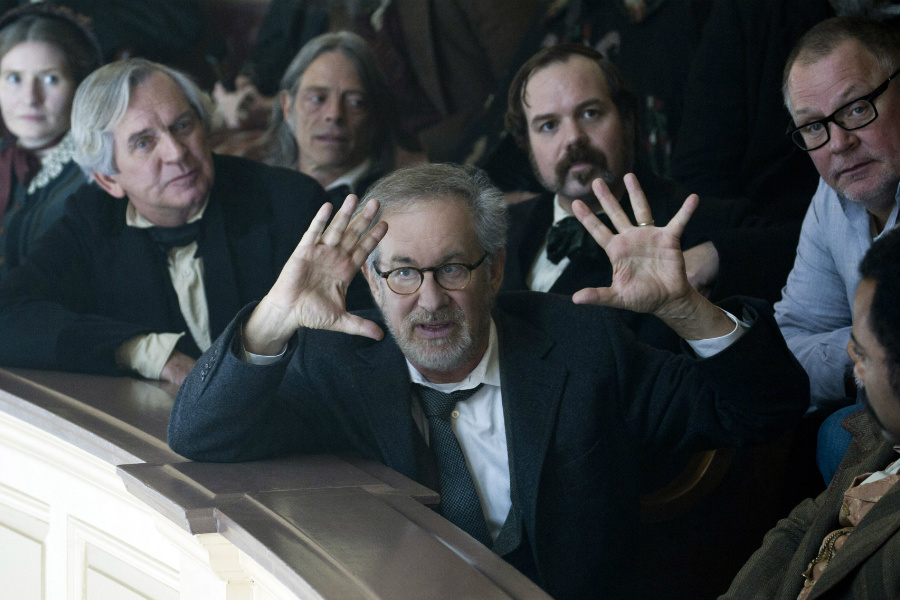
Steven Spielberg will shoot Indiana Jones 5 and West Side Story next year: We talked to Steven Spielberg recently about Ready Player One‘s use of Star Wars plus his plans to make both the next Indiana Jones installment and his West Side Story remake back to back in 2019. Read more here.
GREAT NEWS
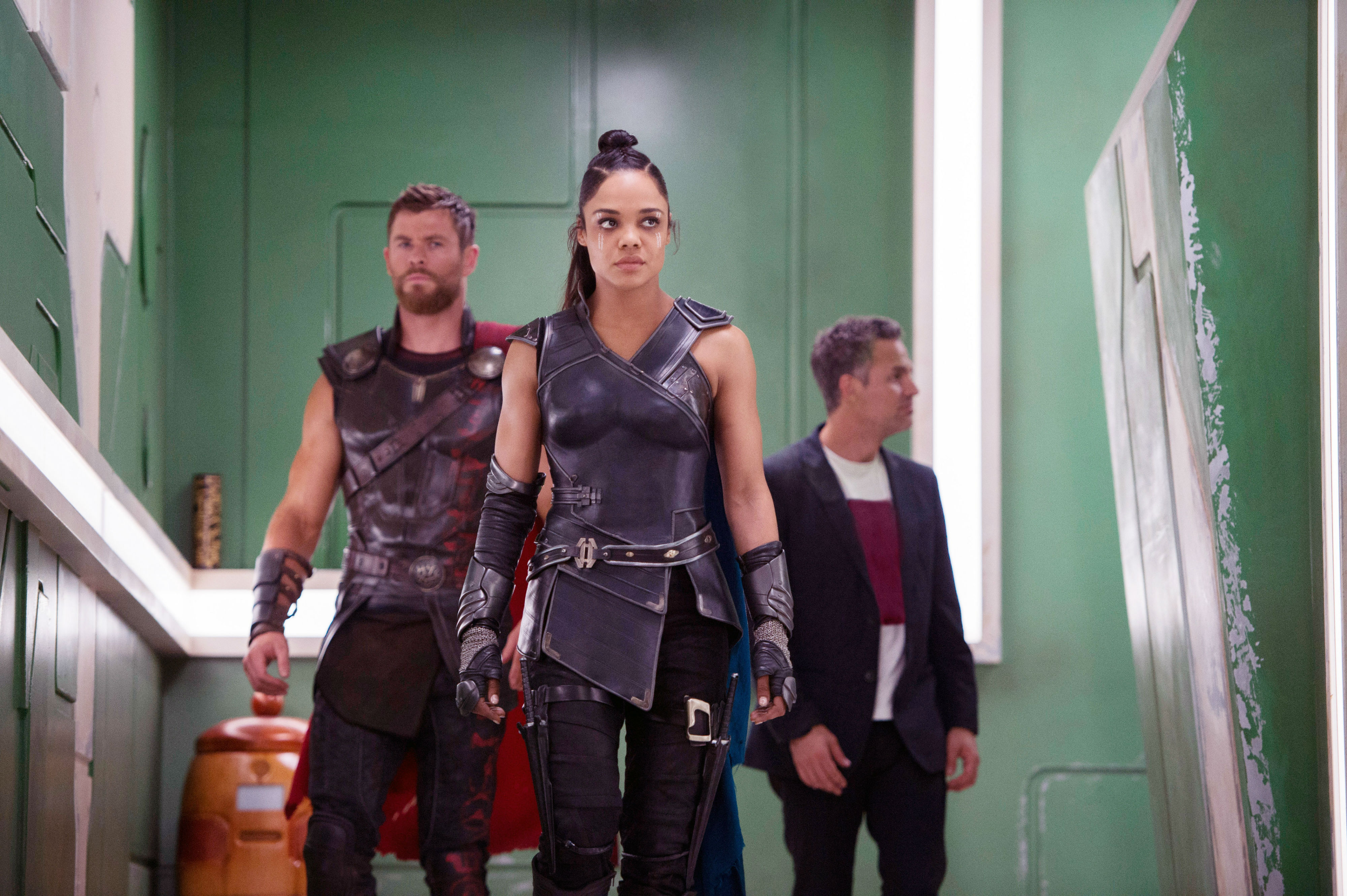
Tessa Thompson will star in the new Men in Black: The Men in Black spin-off will be a Thor: Ragnarok reunion, as Tessa Thompson increases her stardom with a lead role opposite Chris Hemsworth. Read more here.
WONDERFUL NEWS
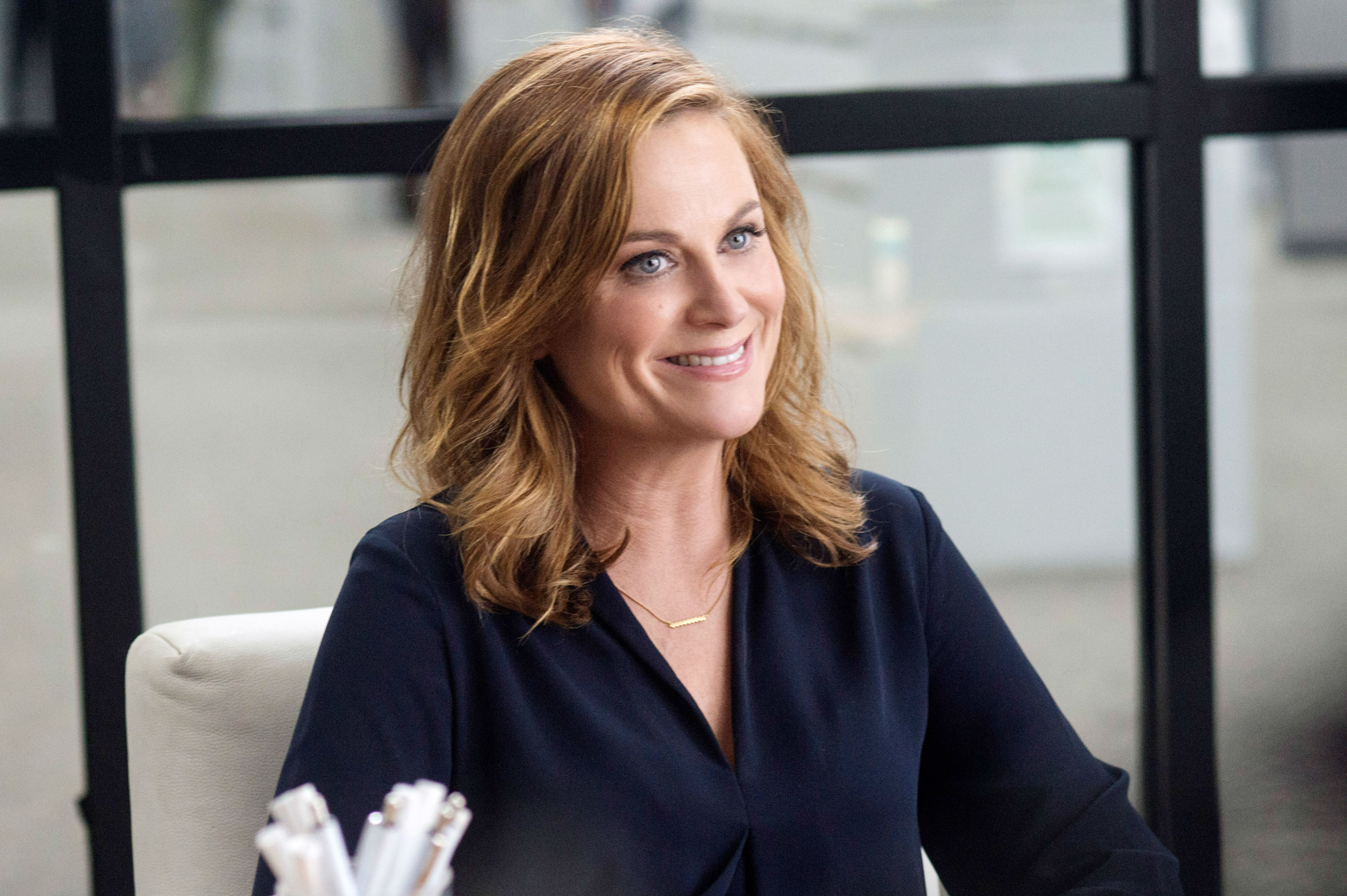
Amy Poehler is making her feature directorial debut: Speaking of reunions, Amy Poehler and Tina Fey will be back on screen together at least briefly for Poehler’s feature directorial debut. The Netflix comedy is titled Wine Country and will be about a group of women traveling to Napa for a birthday. Read more here.

SURPRISING NEWS
Shia LaBeouf will star in a Shia LaBeouf biopic: Although the names will be changed, a movie about Shia LaBeouf’s early career and relationship with his father has been scripted by LaBeouf and will star LaBeouf as the dad. Lucas Hedges has the LaBeouf role. Read more here.
EXCLUSIVE BUZZ
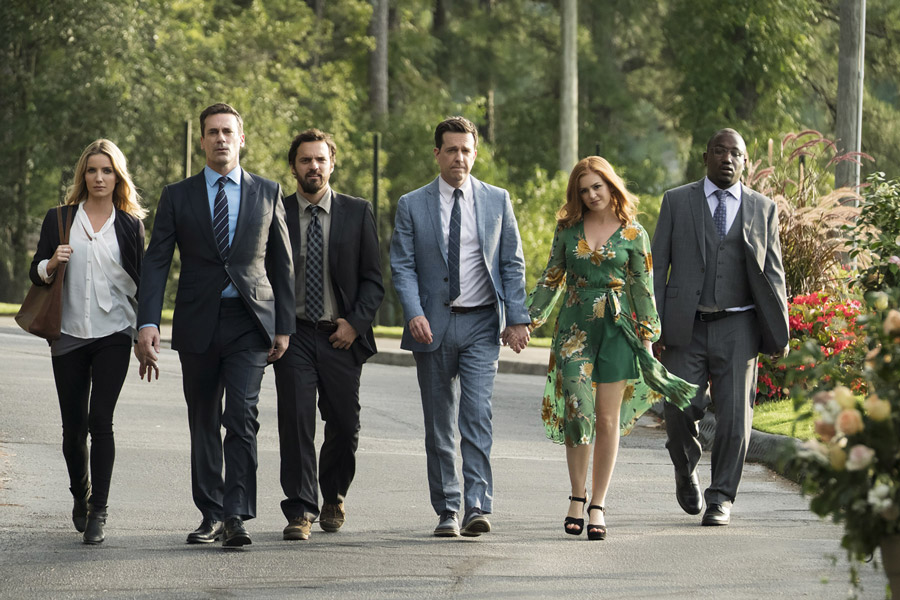
Tag will be the wildest comedy of the summer: We visited the set of Tag, the surprisingly truth-based comedy about a group of adults playing the titular game and learned all about its wild improvisational style and action-movie spectacle. Read the whole report and watch the first trailer here.

COOL CULTURE
Avengers: Infinity War Easter eggs: Following the release of a new Avengers: Infinity War trailer last week, Mr. Sunday Movies dug in to break down and showcase all its Easter eggs and other important details. Watch it below.
[embedded content]

MUST-WATCH TRAILERS
Deadpool 2 rounds up X-Force: Another red-band trailer for the untitled Deadpool sequel arrived, revealing Josh Brolin’s Cable to be the villain and giving a better look at the unification of X-Force. Watch it below.
[embedded content]

Sicario 2: Day of the Soldado expands its title and marketing: The Sicario sequel got a longer title this week as it introduced a new trailer also spotlighting Josh Brolin in a reprisal of his role from the original movie. Watch it below.
[embedded content]
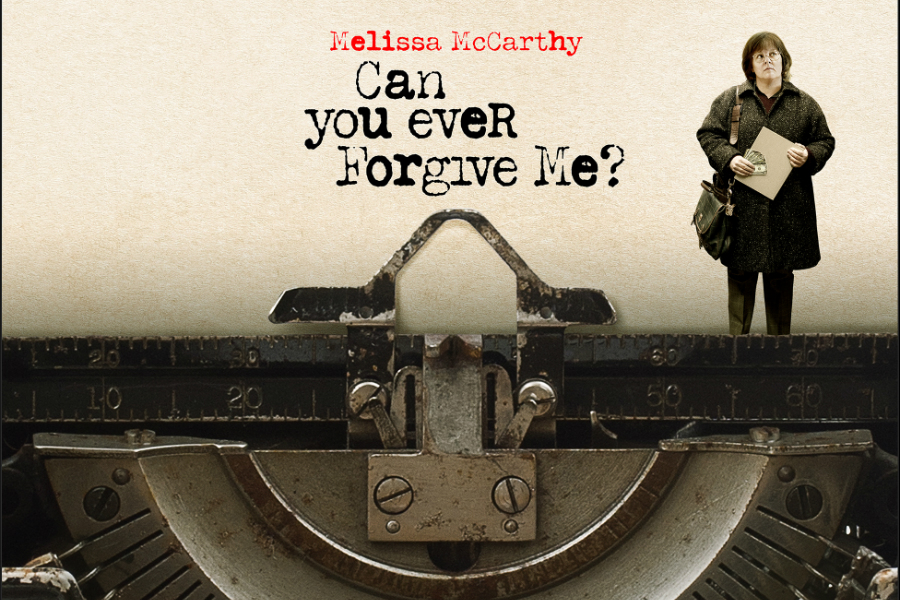
Can You Ever Forgive Me? showcases a serious Melissa McCarthy: Playing real-life disgraced author Lee Israel, Melissa McCarthy shows off her dramatic chops in the first trailer for Can You Ever Forgive Me?. Watch it here:
[embedded content]
and
