
Can Triage Nurses Help Prevent 911 Overload?

Ogechi Ukachu, one of the registered nurses recently hired to help staff D.C.’s “Right Care Right Now” program, takes a training call at the city’s 911 call center.
Selena Simmons-Duffin/NPR
hide caption
toggle caption
Selena Simmons-Duffin/NPR
Most people are familiar with some form of triage: When you go to an emergency room, you first sit down with a triage nurse who records your symptoms, takes your vital signs and assesses the urgency of your medical need.
As of Thursday, that’s happening over the phone for 911 callers in Washington, D.C., where triage nurses now sit alongside 911 dispatchers to help field calls.
Why are they there? D.C. has the highest rate of 911 calls in the U.S., and 1 in 4 of those calls is not an actual emergency — instead, it’s a twisted ankle, or a cough or a rash. The new triage program aims to improve those numbers by diverting needs that aren’t urgent to medical care that doesn’t involve an ambulance or an emergency room.
During a practice session, trainee Ogechi Ukachu, a registered nurse who has previously worked in an ER, clicks through a series of questions.
“Are you having any difficulty breathing or catching your breath?” she asks the training exercise’s pretend caller, who has complained of a sore throat. “Do you hear any weird sounds when you’re breathing — like whistling?” No, and no, the caller tells her.
It’s not an emergency, Ukachu determines, so instead of having the dispatcher send an ambulance, Ukachu gets to work finding the caller an appointment with a primary care provider who can see the patient that day.
On her computer, based on the information the caller has provided, Ukachu can see whether the patient already has a relationship with a doctor or clinic, or, if not, which community health clinic is closest. She can also see nearby clinics’ schedules for the day, so can make the patient an appointment.
The triage nurses can even coordinate free Lyft rides for people who are on Medicaid — including a stop at a pharmacy if needed.

Dr. Robert Holman, medical director of the D.C. Fire and EMS Department, got the idea for the program two years ago, when he realized the city’s system was getting backlogged with nonemergency calls.
Claire Harbage/NPR
hide caption
toggle caption
Claire Harbage/NPR
The “ride” part of the new triage service is critical, proponents say, because that’s the real emergency for many of the inappropriate calls to 911. Some callers simply have a hard time getting to the doctor in parts of the district where clinics can be miles away, and public transportation may not be readily accessible.
It has taken two years to pull off this plan. City health agencies, 22 primary care clinics, contractors and unions were all involved, under the coordination of the D.C. Fire and EMS Department.
“We’re very excited,” says Dr. Robert Holman, the department’s medical director, “and of course we all have butterflies in our stomach.”
Holman says he hit upon the idea soon after taking his job two years ago. He was looking at the city’s emergency call data and noticed that more than a hundred calls every day were for basic medical issues.
“I simply asked a question,” he says. ” ‘Wouldn’t this be simply better evaluated using a triage nurse?’ “
Other cities across the U.S., such as Louisville, Reno and the Dallas-Fort Worth area, have tried similar initiatives, Holman says. But D.C.’s program is distinct in its broad reach, and in the way it’s embedded within the 911 dispatch system.
The hope is that the triage line will save the city and insurers money — ambulances and ERs are the most expensive way to deliver care. Wait times for ambulances should go down, as should ER overcrowding.
And the patients will benefit, too, Holman believes. One example might be someone like a patient he encountered in his previous job at a walk-in health clinic; she’d come to the clinic looking for antibiotics for an infection.
“She mentioned that she’d had a bladder infection quite recently that was treated easily in an emergency department nearby,” he recalls.
Instead of just giving her the antibiotics, Holman also checked the patient’s vital signs and talked to her. Her blood glucose levels were really high. She was depressed and had stopped taking her diabetes medication, she told him.
“We could actually offer her treatment for her behavioral health problem as well as treatment of her diabetes,” he says, “in addition to [treating] her bladder infection.”
This is part of Holman’s message to city residents: Helping callers get a primary care visit, if they need one, is a service the triage nurse can provide.
“The mapping of our low-acuity callers exactly maps to where our community health centers are in Washington,” he says.
However, D.C. has a somewhat rocky history when it comes to its emergency services. In a few high-profile cases in the past, patients have died while waiting for emergency care. Some 911 callers who are advised their case isn’t an emergency may feel they’re being denied something crucial.
To address these fears in advance, Holman and his colleagues have crisscrossed the district, going to community meetings and neighborhood associations talking to residents.
Lois Wiley, a longtime resident of the LeDroit Park neighborhood, is skeptical of the triage plan and lets Holman know that at a public meeting.
“Suppose,” she says, “I say I don’t want to talk to the nurse, I want to go to the hospital?”
Holman tells her the city’s response will be based on the severity of the problem. “If you call with a sore throat,” he says, “we are not taking you to the emergency department.”
“Oh, yes you are,” Wiley says under her breath.
In the face of that sort of skepticism, Washington officials are prepared to carefully monitor how well the pilot project is working.
According to the city’s plan, every caller who gets sent to a clinic instead of the ER will be surveyed the next day about their experience. And data analysts will be checking ambulance response time, ER use, primary care use and 911 call volume.
Other cities grappling with the same difficult issues will be closely watching, too.
This story is part of NPR’s reporting partnership with local member stations and Kaiser Health News.
Today in Movie Culture: James Bond and Jason Bourne vs. John Wick, Why We Love Dwayne Johnson and More
Here are a bunch of little bites to satisfy your hunger for movie culture:
Mashup of the Day:
StryderHD imagines John Wick: Chapter 3 bringing in James Bond, Jason Bourne and more iconic action heroes to take on John Wick:
[embedded content]
Video Essay of the Day:
Speaking of James Bond, here’s a video by Rossatron that looks at why On Her Majesty’s Secret Service is maybe the best 007 movie:
[embedded content]
Camera Angle of the Day:
The shot type known as the Dutch Angle can be seen in so many movies now, but when was it first done? Now You See It examines its origins:
[embedded content]
Movie Song of the Day:
Auralnauts shares a weird retro-sounding Star Wars song set to the Sarlacc pit sequence in Return of the Jedi (via Geekologie):
[embedded content]
Vintage Image of the Day:
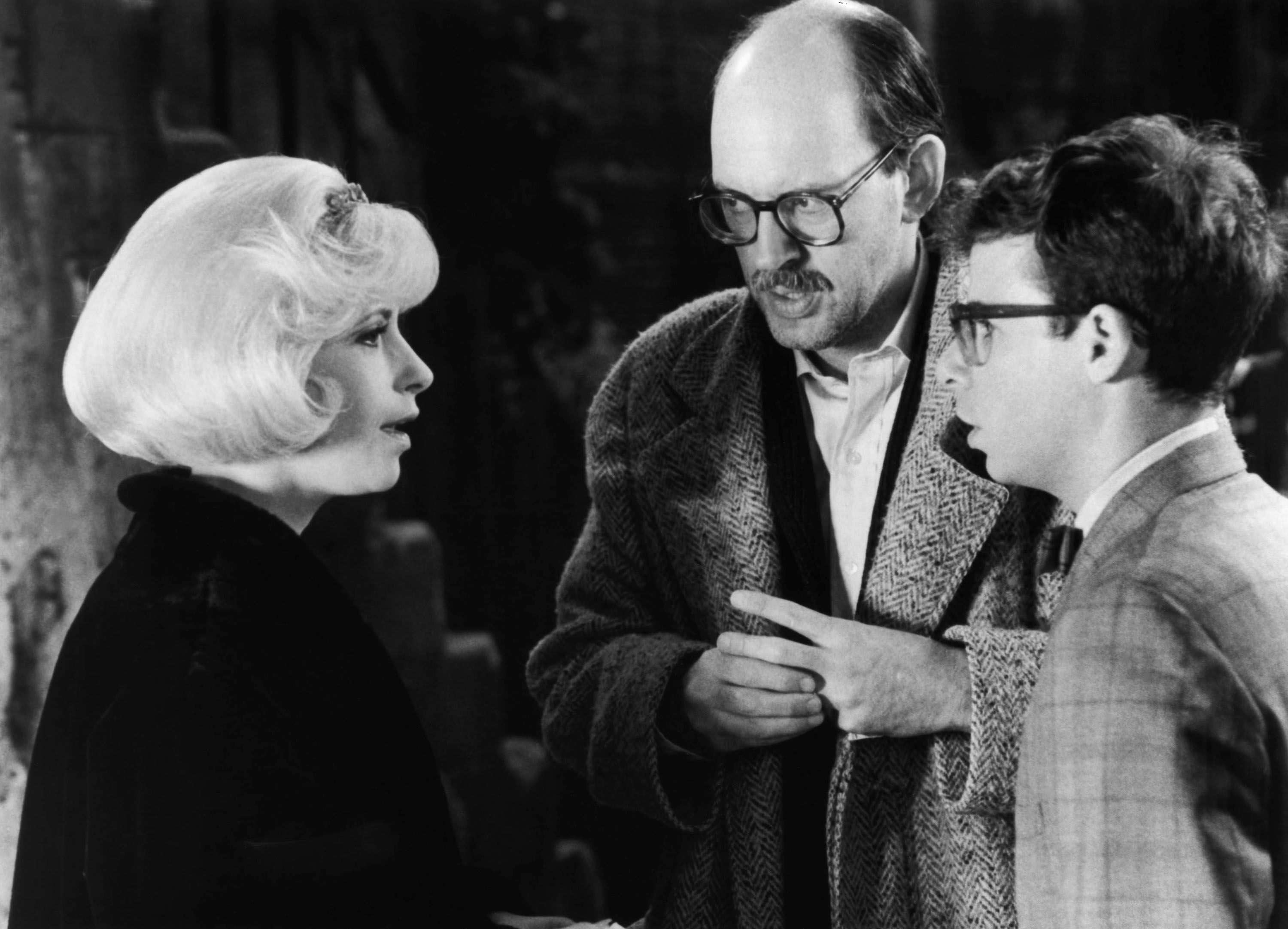
Rick Moranis, who turns 65 today, with director Frank Oz and co-star Ellen Greene on the set of the 1986 musical Little Shop of Horrors:
Actor in the Spotlight:
For Fandor, Jacob T. Swinney highlights the career of Dwayne Johnson and explores why he’s such a beloved movie star:
[embedded content]
FX Breakdown of the Day:
Weta Workshop’s Leri Greer shares a look at how he designed the kaiju of Pacific Rim: Uprising in this behind the scenes effects showcase:
[embedded content]
Movie Comparison of the Day:
Disney’s live-action Beauty and the Beast seems like an exact re-creation of the animated version, but Couch Tomato found 24 ways they’re quite different:
[embedded content]
Cosplay of the Day:
Adam Savage showcases some scary versions of Minions in this video interview with effects artist Pat Magee at Monsterpalooza 2018:
[embedded content]
Classic Trailer of the Day:
Today is the 45th anniversary of the release of Soylent Green. Watch the original trailer for the sci-fi classic below.
[embedded content]
and
Long Kept Secret, Amazon Says Number Of Prime Customers Topped 100 Million

Leon Neal/Getty Images
For years, this has been one of Amazon’s biggest secrets: how many people pay for the Prime membership.
A big round number appears to have prompted CEO Jeff Bezos to finally lift the veil: “13 years post-launch, we have exceeded 100 million paid Prime members globally,” he wrote in this year’s letter to shareholders.
He added that in 2017, more new members joined Prime than in any other year. The membership generally costs $99 a year in the U.S. and lures people in with free two-day shipping and access to video and music streaming. Last year and earlier this year, Amazon added discounted Prime rates for recipients of Medicaid and government assistance programs.
Prime subscribers are known to be more lucrative to Amazon, estimated to spend twice as much money every year than non-members, according to Consumer Intelligence Research Partners. Analysts have been projecting the number of Amazon’s paid subscribers as around 65 million to 85 million, while the company had historically just referred to “tens of millions.”
In a letter to shareholders released in 2016, Bezos wrote: “We want Prime to be such a good value, you’d be irresponsible not to be a member.”
Annual letters from Bezos to shareholders are a popular read in the business world. In this year’s note, he muses about the value of setting the highest standards (“I believe high standards are teachable”), the art of great memos (“They simply can’t be done in a day or two”) and the human nature of ever-rising customer expectations (“We didn’t ascend from our hunter-gatherer days by being satisfied”).
Wednesday’s letter, in running through Amazon’s recent milestones, highlights the sheer scope of the company’s reach: its massive cloud-server business, smart assistant Alexa and the Alexa-powered home devices, award-winning TV and movie production, streaming deals with cable and TV networks, a recent push into fashion, the launch of a cashierless store in Seattle and the blockbuster $14 billion acquisition of Whole Foods.
Not mentioned were Amazon’s relatively nascent push into home security with the purchase of smart-doorbell maker Ring and the company’s for-now vague plans in health care, which had spooked the industry. In Wednesday’s letter, Bezos said Amazon employs more than 560,000 globally.
Amazon has also dramatically grown the number of small businesses and other third-party sellers who compete alongside Amazon’s own retail business on the shopping platform. In the letter, Bezos said 2017 marked the first year when more than half of the goods sold on Amazon worldwide were from third-party sellers.
The Wednesday News Roundup

Most Recent Shows
Wednesday, Apr 18 2018Former [First Lady Barbara Bush died Tuesday](https://www.washingtonpost.com/local/obituaries/barbara-bush-matriarch-of-american-political-dynasty-dies-at-92/2018/04/17/200bfaee-40de-11e8-bba2-0976a82b05a2_story.html?noredirect=on&utm_term=.3b5642fe4b46). She was 92. After several hospitalizations, Bush opted to begin receiving “comfort care” earlier this week, according to a statement from the family.…
Wednesday, Apr 18 2018A new podcast called “Buried Truths” tells the story of a man who lost his life for voting.
Wednesday, Apr 18 2018You read that right.
Tuesday, Apr 17 2018You’re getting smarter, stronger, kinder …
Shark Attacks Force Cancellation Of Australian Surfing Competition

Australia’s Julian Wilson cuts back on a wave during his heat against Michel Bourez on day 5 of last year’s Margaret River Pro Surfing Competition.
David Woodley/Action Plus via Getty Images
hide caption
toggle caption
David Woodley/Action Plus via Getty Images
Australian authorities have shut down a major international surfing event after recreational surfers were attacked by sharks near the site of the competition on the country’s southwest coast.
The World Surf League cancelled the remainder of this year’s Margaret River Pro, which began April 11 and was to finish on Monday. The decision came after the two surfers, who were not in the competition, were mauled in separate attacks earlier this week at surf spots only a few miles from the event’s main venue in West Australia.
In announcing the cancellation, the WSL said the safety of surfers was paramount and that the attacks had “crossed the threshold for what is acceptable” risk for competitors.
Margaret River Pro Cancelled Due to Shark Activity. Message from WSL CEO Sophie Goldschmidt here: https://t.co/pR1iKJhPMMpic.twitter.com/zskvtOL0WE
— World Surf League (@wsl) April 18, 2018
“If we decided to continue the event under the current circumstances and something terrible were to take place, we would never forgive ourselves,” WSL chief executive Sophie Goldschmidt was quoted as saying by The Sydney Morning Herald.
On Monday, Alexander Travaglini, 37, was knocked from his board at Cobblestones off Gracetown by a suspected great white shark. Fellow surfers helped him to shore. He required surgery to both legs but is reportedly in good condition and recovering.
According to the Australian Broadcasting Corp. (ABC) surf photographer Peter Jovic said he witnessed the attack.
“‘[I] saw the guy who had been attacked get separated from the [surf] board and then start to paddle for an inside wave, which he managed to body surf all the way in.
They got him to shore and started working on him to stem the bleeding.'”
Hours later and just a mile and a half away from the first attack, 41-year-old Jason Longgrass was bitten on the leg at Lefthanders break. In a report by Australia’s Channel 7 cited by The West Australian, Longgrass is seen in cell phone video as he fights to escape the shark.
Once ashore, Longgrass is ambulatory, but with a deep bite mark on his right thigh.
The Herald says that the attacks add to uncertainty about the future of the Margaret River event, where “beached whales [attract] sharks” and contribute to their “aggressive behaviour.”
According to the newspaper, “One-time world champion Gabriel Medina expressed fears about re-entering the water following the shark attacks and current world No.1 Italo Ferreira echoed his sentiments.”
Today in Movie Culture: Imagining a 1990s 'X-Men' Movie, the Truth About Luke Skywalker and More
Here are a bunch of little bites to satisfy your hunger for movie culture:
Alternative Timeline Movie of the Day:
With fans talking about who’d have starred in an X-Men movie in the ’90s, BossLogic shows us Nicolas Cage as Wolverine, Jeff Bridges as Magneto, Jada Pinkett Smith as Storm and more:
Had a little free time to jump on this whole 90s thing, it was fun ?? 90s cast #xmenpic.twitter.com/x5dbUKG9i4
— BossLogic (@Bosslogic) April 17, 2018
Continued – @jadapsmith as #storm 90s #xmen cast pic.twitter.com/r4qiNL0HZZ
— BossLogic (@Bosslogic) April 17, 2018
Fan Theory of the Day:
WhatCulture shares the theory that Luke Skywalker was never supposed to be a great Jedi in the original Star Wars movies:
[embedded content]
Movie Score Parody of the Day:
Because a lot of movie score albums contain spoilery titles, here’s a funny fake look at the Avengers: Infinity War soundtrack:
When track titles reveal spoilers…#AvengersInfinityWarpic.twitter.com/ZXI5f6N7Ue
— Matt Neglia (@NextBestPicture) April 16, 2018
Truthful Marketing of the Day:
Honest Trailers takes on Edgar Wright’s Baby Driver, selling it as just a hipster’s Fast and the Furious:
[embedded content]
FX Breakdown of the Day:
See how the weather and elements were created for Wes Anderson’s Isle of Dogs in this behind the scenes featurette:
[embedded content]
Vintage Image of the Day:
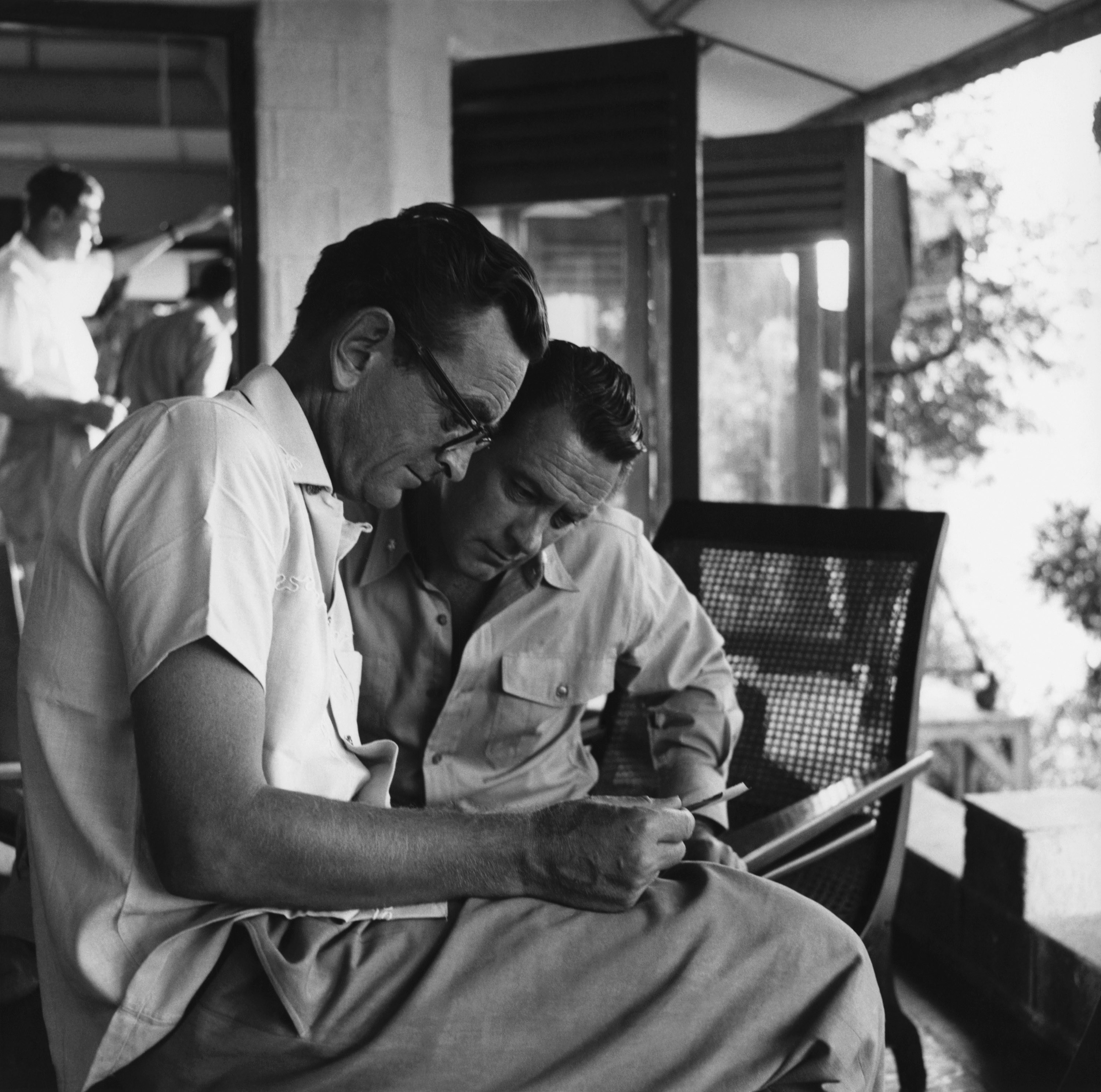
William Holden, who was born 100 years ago today, receives direction from David Lean on the set of the 1957 movie The Bridge on the River Kwai:
Mashup of the Day:
What if Quentin Tarantino had directed The Wizard of Oz? Here’s FBE with an animated parody mashing it with Kill Bill for the answer:
[embedded content]
Movie Trivia of the Day:
IMDb shares nine interesting details you need to know about Pixar’s upcoming sequel The Incredibles 2:
[embedded content]
Movie Food of the Day:
The latest edition of Binging With Babish shows how to make the chateaubriand steak from The Matrix:
[embedded content]
Classic Trailer of the Day:
This weekend is the 80th anniversary of the release of Test Pilot starring Clark Gable and Myrna Loy. Watch the original trailer for the classic drama below.
[embedded content]
and
T-Mobile Fined $40M Over 'False Ring Tones' That Masked Failed Calls

Alan Diaz/AP
T-Mobile has agreed to pay a $40 million fine to settle a federal investigation into its former practice of faking ring tones when calls couldn’t connect in rural areas. The Federal Communications Commission announced the settlement Monday, saying that in the course of the agency’s investigation, T-Mobile acknowledged it had injected such false ring tones into “hundreds of millions of calls.”
“It is a basic tenet of the nation’s phone system that calls be completed to the called party, without a reduction in the call quality—even when the calls pass through intermediate providers,” FCC Chairman Ajit Pai said in a statement. “The FCC is committed to ensuring that phone calls to all Americans, including rural Americans, go through.”
In the order released Monday, the agency noted it had received complaints from callers and several local telephone companies in rural Wisconsin. The complaints alleged that, though their call attempts had failed, they had nevertheless heard ringing on the other end — prompting suspicions T-Mobile was violating a previous FCC order by prematurely triggering the sounds of a connected phone call in rural areas.
“That is, the calling party believes the phone is ringing at the called party’s
premises when it is not,” that order explained. “An originating or intermediate provider may do this to mask the silence that the caller would otherwise hear during excessive call setup time. As a result, the caller may often hang up, thinking nobody is available to receive the call.”
T-Mobile acknowledged the “oversight” in a statement to NPR on Tuesday, adding that the issue was fixed early last year.
“Our actions have always been focused on better serving our customers and the ringtone oversight, which was corrected in January 2017, was unintentional,” the company said. “We have settled this matter — and will continue to focus on our mission to change wireless for good for consumers everywhere.”
The company is not the first to be dinged by the FCC for troubles completing calls in rural areas. The agency notes that this is the sixth such settlement.
Not everyone was satisfied with the agreement, however.
Mignon Clyburn, an FCC commissioner, issued a strongly worded dissent to Monday’s decision, objecting to what she described as a “severely mismatched consent decree.”
For one thing, Clyburn said the fine on the major publicly traded corporation was “dwarfed” by penalties levied on individuals for comparable violations; for another, she criticized the fact that all of the money collected on that fine would be going to the U.S. Treasury and not the actual consumers affected.
“How many times was a loved one calling to check on the wellbeing of an elderly relative, only to have the phone ring and ring with no answer? How many times did a consumer try calling his or her doctor for an urgent refill of an important prescription, only to think that nobody was picking up on the other end of the call?” she asked.
“Childcare providers, employers, local businesses, old friends—what critical information was missed?”
Federal Appeals Court Finds State's Drug Price-Gouging Law Unconstitutional

Maryland’s overturned law restricted the price of generic drugs, and had been hailed as a model for other states. It’s one of a number of state initiatives designed to combat rapidly rising drug prices.
Towfiqu Photography/Getty Images
hide caption
toggle caption
Towfiqu Photography/Getty Images
States are continuing to do battle with budget-busting prices of prescription drugs. But a recent federal court decision could limit the tools available to them — underscoring the challenge states face as, in the absence of federal action, they attempt on their own to take on the powerful drug industry.
The 2-to-1 ruling Friday by the U.S. Fourth Circuit Court of Appeals invalidated a Maryland law meant to limit “price-gouging” by generic drug manufacturers, inspired by cases such as that of former Turing Pharmaceutical CEO Martin Shkreli, who raised one generic drug’s price 5,000 percent after buying the company.
The law, which had been hailed as a model for other states, is one of a number of state initiatives designed to combat rapidly rising drug prices. It gave the state attorney general power to intervene if a generic or off-patent drug’s price increased by 50 percent or more in a single year.
If dissatisfied with the company’s justification, the attorney general could file suit in state court. Manufacturers could face a fine of $10,000 and potentially have to reverse the price hike. The generics industry was fiercely critical of the law.
“We are evaluating all options with regard to next steps,” Maryland Attorney General Brian Frosh said, in a written statement. His office would not elaborate further.
The state could appeal to have the case heard “en banc,” meaning by the full Fourth Circuit, as opposed to just the three judges.
Such appeals aren’t commonly granted, but this law could be a strong candidate, suggests Dr. Aaron Kesselheim, an associate professor at Harvard Medical School who researches drug-price regulation.
The Friday ruling looms large as other state legislatures grapple with ever-climbing drug prices.
Similar price-gouging legislation has been introduced in at least 13 states this year, though none of those measures became law, according to the National Conference of State Legislatures. Three other bills failed to gain passage.
The NCSL also cited the law in a March advisory for states seeking new approaches to regulating drug prices.
The appeals court’s finding could have a chilling effect on such efforts, especially as more state legislatures wrap up business for 2018.
“A negative court ruling will put a damper or a pause on state activities,” says Richard Cauchi, NCSL’s health program director. “Unless this topic is your number one priority of the year, your legislators are juggling multiple bills, multiple strategies. When bill three gets in trouble, they move to bill four.”
The appeals court held that Maryland’s law overstepped limits on how states can regulate commerce — specifically, a constitutional ban on states controlling business that takes place outside their borders. The majority ruling argues that since most manufacturers of generic drugs and medication wholesalers engage in trade outside Maryland, the state cannot control what prices they charge.
In a dissenting opinion, the panel’s third judge argued Maryland can regulate the drug prices charged within the state since it only is meant to affect medications being sold to its own residents.
Kesselheim, in an article published last month in the medical journal JAMA, argued a similar point.
Regardless, striking down a law on constitutional grounds can be particularly discouraging, says Rachel Sachs, an associate law professor at Washington University in St. Louis, who researches drug regulations.
“If it had been a rejection on vagueness grounds, that’s something you can cure with a more specific statute,” she says. “But the fact that they said this is unconstitutional poses real concern for other states.”
That’s important. While the federal government has talked a big game on bringing down drug prices, it’s done little. Instead, states have taken the lead — spurred by the budget squeeze pricey prescriptions impose on their Medicaid programs and on benefits packages for state employees.
But states have far fewer tools at their disposal than does Congress. Most state laws so far only tackle pieces of the problem — targeting a specific drug or particular practice, specialists in health law say.
“We’ll get more broad and better evolution on this issue if the federal government decides to take it seriously — which it hasn’t so far,” Kesselheim says.
In the meantime, Maryland’s law is only one of a bevy of approaches.
Other states have focused on price transparency laws. In California, drug companies must disclose in advance if a price might increase by more than a set percent, and the companies must justify that increase.
Drugmakers have sued to block the California law.
New York has limited what the state will pay for medications, establishing a process to review if expensive drugs are priced out of step with their medical value.
Since 2017, a number of states have passed laws regulating pharmaceutical benefits managers — the contractors who negotiate discounted drug coverage for insurance plans, but who rarely reveal what level of discount they actually pass on to consumers.
Health policy specialists expect that activity to continue, especially as drug prices show little sign of letting up.
“The states are going to keep trying and experimenting,” Sachs says. “This is a problem that isn’t going away.”
Even efforts such as Maryland’s — which targeted price gouging — will likely remain at the forefront.
“I don’t think this is the end of states trying to do something on price gouging,” says Ellen Albritton, a senior policy analyst at the consumer advocacy group Families USA, who consults with states on drug pricing policy. “It’s such an issue that offends people’s sensibilities. It’s crazy [that] people can do this.”
Today in Movie Culture: Gabriel Luna as the Terminator, A Quiet Place' Scene Break Down and More

Here are a bunch of little bites to satisfy your hunger for movie culture:
Casting Rendering of the Day:
With Gabriel Luna cast as the Terminator in the reboot, BossLogic shows us what he could look like as a T-800:
Congratulations to my boy @IamGabrielLuna#Terminatorpic.twitter.com/zYO7C0V9p2
— BossLogic (@Bosslogic) April 14, 2018
Director Commentary of the Day:
For Vanity Fair, John Krasinski breaks down one of the most memorable scenes in his horror hit A Quiet Place:
[embedded content]
Movie Parody of the Day:
Speaking of A Quiet Place, here’s a perfect parody of the movie from The Late Late Show With James Corden:
[embedded content]
Movie Trivia of the Day:
With Super Troopers 2 out in theaters this Friday, CineFix shares nine things you probably don’t know about the original:
[embedded content]
Vintage Image of the Day:
Charlie Chaplin, who was born on this day in 1889, eats lunch on the set of The Gold Rush in 1924:
Actor in the Spotlight:
IMDb’s No Small Parts highlights the movie and TV career of The Walking Dead star Lennie James:
[embedded content]
Remade Trailer of the Day:
Huxley Berg Studios re-created the latest Deadpool 2 trailer in Lego and announced they’re trying to redo the whole first movie in the same style:
[embedded content]
Fan Build of the Day:
The most impressive Star Wars fan of the day is the guy who build this drivable TIE Fighter (via Geekologie):
[embedded content]
Cosplay of the Day:
Today is the 30th anniversary of the Japanese release of My Neighbor Totoro, so this video of Adam Savage repairing a Totoro cosplayer’s outfit is pefectly timed:
[embedded content]
Classic Trailer of the Day:
Today is the 15th anniversary of the release of Christopher Guest’s A Mighty Wind. Watch the original trailer for the classic comedy below.
[embedded content]
and
Young People More Likely To Shift Toward Supporting Abortion Rights, Poll Finds

A new national poll finds a growing divide between younger and older Americans on abortion and reproductive health care — a shift that may be driven in large part by changing attitudes toward religion.
In the survey from the Public Religion Research Institute, or PRRI, respondents between the ages of 18 and 29 were more likely to report that their views on abortion had changedin recent years – and when they moved, they tended to move in favor of abortion rights. Of those young people whose opinions had changed, 25 percent said they became more supportive of legalized abortion compared to 9 percent who became less supportive.
Older respondents, meanwhile, were less likely to report they had changed their opinions; those who had changed their minds were more likely to have shifted towardopposing abortion rights.
“This moving in opposite directions has led us to a greater polarization between the generations on this issue,” said PRRI CEO Robert Jones.
The poll also looked at personal beliefs about abortion – in other words, opinions on the morality or ethics of abortion apart from the legal or political status of the procedure. More than half of Americans, 54 percent, said abortion “goes against my personal beliefs,” while 44 percent said it did not.
A substantial number of respondents appeared to separate their personal views from their public policy position; 34 percent said that while abortion violates their personal beliefs, they believe it should be legal in most or all cases.
Here, too, a generational divide was apparent: 60 percent of older respondents said abortion violates their personal beliefs, compared with 44 percent of younger people.
Jones said he believes the generational divide on abortion is explained at least in part by a larger shift among young people away from religion, particularly among white evangelical Protestants.
While some religious traditions support abortion rights, Jones notes that white evangelicals have consistently opposed abortion in larger numbers than other religious groups. In the PRRI poll, 78 percent of white evangelical Protestants said abortion goes against their personal religious beliefs compared with 59 percent of Catholics, 56 percent of black Protestants and 54 percent of white mainline Protestants.
But while white evangelicals remain a dominant religious group in American, the tradition is losing younger members.
Taken together, Jones said that may help to account for generational shifts in attitudes toward abortion.
Americans under 30 also were more likely than their elders to say that health insurance should cover abortion services and that the procedure should be available in their local communities.
“I think part of that is a clue to how younger people are seeing this, I think, less as a culture war, political issue, and more really as a health care issue,” Jones said. “And that I think puts it in different political terrain for younger people today.”
Overall, more than half of respondents, 54 percent, said abortion should be legal in “all or most cases,” while 43 percent said it should usually or always be illegal. A majority, 51 percent, said publicly funded health insurance programs, such as Medicaid, should not cover abortion.
The survey found one point of broad agreement: nearly two-thirds of Republicans and three-fourths of Democrats said elected officials are spending too much time talking about abortion rather than focusing on other issues.
The survey was conducted in March 2018 among 2,020 adults ages 18 and older living in the United States. Respondents were contacted by telephone, including cellphones, and the interviews took place in English and Spanish. The margin of error is 2.6 percentage points.
