Articles by admin

No Image

Retaliatory Tariffs Loom Over 'America's Oldest Ice Cream Company'

Bassetts Ice Cream in Philadelphia’s Reading Terminal Market bills itself as the oldest U.S. ice cream maker. Owner Michael Strange worries about the trade war hurting his business.


MICHEL MARTIN, HOST:

Next, we’re going to hear a story of a very different business that you might not associate with tariffs – Bassetts Ice cream.

UNIDENTIFIED PERSON #1: Thank you, sir.

UNIDENTIFIED PERSON #2: Thank you.

MARTIN: They say they are the oldest ice cream maker in the country.

MICHAEL STRANGE: Our company was founded by my great-great-grandfather in 1861.

MARTIN: That’s owner Michael Strange. He meets us at the bustling Reading terminal in downtown Philadelphia. It’s in a huge indoor market featuring row after row of vendors selling everything from freshly butchered meats to handmade doughnuts to handmade soaps and everything in between. The market opened in 1893, and Bassets has been selling ice cream here ever since. Just don’t make the mistake of calling it premium ice cream.

STRANGE: The term we use is super premium. And I didn’t come up with that myself. But it’s primarily based on the butter fat or milk fat that’s in the product. Ours is a 16.5 percent milk fat, which lends our ice cream that rich, creamy, silky mouthfeel.

MARTIN: Before we got a chance to taste that super premium ice cream, we asked Strange to talk tariffs. They’ve been very much on his mind.

STRANGE: Tariffs are definitely affecting our international business, most particularly our shipments to China. The tariff increases that have been going on back and forth between the U.S. and China were applied to ice cream imports from the U.S. into China. We started shipping our ice cream to China in 2008, and at that time, there was a 19 percent tariff on our product, which is significant. But we were able to capture that tariff in our pricing and still grow our business there.

With the recent back and forth of increases in the tariff, China added an additional 25 percent tariff to ice cream imports from the U.S., making it a total of a 44 percent tariff on ice cream shipped from the U.S. to China. That is such a large and measurable number that I regret to tell you we have not shipped to China since the imposition of that additional tariff. We do have an order in hand from our China customer. He’s a little more sanguine about the tariff increase than I am. He seems convinced that, sooner rather than later, both sides will roll back the tariffs after we come to some sort of an agreement. I am a little more pessimistic about whether or not these tariffs are going to be rolled back any time in the near future.

And, as a result of that, we are operating our business on the assumption that, while we have one order in hand that we expect to ship, I am operating on the assumption that that is going to be our last shipment to China until such time as those tariffs get rolled back. I hope I am wrong, and I could well be wrong. But, as of right now, we’re running our business assuming China is no longer going to be a viable market for us.

MARTIN: Now, some people we met in Pennsylvania like the folks at American Keg told us they are optimistic the tariffs will help bring business back to the U.S. and revitalize their companies. So we asked Michael Strange why he doesn’t see it that way.

STRANGE: Well, the thought as to whether or not implementing tariffs on China will ultimately cause them to reduce tariffs on U.S. products imported to China – that’s above my pay grade. I don’t know if that plan is going to work or not. But I do know that, in the short term, it is measurably affecting our total business. It would mean that we would have to lay people off if the other components of our business weren’t growing as rapidly as they are. So we don’t expect to lay anyone off. But, by the same token, we will certainly delay hiring anybody.

MARTIN: With the elections just a few days away, Strange told us that he doesn’t like to get involved in politics, but he is hoping Democrats take control of Congress so they can push back on the president.

STRANGE: I’ll be very candid. And I don’t know whether you’ll put this on the air or not, but I honestly – I question a lot of what our current president does. And I think a lot of it is just shooting from the hip, knee-jerk reaction without deep, considered thinking. And, honestly, I don’t think he’s really thought it through. I think he is shooting from the hip, and it is what makes Donald Trump feel good is what our policies are. To be honest with you, we’re just a little company. My sales are a tiny, tiny fraction of what most international companies enjoy. But it’s an important topic for me.

MARTIN: That was Michael Strange, owner of Bassetts Ice Cream in Philadelphia. Now, we wanted to talk more about how tariffs are affecting the business environment, so we called NPR’s Uri Berliner. He’s a senior editor covering business and the economy. Uri, thanks so much for joining us.

URI BERLINER, BYLINE: Sure thing.

MARTIN: So we just heard from two business leaders. One is a supporter of tariffs, and he said he’s cautiously optimistic that they will help. That was Paul Czachor, the CEO of American Keg. But he’s had to lay off workers. And then the other, Michael Strange of Bassetts Ice Cream, has not had to lay off workers, but he’s clearly worried, and he’s vocally opposed to more tariffs. And they both say that they are very uncertain about what is in store. So the first thing we wanted to ask is, is this uncertainty something that you are hearing, you know, across the country, you know, apart from these two guys that we talked to?

BERLINER: Well, yes. There’s a tremendous amount of uncertainty ranging from the very largest companies – companies like Ford and GM – to small companies like this keg maker because no one really knows where things are going. It was just in late September that the Trump administration imposed the last very big batch of tariffs on China – tariffs on $200 billion worth of Chinese goods. That’s a lot. That’s a huge move.

But we don’t even know where this is going. President Trump spoke by phone with Chinese President Xi Jinping this week about trade. He said they had a very good conversation. They’re supposed to meet later this month in Argentina at a summit, the G20 summit. Maybe there’ll be some progress there. But if there isn’t – if these two countries continue with the standoff – there’s just tremendous uncertainty about where this goes.

MARTIN: Is there any sense of winners and losers so far?

BERLINER: Yes. U.S. steelmakers, companies that make steel, say they are benefiting from the tariffs – companies like U.S. Steel and Nucor. There are a lot of companies that are paying a price from the tariffs already. And what we’re seeing mostly because they were imposed earlier are the tariffs on steel and aluminum. So a lot of companies that use steel for their production – everything from this maker of kegs to makers of heavy equipment like Caterpillar – they have to pay more for the steel they bring in or the steel that they buy. And that’s having an effect on their bottom line. Now, for the most part, consumers have been pretty protected from the tariffs. But this last round of tariffs on $200 billion worth of Chinese goods – that’s going to impact all kinds of consumer goods.

MARTIN: So is there any sense – given everything you just told us, is there any sense of what we should be looking at as this story continues to develop?

BERLINER: To some extent, the playing field has been cleared. The – you know, the U.S. and Canada and Mexico renegotiated a trade agreement. The tensions with the EU have calmed down somewhat. But really, now this is completely about the U.S. and China. And does this become an all-out war that lasts for years over that really these two countries become sort of fierce rivals, if not enemies, in the world of the – economics or whether these two countries see that there’s some benefit in ratcheting back the tension because they’ll both be harmed by that. This is the thing to watch for right now.

MARTIN: That’s NPR’s Uri Berliner.

Uri, thanks so much.

BERLINER: You’re welcome.

Copyright © 2018 NPR. All rights reserved. Visit our website terms of use and permissions pages at www.npr.org for further information.

NPR transcripts are created on a rush deadline by Verb8tm, Inc., an NPR contractor, and produced using a proprietary transcription process developed with NPR. This text may not be in its final form and may be updated or revised in the future. Accuracy and availability may vary. The authoritative record of NPR’s programming is the audio record.

Let’s block ads! (Why?)


No Image

Saturday Sports: University Of Maryland Football Team Controversy

NPR’s Scott Simon speaks to ESPN’s Howard Bryant about the recent controversy surrounding the University of Maryland’s football team.


(SOUNDBITE OF MUSIC)

SCOTT SIMON, HOST:

And controversy continues to surround the University of Maryland’s football program following the death of a player after a practice last spring. We’re going to turn now to Howard Bryant of espn.com and ESPN The Magazine. Howard, thanks so much for being with us.

HOWARD BRYANT, BYLINE: Good morning, Scott.

SIMON: And this is a controversy, we don’t want to forget, that began with a tragedy – a 19-year-old player, Jordan McNair, died of heat stroke five months ago following a practice. The Maryland coach, D.J. Durkin, was put on administrative leave, returned this week, then fired. There seems to be what amounts to an uprising or standing up to the coach on the team, doesn’t there?

BRYANT: Well, not just standing up on the members – on the part of the members of the team but also from the university students. And I think that’s one of the things that’s been very interesting watching this is the impunity in which the regents – the board of regents at the University of Maryland seem to believe that D.J. Durkin would be allowed to come back and have there be no repercussions. I think that when you watch this story and especially if you take this story and you combine it with what’s been taking place in the university systems across the country – whether it’s Ohio State, whether it’s Michigan State with the Larry Nassar case, whether it is Baylor University – that the role of athletics and sports, the power that these athletic departments have is so enormous that they really do believe they’re invincible. And the thing that bothered me most about this, Scott, was the notion that the players and the family, the McNair family, and that the entire country would just sit and expect this to be normal, that this football coach would come back and that there would be no repercussions at all for a 19-year-old dying on the field.

SIMON: I mean, does it all trace back to the money?

BRYANT: It always traces back to the money. And I think that this goes back to this question that we’ve been having whenever we talk about this for the last dozen years that I’ve been on this show. We talk about the power of sports, the power – the money that these universities bring in from basketball and from football. The fact that the players are unpaid and the fact that the players have – I’m sorry – that the coaches have so much power. And D.J. Durkin – when you look at his settlement…

SIMON: And they’re paid plenty, the coaches.

BRYANT: And they’re paid plenty. And I was just about to say, he’s got a five-million-dollar settlement that they’re working out right now. And so who runs the show over here? And you have this battle – it’s a very intense one – of, does the university control sports, or does sports – or do sports control the university?

SIMON: And, I mean, I think it also raises a question about, you’ve got to ask, what is a coach? Coaches are supposed to take care of their players, aren’t they, especially at the college level?

BRYANT: Well, exactly, especially at the college level. And when you look at these recruiting stories and the trips that they make to these families, the very first thing that they say is we are here to take care of your child, not only as a star athlete but as a person. We’re going to grow them as people, as men, these great leaders of men. You hear all of this. And it just rings so hollow when you recognize that what this is really all about is money. And also on top of that, I think that the more important thing or even the equally important thing that I saw from Maryland was the fact that the students see through this and that they were out in force. And when we talk about change and challenge to systems, you have to be out in the street. And I think that the University of Maryland, whether it was the players being vocal online, with the students being vocal online and also the students being vocal out in the university campus, you can’t ignore those numbers. Without those numbers, without people talking, nothing happens.

SIMON: Howard Bryant, thanks so much.

BRYANT: Thank you.

Copyright © 2018 NPR. All rights reserved. Visit our website terms of use and permissions pages at www.npr.org for further information.

NPR transcripts are created on a rush deadline by Verb8tm, Inc., an NPR contractor, and produced using a proprietary transcription process developed with NPR. This text may not be in its final form and may be updated or revised in the future. Accuracy and availability may vary. The authoritative record of NPR’s programming is the audio record.

Let’s block ads! (Why?)


No Image

The Week in Movie News: 'Flash Gordon' Remake Gets a Director, 'Clueless' Remake Announced and More

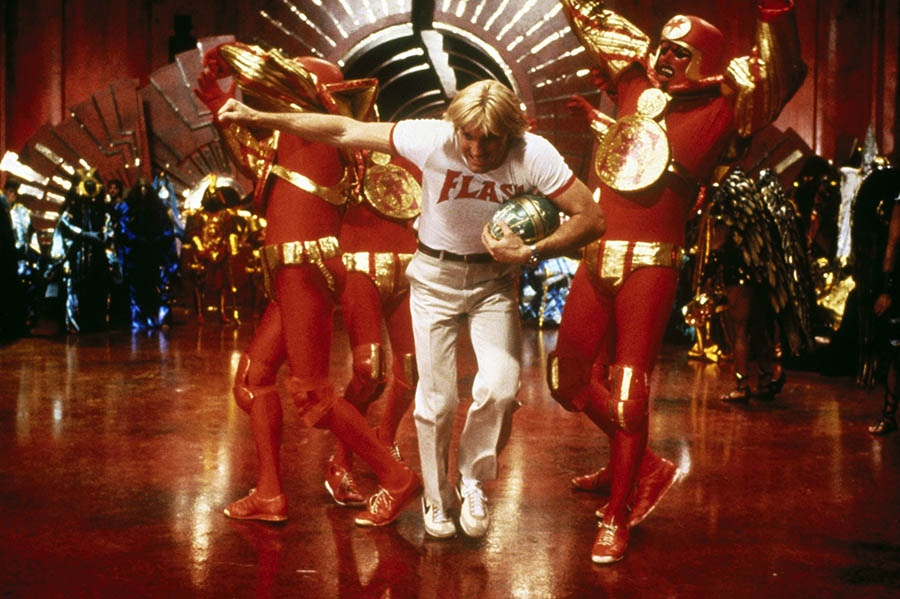
Flash Gordon

Need a quick recap of the past week in movie news? Here are the highlights:

BIG NEWS

Julius Avery will direct the Flash Gordon remake: Perfectly timed to the week of a Queen biopic’s release, an update on the Flash Gordon remake arrived, naming Overlord helmer Julius Avery as writer and director. Read everything we know about the project here.

Muschietti

GREAT NEWS

Andy Muschietti is making an Attack on Titan movie: One of the most popular manga series of all time, Attack on Titan, is heading to the big screen again, this time from It: Chapter One director Andy Muschietti. Read everything we know about this ambitious project here.

Labyrinth

SURPRISING NEWS

Clueless remake in development: The beloved cult classic Clueless, considered to be one of the quintessential ’90s teen movies, will be redone with a script by GLOW writer Marquita Robinson. Read everything we know about it here.

Nutcracker and the Four Realms

NEW MOVIE GUIDE

Meet the Nutcracker and the Four Realms characters: Prepare for Disney’s magical new family film The Nutcracker and the Four Realms with our comprehensive character guide. Read all about the movie here and check out some activity sheets for the kids here.

COOL CULTURE

The new Grinch theme: With a new animated version of Dr. Seuss’ The Grinch comes a new version of the song “You’re a Mean One, Mr. Grinch,” this one by Tyler, the Creator. Watch the music video for the cover below.

[embedded content]

MUST-WATCH TRAILERS

Isn’t It Romantic indeed looks romantic: Rebel Wilson plays a woman who wakes up inside a romantic comedy in the hilarious-looking meta-movie Isn’t It Romantic. Watch the first trailer for the movie below.

[embedded content]

and

Let’s block ads! (Why?)


No Image

In Some Congressional Districts, The Tax Cut is Actually Hurting Republican Campaigns

In New Jersey’s 11th Congressional District, the Republican isn’t running on the tax bill despite the strong economy. But the Democrat is making it an issue, because the GOP tax bill limits deductions for property taxes.


ARI SHAPIRO, HOST:

One of the Republican’s signature accomplishments in Congress was a big tax cut for people and businesses. But Republicans haven’t been talking much about the tax cut. And in some of the swing districts that could determine control of Congress, that’s actually hurting them. NPR’s Jim Zarroli reports.

JIM ZARROLI, BYLINE: Mikie Sherrill makes her way through an indoor farmer’s market in Madison, N.J., shaking hands and talking to voters.

MIKIE SHERRILL: Have you guys been following the election at all?

ZARROLI: Sherrill is a Democrat running for New Jersey’s 11th Congressional District. This area has long been reliably Republican – a wealthy, well-educated district where taxes are a perennial issue. Sure enough, one of the first people Sherrill approaches, Joe Lopiccolo, gives her an earful about property taxes.

JOE LOPICCOLO: In Pennsylvania, you can get three times the size of a home with a quarter of the taxes.

ZARROLI: But Lopiccolo is no fan of the tax cut passed by Congress last year. While it lowered taxes for more than three-fifths of New Jersey residents, it also capped the deduction on state and local taxes at $10,000 a year. And Sherrill says that’s a big deal in a district where average property taxes are almost twice that much.

SHERRILL: You know, it’s something that’s really creating a bigger and bigger burden on our families.

ZARROLI: Sherrill says she regularly hears complaints about the bill, even from Republicans such as Cali Yost.

CALI YOST: I think it was a tax increase. And it’s not fair for New Jersey because we send so much money back to the federal government – then to take away our deduction really even puts us further in the hole.

ZARROLI: The tax cut was sold as a means of jump-starting growth, and it arguably did that. But Patrick Murray, of the Monmouth University Polling Institute, says few Republicans are talking about it in their campaigns. It’s not that most people dislike the tax cuts. It’s just that a lot of voters don’t think they benefited much from them.

PATRICK MURRAY: In places where it might have an impact – the only few places where we’ve seen it come up, it’s been a negative.

ZARROLI: Murray says the tax bill remains deeply unpopular in some swing districts in high-tax states such as California, New York, New Jersey and Illinois – districts that will help determine control of the House. That has put Republicans running in those places on the defensive. Mikie Sherrill’s opponent in New Jersey’s 11th is State Assemblyman Jay Webber. He regularly tells voters that there was more to the tax bill than the state and local tax deduction.

JAY WEBBER: But just to focus on one piece of this and pretend that it’s the whole tax package is simply wrong. And overall we see the economy growing. We see our taxes cut. And overall it’s a good thing.

ZARROLI: To win next week, Republicans such as Webber will need to remind voters of their long track record of cutting taxes. But in some parts of New Jersey, polls suggest that getting that message across has become more complicated than it used to be. Jim Zarroli, NPR News.

Copyright © 2018 NPR. All rights reserved. Visit our website terms of use and permissions pages at www.npr.org for further information.

NPR transcripts are created on a rush deadline by Verb8tm, Inc., an NPR contractor, and produced using a proprietary transcription process developed with NPR. This text may not be in its final form and may be updated or revised in the future. Accuracy and availability may vary. The authoritative record of NPR’s programming is the audio record.

Let’s block ads! (Why?)


No Image

NFL Cheerleader Kneels During National Anthem

Military planes fly over Levi’s Stadium on Thursday during the playing of the national anthem. A cheerleader took a knee during the pre-game anthem, and may be the first NFL cheerleader to do so.

Jeff Chiu/AP


hide caption

toggle caption

Jeff Chiu/AP

A cheerleader for the San Francisco 49ers knelt during the U.S. national anthem on Thursday evening, just before a game against the Oakland Raiders. The woman has not been identified, and her decision to kneel echoes player protests against racism and police brutality.

Football player Colin Kaepernick started the protests when he kneeled during a pre-game anthem in 2016. He is a former player for the 49ers.

Spectators photographed the cheerleader kneeling while the rest of her squad held up pom-poms in unison during the Star Spangled Banner.

One of the Niners cheerleaders is taking a knee. pic.twitter.com/DW5SJqh9zj

— 2004 never happened (@GatorLenny) November 2, 2018

NBC reporter Damian Trujillo also tweeted a shot of the cheerleader kneeling on one knee, with her hands on her hips.

Close up:@49ers cheerleader takes a knee during #NationalAnthem pic.twitter.com/f4PC0p9IPf

— Damian Trujillo (@newsdamian) November 2, 2018

This may be the first time an NFL cheerleader has kneeled during the anthem. Cheerleaders for college-level football teams have kneeled in protest before. Last year five members of Kennesaw State University’s cheerleading squad in Georgia knelt during the national anthem. A local NBC affiliate reported that four of the five cheerleaders were not asked back on the team.

Kaepernick left the 49ers in 2016, and still has not signed on with another team. He is suing the NFL for allegedly freezing him out of playing professional football because of his activism.

Let’s block ads! (Why?)


No Image

Despite Warnings, FDA Approves Potent New Opioid Painkiller

Food and Drug Administration Commissioner Scott Gottlieb, testifying before a House subcommittee in May. There are “very tight restrictions” being placed on the distribution and use of Dsuvia, Gottlieb said Friday in addressing the FDA’s approval of the new opioid. But critics of the FDA decision say the drug is unnecessary.

Chip Somodevilla/Getty Images


hide caption

toggle caption

Chip Somodevilla/Getty Images

The Food and Drug Administration has approved a potent new opioid painkiller, despite warnings from physician critics who say the drug will contribute to the addiction epidemic.

Dsuvia, a 3-millimeter-wide tablet of sufentanil made by AcelRx, came before an FDA advisory committee on Oct. 12. Such committees weigh in on the safety and efficacy of proposed products, and the FDA generally follows committee guidance in its decisions about drugs. The FDA’s Anesthetic and Analgesic Drug Products Advisory Committee voted 10-3 to recommend approval for the medication, and the agency approved the drug Friday.

“There are very tight restrictions being placed on the distribution and use of this product,” said FDA Commissioner Scott Gottlieb in a written statement Friday regarding his agency’s approval of Dsuvia. “We’ve learned much from the harmful impact that other oral opioid products can have in the context of the opioid crisis. We’ve applied those hard lessons as part of the steps we’re taking to address safety concerns for Dsuvia.”

But vocal critics, including the chair of the FDA advisory committee and the consumer advocacy group Public Citizen, had urged the FDA to reject Dsuvia.

In approving the drug, the agency skirted its normal vetting process, these critics say. Dsuvia is an unnecessary opioid, they say, and its size and potency will appeal to people looking to sell or misuse it.

“We have worked very diligently over the last three or four years to try to improve the public health, to reduce the number of potent opioids on the street,” says Dr. Raeford Brown, an anesthesiologist at the University of Kentucky. Brown chairs the FDA committee that, despite his disagreement, voted for Dsuvia’s approval. “I don’t think this is going to help us in any way,” he says.

Dr. Pamela Palmer, an anesthesiologist and co-founder of AcelRx, argues that the risk of diversion — when drugs end up with people who are not the intended patients — is low with Dsuvia because it will not be dispensed to patients at pharmacies. Instead, health care providers will only be able to use it in medical centers, she says, arguing that few people misuse drugs from those settings.

“It will not contribute to the large outpatient opioid crisis,” Palmer maintains.

While sufentanil is potent, the dose in Dsuvia is premeasured and small: 30 micrograms, or millionths of a gram. And Palmer says the product fills a unique need — health care providers put it under patients’ tongues, rather than injecting it or giving them a pill to swallow, which, she says, can take too long to offer relief.

“If you want to get on top of someone’s pain quickly, you have to come up with a different route than swallowing a pill,” Palmer says. She envisions providers using the tablet when finding a vein is difficult and time-sensitive — in emergency room patients who are morbidly obese, for instance.

The company projects $1.1 billion in annual sales, and hopes to have its product in hospitals early next year.

Palmer also says the Department of Defense helped fund the company’s research because Dsuvia could potentially be used on the battlefield instead of morphine.

Dr. Sidney Wolfe, senior adviser to Public Citizen’s Health Research Group, dismisses Palmer’s claim that Dsuvia meets a crucial need. Along with Brown, the group sent a letter to the FDA expressing concerns about the drug.

“It is not unique at all,” Wolfe says, adding that the drug wasn’t adequately tested in emergency settings, and that in tests, pain relief with Dsuvia was slow. In two of the company’s studies, Dsuvia patients only felt “meaningful” pain relief at 54 minutes and 78 minutes.

“We may find a niche for [Dsuvia] but it’s not like we need it, and for sure, at some level, it’s going to be diverted,” says Dr. Palmer MacKie, assistant professor at the Indiana University School of Medicine and director of the Eskenazi Health Integrative Pain Program in Indianapolis. “Do we really want an opportunity to divert another medicine?”

Though the advisory committee ultimately voted in favor of the drug, Public Citizen contends the FDA sought to “tilt” the vote’s outcome toward approval. Brown, the committee chief, who has been outspoken against certain opioids in the past, says he was unable to attend the advisory committee meeting on Oct. 12 because of a scheduling conflict that he had informed the FDA about months in advance.

Brown says the FDA decided to hold the meeting anyway — without him.

“I have strong feelings about the opioid crisis, as someone who lives in the Commonwealth of Kentucky, where we continue to have people die,” Brown says. “My forthright nature may have played a role in their decision about how the agency was going to manage this advisory committee.”

The October meeting also left out most members of another FDA committee — the Drug Safety and Risk Management Advisory Committee — who are often included in regulatory discussions of new opioid drugs. Public Citizen says members of that committee were not invited to attend.

In an email, an FDA spokesman wrote that drug safety committee members “could not attend due to scheduling conflicts.”

“That’s not the full story,” Brown says.

On Wednesday, ahead of the FDA’s final decision, four U.S. senators — Ed Markey, Claire McCaskill, Joe Manchin and Richard Blumenthal — sent a letter to Gottlieb, the FDA’s commissioner, echoing concerns from Brown and Public Citizen and asking the agency to deny approval to Dsuvia until Brown and the full drug safety committee were allowed to participate.

Ultimately, the FDA approved the drug anyway.

“There should never again be a meeting on opioids that doesn’t include drug safety,” says Wolfe. “The FDA really screwed up.”

Let’s block ads! (Why?)


No Image

Ewan McGregor Joins 'Birds of Prey'; Here's Everything We Know

Christopher Robin

Margot Robbie will reprise her Suicide Squad role as Harley Quinn in the upcoming Birds of Prey; she will also serve as a producer. Her character was very much her own woman; smart, strong and sassy, she did whatever she felt was best for herself in any particular moment. So it should be exciting to see her lead the way in a project that’s been described as a “girl gang movie.”

Ewan McGregor, who most recently played a heroic family man in Christopher Robin (above), leads the latest casting news, which will find him turning toward the dark side. We have details about that, along with everything else we know, below.

Who are the Birds of Prey?

In DC Comics, the superhero Black Canary first appeared in 1947. She has often teamed up with other heroic crime fighters through the years. She began a partnership with Barbara Gordon, daughter of Gotham City police commissioner James Gordon, and their team was called Birds of Prey. In the most recent reincarnation in 2016, the team includes Barbara Gordon (aka Batgirl), Black Canary and another superhero known as Huntress.

Wait, so Harley Quinn will be a crime fighter?

In one comic book incarnation, Harley Quinn was part of a team (The Secret Six) that aided/bedevilled the heroes. In the TV series Birds of Prey, Harley Quinn (as played by Mia Sara) was a villainous guest star. We’ve already seen how the character behaved in Suicide Squad, so we don’t expect to see Harley Quinn as any sort of traditional hero — that’s just not her style!

It’s probably more than coincidental, by the way, that writer Christina Hodson, who penned the Birds of Prey script, has now been engaged to write Batgirl, though we’re still waiting to hear if Batgirl will actually make an appearance in this movie. Perhaps a cameo?

Who else will star?

Ewan McGregor is in final negotiations to play Black Mask, according to The Wrap. As the outlet previously reported, Black Mask will be the villain of the piece; he is a mob boss in Gotham City and has also been a fierce foe of Batman.

First appearing in DC Comics in 1985, Black Mask has not been portrayed on the big screen before. In the comics, Black Mask murdered his parents to seize control of their corporation, then lost everything, prompting him to go on a vengeful rampage.

McGregor joins Robbie, Mary Elizabeth Winstead (as Huntress), Jurnee Smollett-Bell (as Black Canary) and Rosie Perez (as Renee Montoya). Huntress is a superhero who has taken different forms in DC Comics; in the movie, she is a former “mafia princess,” per Deadline, who “saw her family killed at a young age” and became a vigilante. Black Canary is “an expert fighter [who] is known for her ‘canary cry,’ per THR. Renee Montoya is an openly gay police detective, who, during the New 52 comic series, “took on a costumed identity, becoming the Question,” per The Wrap.

Who is directing?

Cathy Yan. She is a former journalist who began making short films before making her feature directorial debut with Dead Pigs. The independent movie debuted at the Sundance Film Festival in January, where it won the World Cinema Dramatic Award For Ensemble Acting. Zazie Beetz (Deadpool 2) stars in the comedy-drama, which follows a diverse group of characters who are affected when thousands of dead pigs begin floating down a river in China.

When might we see the movie?

The goal is start production in January 2019. Warner Bros. has set Birds of Prey to open in theaters everywhere on February 7, 2020.

Let’s block ads! (Why?)


No Image

U. Of Maryland Board Of Regents Chair Resigns, Fallout Continues From Athlete's Death

James Brady, chairman of the University System of Maryland Board of Regents, speaking at a news conference on Oct. 30, resigned on Thursday after days of outrage over the board’s recommendation that football head coach DJ Durkin retain his job.

Patrick Semansky/AP


hide caption

toggle caption

Patrick Semansky/AP

The chairman of University System of Maryland’s Board of Regents resigned on Thursday amid outrage from faculty, trustees and students after the board’s handling of an investigation into a football player’s death earlier this year.

“In my estimation, my continued presence on the board will inhibit its ability to move Maryland’s higher education agenda forward. And I have no interest in serving as a distraction from that important work,” James Brady wrote in a statement Thursday afternoon.

“Accordingly, I will step down from the Board of Regents immediately,” he said.

Brady informed the board of his plans to step down in a closed-door meeting following days of public outcry for the chair to resign. His announcement is the latest in a whirlwind of personnel decisions this week at the University of Maryland, involving the football head coach and the university president.

On Tuesday the board said it would allow DJ Durkin to resume his position running the football program. He had been on paid administrative leave. Durkin was forced to step aside as President Wallace Loh launched investigations into allegations that the football program fostered a “toxic culture” and into the events surrounding the death of offensive lineman Jordan McNair. The sophomore collapsed of heatstroke during a team workout in May. He died two weeks later.

Also on Tuesday, Loh revealed he would resign as of June, and he apparently still intends to do that.

Both decisions led to widespread condemnation of the board of regents and a day later Loh fired Durkin. In a statement, Loh said he had met with student organizations, deans and campus leaders who “expressed serious concerns about Coach DJ Durkin returning to the campus.”

“This is a difficult decision, but it is the right one for our entire University,” Loh added.

The move, however, did not stem the backlash against the regents from members of the University of Maryland College Park Foundation Board of Trustees, who, on Thursday, claimed the regents “evidently forced” Loh into retirement.

They are calling for Loh to remain at the helm of the university.

In a Thursday letter to regents chair James Brady, Foundation Chair Geoff Gonella slammed the regents for their handling of the aftermath of the young football player’s death. He accused them of deliberately taking steps designed to undermine Loh and “create the false impression that Dr. Loh had mismanaged the issues surrounding the death of Jordan McNair.”

The regents had overreached by “meddling” in the “hiring or firing of football coaches on campus or any other personnel for that matter,” Gonella wrote, adding that its actions may have derailed the university’s fundraising efforts for the state’s flagship campus.

“Let us remind you that we are in the middle of a $1.5 billion campaign to raise funds for the Flagship of the System. … You may have dealt our efforts a fatal blow,” Gonella said.

Also on Thursday, university Provost Mary Ann Rankin and more than a dozen deans expressed similar sentiments in a letter to the regents.

“Through its intervention, the Board of Regents usurped the President’s authority and intervened in the ability of the President to carry out his full duties and responsibilities. Neither the by-laws of the Board of Regents nor state law give authority to the Regents to take such actions,” Rankin wrote.

She also called for Loh to rescind his resignation: “We believe Dr. Loh’s leadership is critical for the university at this challenging time and we call upon the Board of Regents and the Chancellor to publicly affirm its support for Dr. Loh’s continued leadership of the state’s flagship university.”

Maryland Gov. Larry Hogan, who originally appointed Brady to the board of regents, had called on Brady to resign in the wake of the board’s recommendation to retain Durkin, saying in a statement that he was “deeply concerned about how they could have possibly arrived at the decisions announced.”

Upon learning that Brady had quit on Thursday, Hogan’s spokeswoman Amelia Chasse told NPR, “The governor believes that the university system must move forward in an open and transparent manner to restore public trust in Maryland’s flagship university.”

Let’s block ads! (Why?)


No Image

2 Goldman Sachs Bankers Charged In Malaysian Financial Scandal

The Justice Department has brought criminal charges against two former Goldman Sachs bankers and a Malaysian financier in connection with the financial scandal known as 1MDB, which involved the misuse billions of dollars in Malaysian government funds.

In the indictment unsealed by a federal court Thursday, prosecutors accuse former Goldman Sachs banker Ng Chong Hwa and financier Low Taek Jho – known as “Jho Low” — with conspiring to launder money embezzled from 1Malaysia Development Berha — known as 1MDB — Malaysia’s investment development fund, as well as conspiring to violate the Foreign Corrupt Practices Act.

The Justice Department also says another former Goldman Sachs banker, Tim Leissner, has pleaded guilty to conspiring to launder money and violate anti-bribery laws. A lawyer for Leissner was unavailable for comment when NPR phoned.

News reports say Ng has been arrested in Malaysia. The Wall Street Journal reports that Low was last seen in China but remains at large. The Associated Press quotes a spokesman for Low as saying, “Mr. Low simply asks that the public keep an open mind regarding this case until all of the evidence comes to light, which he believes will vindicate him.”

While the Justice Department has been investigating the 1MDB scandal for some time and has pursued civil lawsuits, these are the first criminal charges the department has brought against individuals related to the 1MDB scandal, according to the Wall Street Journal, which brought international attention to the scandal itself in 2015.

The indictment accuses Leissner and Ng and of using Low’s connections to government officials in Malaysia and Abu Dhabi to “retain business from 1MDB for [Goldman Sachs] through the promise and payment of hundreds of millions of dollars in bribes,” including three bond transactions that raised about $6.5 billion for the 1MDB fund between 2012 and 2013.

While that money was supposed to be used for three development projects, court documents allege the men and their fellow conspirators used the laundered money to pay bribes and “for the personal benefit of the co-conspirators and their relatives and associates, including, among other things, for the purchase of luxury residential real estate in the United States and artwork from an auction house in New York, New York, and the funding of major Hollywood films.”

In total, more than $2.7 billion was misappropriated by the three men and other alleged associates, according to court filings.

Goldman Sachs, which made hundreds of millions from their work with the fund, denies any wrongdoing.

Set up in 2009 by then-Prime Minister Najib Razak to promote foreign investment in Malaysia, the 1MDB fund drew attention when quickly amassed an estimated $11 billion in debt.

An investigation by the Journal revealed millions linked to the fund ended up in Najib’s personal bank accounts. Najib tried to block investigations, but after losing an election earlier this year he was arrested in July and has since been charged with multiple counts of corruption. He denies any wrongdoing.

His wife, Rosmah Mansor, was also arrested in October and charged in connection with the scandal.

The couple are awaiting trial.

Let’s block ads! (Why?)


No Image

Today in Movie Culture: The Greatest Hugh Jackman Costume, How to Defeat Michael Myers and More

Here are a bunch of little bites to satisfy your hunger for Halloween-themed movie culture:

Mashup Cosplay of the Day:

Honoring the diverse talents of Hugh Jackman, this fan crossed X-Men‘s Logan with The Greatest Showman‘s P.T. Barnum:

I’d say my ‘The Greatest Logan’ costume is definitely The Front Runner (in theaters this November) for one of my favorite Halloween costumes.

Not an ad. Just a @RealHughJackman appreciation post. pic.twitter.com/dswgRNMI8u

— Adam ‘Haunted Stuhlbarg’ Murray (@Atom_Murray) October 28, 2018

Adorable Kid Cosplay of the Day:

Since it’s Halloween, let’s do some extra costumes. Here’s a kid dressed as Michael Myers from Halloween, just one of a series of 31 dress-up photos her mom created and shared all this month on Instagram (via BuzzFeed).

Family Cosplay of the Day:

More kids, more superheroes, more costumes, here’s a whole family cosplaying as the Avengers circa Age of Ultron:

Since someone stole a bad copy and got 12k karma before it got deleted, here is MY actual Avengers Family, in HD. from r/marvelstudios

Pet Cosplay of the Day:

Oh My Disney showcases two more Star Wars fan and their dog as they all dress up as Jedi Council members:

[embedded content]

Vintage Image of the Day:

In honor of Halloween, here’s the cast of the Our Gang shorts (Bobby Hutchins, Allen ‘Farina’ Hoskins, Joe Cobb, Jackie Condon, Jay R. Smith, Harry Spear, Pete the Pup, Jean Darling) dressed up for the holiday in the late 1920s:

Actor in the Spotlight:

This weird video inserting Nicolas Cage into all kinds of iconic movie roles is almost like a supercut of Nicolas Cage cosplaying as all those characters (via Geekologie):

[embedded content]

Screenwriting Lesson of the Day:

Lessons from the Screenplay looks at the horror-comedy Shaun of the Dead to make the case that comedy needs to prioritize character:

[embedded content]

Video Essay of the Day:

For Little White Lies, Leigh Singer explores first-person perspective horror movie, from Peeping Tom to the found footage trend:

[embedded content]

Fan Theory of the Day:

In his latest Film Theory video, MatPat shows us how to beat the seemingly unstoppable slasher icon Michael Myers, aka The Shape, from Halloween:

[embedded content]

Classic Movie Trailer of the Day:

Today is the 55th anniversary of the release of The Old Dark House. Watch a re-release trailer for the classic horror movie below.

[embedded content]

and

Let’s block ads! (Why?)