
July 7, 2019

No Image

U.S. Takes A Record 4 Women’s World Cup Titles

The United States won the Women’s World Cup after a thrilling 2-0 victory against the Netherlands. With the win, the U.S. has won the World Cup a record four times.


MICHEL MARTIN, HOST:

Well, they did it. The U.S. women proved once again they are the best in the world, defeating the Netherlands 2-0 in the Women’s World Cup final today. The U.S. has now won the tournament a record four times. NPR’s Eleanor Beardsley was at the final in Lyon, France, and she is with us now.

Hi, Eleanor.

ELEANOR BEARDSLEY, BYLINE: Hi, Michel.

MARTIN: Well, Eleanor, let me contain – or try to contain – my jealousy that you are there and I am not. But it was tense enough to watch from here. What was it like inside the stadium?

BEARDSLEY: Michel, it was amazing. I’ve been to some of the games during this past month, and they just built up and built up. And today, it was the buildup of a whole month of the tournament. The stadium was at a fevered pitch. There were 60,000 people. It was filled to capacity for, you know, these two teams. The U.S. has been like a well-oiled machine all month, just rolling through France, steamroller. And, you know, the Netherlands is No. 8, but they’ve been really scrappy. They won the European Championship last year. So this was a great game. The U.S. was a favorite team, but the Netherlands was good.

In the six previous games, the U.S. has scored within the first 12 minutes, so everyone was waiting for that. But it didn’t happen. In fact, we didn’t score, Michel, until the 62nd minute, into the second half. So people were just on tenterhooks. It was the most tense game that I’ve been to. And Megan Rapinoe scored then in a penalty kick. And then, seven minutes later, Rose Lavelle scored. And then by then, we had two goals to nil. The momentum was with us. The Dutch really defended their goal, but they couldn’t score after that.

MARTIN: So talk about that run, if you would. I mean, this capped this really amazing month-long run for the U.S. Why was the U.S. so dominant?

BEARDSLEY: The U.S. is has so much talent. It’s almost like two teams came to play. There was the team out on the field that played, and there was another one ready to go on the bench. You know, coach Jill Ellis played 21 out of the 23 players. Only the two, you know, backup goalies didn’t play. We have so many talented players, and I think that speaks to the way the game is just so successful in the U.S. It’s so supported. It has funding. And it’s not really – doesn’t have that depth in Europe. You know, the Europeans’ teams have caught up, the rest of the world is catching up, but we’re still really dominant.

MARTIN: To the question of funding, there was a moment after this game where fans were chanting equal pay, and that is a reference to the lawsuit that the women’s team has filed against U.S. Soccer demanding pay at least comparable to the men’s team, particularly given their success both on the pitch and in attracting supporters and fans. So do you have a sense that this is an issue that actually really resonated with the fans?

BEARDSLEY: Yes, it really does. You know, the women earn supposedly 30 million for this while the men in their World Cup got 400 million. It’s just too big of a gap. People were chanting that here. You can hear it.

UNIDENTIFIED CROWD: (Chanting) Equal pay, equal pay, equal pay…

BEARDSLEY: And then also what was really telling is when the president of FIFA came in, the entire stadium booed.

UNIDENTIFIED CROWD: (Booing).

BEARDSLEY: People such as Mr. Kenneth Lloyd (ph), who I spoke to from Austin, Texas, who brought his family for the World Cup – they want the women to earn what they deserve. Listen to what he says.

KENNETH LLOYD: It should inspire the men, and it should inspire the United States to level – to pay these women what they deserve to be paid because they are the champions of the world more than one time.

BEARDSLEY: He brought his son and daughter out, and he said, you know, these women are phenomenal. They’re doing an incredible job. Let’s pay them.

MARTIN: That is NPR’s Eleanor Beardsley in Lyon, France.

Eleanor, thank you so much.

BEARDSLEY: You’re welcome, Michel.

Copyright © 2019 NPR. All rights reserved. Visit our website terms of use and permissions pages at www.npr.org for further information.

NPR transcripts are created on a rush deadline by Verb8tm, Inc., an NPR contractor, and produced using a proprietary transcription process developed with NPR. This text may not be in its final form and may be updated or revised in the future. Accuracy and availability may vary. The authoritative record of NPR’s programming is the audio record.
Let’s block ads! (Why?)


No Image

Microsoft Closes The Book On Its E-Library, Erasing All User Content

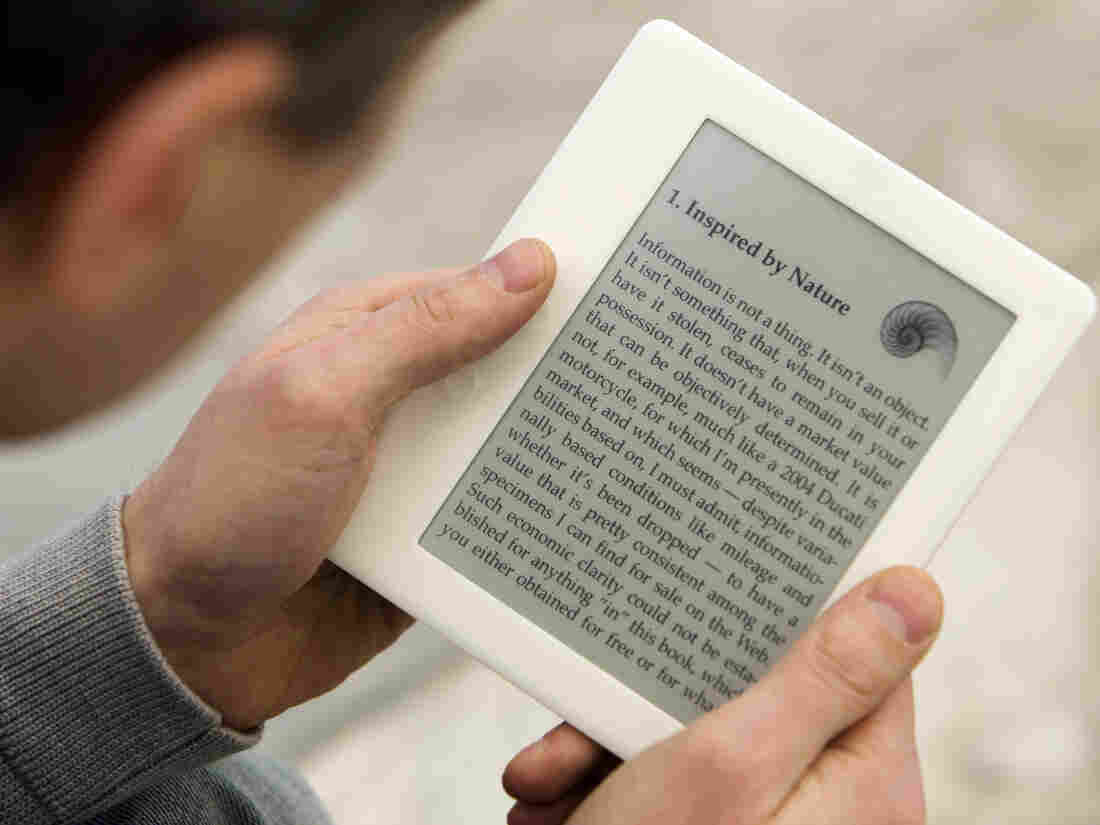
A man reads a book on his e-book reader device. In July, Microsoft will be deleting its e-book library and ceasing all e-book sales.

Joerg Sarbach/Associated Press


hide caption

toggle caption

Joerg Sarbach/Associated Press

Coffee poured. Pillow fluffed. E-book loaded. You’re ready to begin a delightful afternoon on your e-reader when, poof, the book disappears.

Starting in July, Microsoft will be closing its e-book library and erasing all content purchased through the Microsoft e-bookstore from devices. Consumers will receive a refund for every e-book bought.

The company is able to shutter its store – which it launched in 2017 to compete with industry leaders Amazon, Apple and Barnes & Noble – due to a tool called Digital Rights Management or DRM.

DRM allows companies to control content to protect copyright holders and prevent piracy.

“One of the things that I think people don’t realize that’s crucially important is that DRM and related software tools are embedded in all sorts of devices that we buy,” Aaron Perzanowski, the author of The End of Ownership: Personal Property in the Digital Economy, tells NPR’s Lulu Garcia-Navarro.

“Your car, your smart home appliances, your home security system – all of these systems have software that allows for this kind of control over how the devices are used, and I think we’re going to see these same sorts of situations crop up in the context of physical devices that are being used in people’s homes.”

It’s time for @FTC to consider whether a refund is really sufficient when a seller confiscates your media or bricks your device. https://t.co/DaO73bLoti

— Aaron Perzanowski (@APerzanowski) June 30, 2019

The way DRM is widely employed has been criticized by consumers and earned calls for regulation of Big Tech companies.

“The initial vision for DRM was that it was going to allow for the sale of digital goods online in a way that reduced the risk of copyright infringement,” Perzanowski says.

“As this technology has been deployed what we’ve seen is that the big beneficiaries of DRM have not been copyright holders. They have been technology companies like Amazon, like Microsoft, who are able to control these ecosystems to make it harder for consumers to switch over to new platforms.”

In a University of Pennsylvania Law Review article, Perzanowski found that users are often misled when they click the “Buy Now” button, thinking that they’ve gained permanent ownership of digital content.

Other companies, like Amazon and Walmart, have run into DRM-related troubles in the past, wiping out digital content to the chagrin of consumers.

The e-book and online shopping giant, Amazon, obtained eye rolls when it deleted some George Orwell books from the Kindle’s DRM server, including 1984. Apparently, the company did not understand the irony of erasing a book that famously details the dangers of thought control.

Perzanowski worries that DRM erodes personal property rights and that the scope extends beyond digital media.

“You can go out and buy a car and you think you own the car because it’s parked in your garage,” Perzanowski says. “But in reality – how it functions, who can repair it, what replacement parts are compatible with it – all of that is controlled through software code. And, so I think that line between the physical and the digital is getting increasingly blurry.”

In an explainer posted to its website, Microsoft adds that anyone who wrote notes or marked-up e-books will receive an additional $25 credit. The company has not provided a reason for the closure.

Frank Scardera, a Reddit user, is one of the many Microsoft consumers affected by the e-book purge.

“I was disappointed when Microsoft announced they were shutting the service down…” Scardera says. “In the future, I’ll be buying books from sources that use DRM-free formats, so that if a service is shut down I don’t lose my books or other media.”

NPR’s Peter Breslow and Barrie Hardymon produced and edited this story for broadcast.

Let’s block ads! (Why?)


No Image

With Rural Health Care Stretched Thin, More Patients Turn To Telehealth

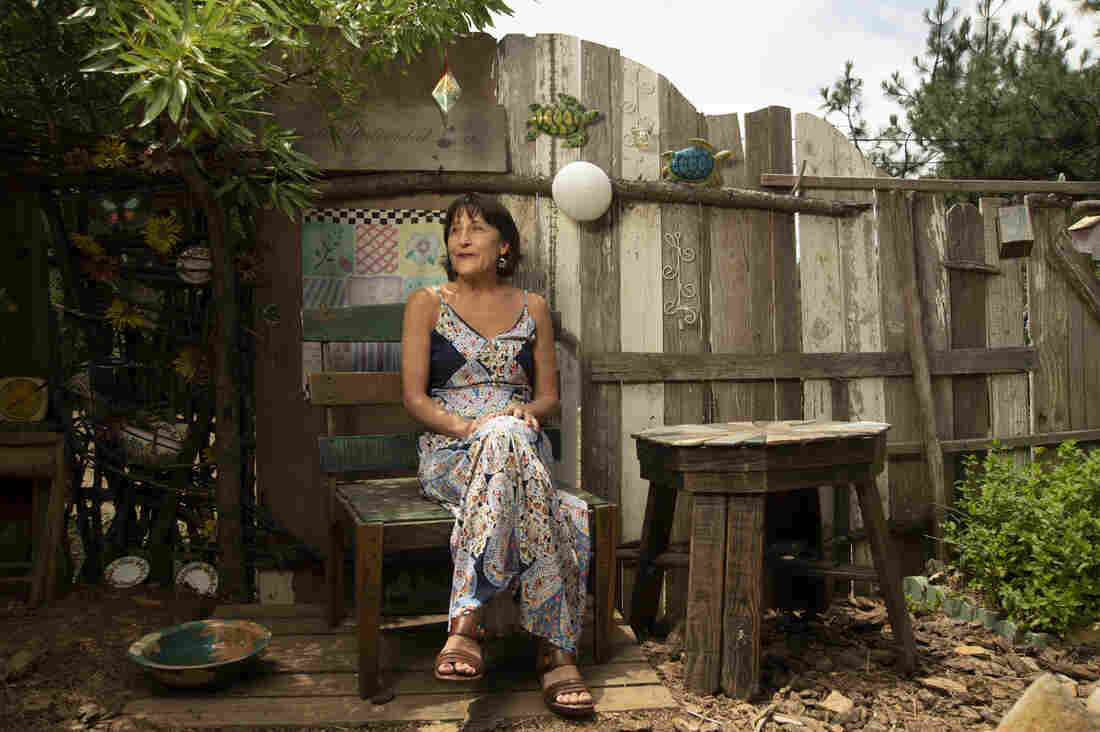
After a difficult time in her life, Jill Hill knew she needed therapy. But it was hard to get the help she needed in the rural town she lives in, Grass Valley, Calif., until she found a local telehealth program.

Salgu Wissmath for NPR


hide caption

toggle caption

Salgu Wissmath for NPR

Telehealth turned Jill Hill’s life around.

The 63-year-old lives on the edge of rural Grass Valley, an old mining town in the Sierra Nevada foothills of northern California. She was devastated after her husband Dennis passed away in the fall of 2014 after a long series of medical and financial setbacks.

“I was grief-stricken and my self-esteem was down,” Hill remembers. “I didn’t care about myself. I didn’t brush my hair. I was isolated. I just kind of locked myself in the bedroom.”

Hill says knew she needed therapy to deal with her deepening depression. But the main health center in her rural town had just two therapists. Hill was told she’d only be able to see a therapist once a month.

Then, Brandy Hartsgrove called to say Hill was eligible via MediCal (California’s version of Medicaid) for a program that could offer her 30-minute video counseling sessions twice a week. The sessions would be via a computer screen with a therapist who was hundreds of miles south, in San Diego.

Hartsgrove co-ordinates telehealth for the Chapa-de Indian Health Clinic, which is a 10-minute drive from Hills’s home. Hill would sit in a comfy chair facing a screen in a small private room, Hartsgrove explained, to see and talk with her counselor in an otherwise traditional therapy session.

Hill thought it sounded “a bit impersonal;” but was desperate for the counseling. She agreed to give it a try.

Coordinator Brandy Hartsgrove demonstrates how the telehealth connection works at The Chapa-de Indian Health Clinic in Grass Valley, Calif. Via this video screen, patients can consult doctors hundreds of miles away.

Salgu Wissmath for NPR


hide caption

toggle caption

Salgu Wissmath for NPR

Hill is one of a growing number of Americans turning to telehealth appointments with medical providers in the wake of widespread hospital closings in remote communities, and a shortage of local primary care doctors, specialists and other providers.

Long-distance doctor-to-doctor consultations via video also fall under the “telehealth” or “telemedicine” rubric.

A recent NPR poll of rural Americans found that nearly a quarter have used some kind of telehealth service within the past few years; 14% say they received a diagnosis or treatment from a doctor or other health care professional using email, text messaging, live text chat, a mobile app, or a live video like FaceTime or Skype. And 15% say they have received a diagnosis or treatment from a doctor or other health professional over the phone.

Loading…

Don’t see the graphic above? Click here.

Those survey findings are part of the second of two recent polls on rural life and health conducted by NPR, the Robert Wood Johnson Foundation and the Harvard T.H. Chan School of Public Health.

The Chapa-de clinic offers telehealth services not only for consultations in behavioral health and psychiatry, but also in cardiology, nephrology, dermatology, endocrinology, gastroenterology and more.

The Chapa-de Indian Health Clinic in Grass Valley, Calif., offers telehealth services for various specialties, including dermatology, gastroenterology and psychiatry.

Salgu Wissmath for NPR


hide caption

toggle caption

Salgu Wissmath for NPR

Hill feels fortunate; she knows most rural health facilities don’t include telehealth services, which means most patients living in remote areas would need their own broadband internet access at home to get therapy online.

And that’s out of reach for many, says Robert J. Blendon, co-director of NPR’s poll and professor of health policy and political analysis at the Harvard Chan School.

The poll found that one in five rural Americans say getting access to high-speed internet is a problem for their families.

Blendon says advances in online technology have brought a “revolution” in healthcare that has left many rural patients behind.

“They lose the ability to contact their physicians, fill prescriptions and get follow-up information without having to go see a health professional,” he says.

Critical care pediatrician James Marcin at UC Davis Children’s Hospital, directs the University of California, Davis, Center for Health and Technology and regularly consults via a telehealth monitor with primary care doctors in remote hospitals in rural areas.

“We’re able to put the telemedicine cart [virtually] at the patient’s bedside,” Marcin says, “and within minutes our physicians are able to see the child and talk with the family members and help assist in the care that way.”

If not for telehealth, Marcin says, the costs of getting what should be routine care “are significant barriers for those living in rural communities.”

“We have patients that drive to our Sacramento offices and they have to drive the night before,” he says, “and spend the night in a hotel because it’s a five-hour trip each way.” And there are additional costs for many patients, he says, such as childcare services, and missed days of work.

With telehealth, “a video is truly worth a thousand words,” he says; it can mean patients don’t have to make costly time-consuming trips to see a specialist.

Though Hill initially had reservations about meeting with a therapist online, she says she’s been amazed by how helpful the sessions have been.

“She gives me assignments and works me really hard,” Hill says, “and I have grown so much — especially just in the last few months.”

Her latest assignment in therapy: writing down positive characteristics of herself. Initially, she could only come up with three: loyalty, compassion and resilience. But the therapist questioned that, and encouraged Hill to consider that there might be more.

Hill says she’s in a ‘super growth” mode these days psychologically, and says the support she’s received in therapy has been key to that. She speaks with a clinical psychologist via a telehealth session twice a week for 30 minutes, and completes assigned homework in between those appointments.

Salgu Wissmath for NPR


hide caption

toggle caption

Salgu Wissmath for NPR

“She wanted 10,” says Hill, who proceeded to work through some other issues and talk more with therapist. “Now I’ve got like 15 at least,” Hill says, “and I keep adding to the list; once I started writing things down, I started really seeing that I have a lot of strengths I didn’t even know I had.”

Attorney Mei Kwong, executive director of the Center for Connected Health Policy in Sacramento, says telehealth services have the potential to remove many barriers to good health care in rural America.

But policies that regulate which telehealth services get paid for “lag way behind the technology,” Kwong says. Many policies are 10 to 15 years behind what the technology is able to do, she says.

For example, high-resolution photos can now be taken – and sent anywhere digitally — of skin conditions that many doctors say are better than “the naked eye looking at the condition,” she says. But the policies on the books of what Medicare, Medicaid and private insurers will pay for often means these services are not fully covered.

That’s unfortunate, Kwong says, especially for underserved communities where there is a shortage of specialists.

Changes are starting to be made in state, federal and private insurance policies, Kwong says. But it’s “slow going.”

Let’s block ads! (Why?)