
U. Of Maryland Hires Michael Locksley To Lead Football Team In Time Of Tumult

Michael Locksley, seen here in 2015 during a previous stint with the Maryland Terrapins, has been hired as head coach of the university’s football team. He replaces DJ Durkin, whose tenure ended in controversy over a player’s death earlier this year.
Alex Goodlett/Getty Images
hide caption
toggle caption
Alex Goodlett/Getty Images
Just over a month since the University of Maryland fired DJ Durkin, dismissing the football coach amid a months-long controversy over a player’s death, the school has named the man set to replace him: Alabama Offensive Coordinator Michael Locksley.
“As we narrowed the search for the individual best suited to lead our program, Michael not only stood out for his talent as a coach,” Maryland’s director of athletics, Damon Evans, said in Tuesday’s announcement, “but most importantly for the role he has played as a mentor to student-athletes throughout his career and his deep commitment to helping them grow into leaders on and off the field.”
It will not be Locksley’s first stop on campus in College Park, Md. Locksley, whose work with Alabama just earned him the 2018 Broyles Award as college football’s top assistant coach, has already served two stints as an assistant at Maryland. After then-coach Randy Edsall was fired, Locksley also acted as the Terrapins’ interim head coach for part of the 2015 season — before leaving to join the Crimson Tide the next year.
We’re proud to announce 2018’s WINNER of the 23rd annual @BroylesAward.
?Michael Locksley, @AlabamaFTBL. pic.twitter.com/BvwEGkNkFd
— BROYLES AWARD (@BroylesAward) December 4, 2018
This time around, however, Locksley can expect to find a significantly more difficult situation awaiting his return.
The University of Maryland’s football program has been wracked by tumult since Jordan McNair’s death in June. The 19-year-old offensive lineman collapsed from heat stroke after an offseason workout and died two weeks later.
The blame for the deadly incident spread widely in the months that followed. First laid with medical personnel, which “misdiagnosed” McNair’s ailments — according to university President Wallace Loh — the blame soon also fell on Durkin for allegedly fostering a toxic culture of intimidation and verbal abuse.
But the buck did not stop with Durkin.
The controversy reached as high as the University System of Maryland’s Board of Regents, which briefly decided to keep the head coach after concluding its investigation — only to promptly do an about-face and fire him one day later, after a groundswell of outrage at the decision. Just another day after that, the board’s chairman, James Brady announced he was stepping down.
President Loh, too, has announced plans to retire next year.
On Tuesday evening, Locksley acknowledged the turmoil that awaits him at Maryland — but expressed his excitement at returning to the Terrapins, nevertheless.
“I have been tremendously impressed at how the team came together through a difficult season and honored their fallen teammate, Jordan,” he said in a statement issued by the school. “We are all in this together, and I look forward to rejoining the Maryland family.”
That said, he arrives in Maryland without a spotless record. Before returning for his second stint at Maryland, Locksley was fired from his head coaching job at the University of New Mexico, where he amassed a putrid total record of 2-26 and found himself dogged by controversy — including allegations of creating a toxic environment of his own.
As The Washington Post notes, his tenure there was marred by an age and sex discrimination complaint against him, which was later withdrawn, and a lawsuit alleging that he choked and punched an assistant coach, which was later settled.
In its announcement Tuesday, the University of Maryland largely kept to the warmer, more recent memories of Locksley’s time with the Terrapins and Crimson Tide.
“On the field, Michael orchestrated one of the country’s most prolific offenses at the University of Alabama and has long been regarded for his recruiting prowess,” Evans said. “Today he was recognized as the nation’s top assistant coach in the country, and I’m excited for him to be leading our program.”
Behind The Curve

Yesterday, a part of the yield curve inverted. The interest rate on 5-year treasuries fell slightly below the interest rate on three-year treasuries. This has spooked some people, because an inversion in the yield curve is sometimes regarded as the harbinger of a recession.
So, are we headed for a recession?
Campbell Harvey says no. He’s a finance professor at Duke, and the man who first demonstrated that the yield curve can act as a recession predictor. Today on the Indicator, he tells us why there’s no need to panic about a recession — or at least not yet.
Music by Drop Electric. Find us: Twitter/ Facebook.
Subscribe to our show on Apple Podcasts, PocketCasts and NPR One.
A Push For Diversity In Medical School Is Slowly Paying Off

Currently students of color are underrepresented in medical schools, but their numbers are slowly growing.
Getty Images
hide caption
toggle caption
Getty Images
In 2009, the body that accredits medical schools issued a new requirement: All medical schools must implement policies that help them attract and retain more diverse students. Failure to do so can lead to citations from this body, the Liaison Committee on Medical Education, and can affect their status as accredited institutions.
This effort appears to be working. In a research letter published today in JAMA, researchers examine the changing demographics of medical students from 2002 to 2017. They found an increase in diversity in enrollment, especially since 2012, which the researchers think may be the first year new standards could be expected to have an effect.
But the rate of change, some medical educators say, is too slow. Medical student bodies were still 58.9 percent white in 2017.
“We see the trend going up, but it’s going up very slowly,” says Dr. Dowin Boatright, an assistant professor of emergency medicine at Yale University and coauthor of the study. “If we’re trying to get some degree of representation that matches the proportion of black people in the population as a whole … We’re talking 20 to 50 years.”
The pattern of change over the period studied is noteworthy, Boatright says. Between 2002 and 2012, the proportion of female and black students decreased each year.
In that same time period, the percentage of Latino and Asian students increased. White students were the majority of medical school enrollees throughout that time period.
In 2012, the percentage of female and black students starting medical school began a steady, albeit slow, increase.
Loading…
Don’t see the graphic above? Click here.
By 2017, 7.3 percent of new medical students identified as black, up from 6.8 percent in 2002. Students identifying as female made up 50.4 of matriculants, up from 49 percent in 2002.
Hispanics represented 8.9 percent of students, up from 5.4 percent in 2002 and Asian students were 24.6 percent of students, up from 20.8 percent.
Boatright hypothesizes that the improved numbers reflect that the new requirement that schools have formal programs to attract diverse students.
“I think there’s a strong incentive now to have at least some kind of benchmark to promote diversity,” Boatright says. “Programs actually are being held accountable.”
Many medical schools have hired dean-level administrators who focus on attracting and retaining minority students.
“When you tell people they should do something, they’re like, ‘Oh, we don’t have to do something,’ ” says Dr. John Paul Sanchez, the associate dean for diversity and inclusion at Rutgers New Jersey Medical School. “It makes people think differently when you say you must do something … People have more concrete direction.”
The Liaison Committee on Medical Education also requires that medical schools develop programs to improve the “pipeline” of minority applicants, which usually take the form of science education and mentorship programs for minority college and high school students.
Representatives of the Liaison Committee on Medical Education don’t interpret the data the same way Sanchez and Boatright do. The organization’s co-secretary, Dr. Veronica M. Catanese, said in a written statement that the organization has explicitly promoted diversity in its standards for “more than two decades” and while the organization’s expectations may encourage medical schools to pay attention to diversity, “it likely does not account for the correlation suggested by the authors of the letter.”
This trend the study identified is confirmed by the latest medical school enrollment data also released today by the Association of American Medical Colleges.
In 2018, 8.6 percent of first-year medical students are black, and more women than men started medical school: 51.7 percent identified as female.
The number of black men enrolling in medical school in 2018 — a group that has been significantly underrepresented compared to the general population — increased by 7.3 percent in 2018. Black men made up about 3.4 percent of first-year medical students this year.
This latest data differs from the data the JAMA study authors presented. To assess the effect of the new accreditation requirement, the authors excluded historically Black medical schools and all schools in Puerto Rico because they felt felt the new diversity standards would not affect them in the same way as predominantly white schools.
Sanchez says he thinks the accreditation standards are important, and encourage medical schools to devote money and time to supporting minority students. Still, he says, there’s a difference between meeting the standards and developing long-lasting programs that help minority students feel welcome in medical school.
“That takes decades to build. You can’t train someone to be passionate,” Sanchez says. “But you can hire them and bring them together to serve as faculty at the medical school.”
Mara Gordon is a family physician in Washington, D.C., and a health and media fellow at NPR and Georgetown University School of Medicine.
'Captain Marvel' Promises to End the War in New Trailer; Here's Everything We Know So Far

Captain Marvel, the 21st entry in the Marvel Cinematic Universe, will mark the mega-franchise’s first movie focused on a single female superhero. And the first to be co-directed by a female filmmaker and scored by a woman composer. The highly anticipated film, which will take place more than 10 years before the MCU began, has been in development since 2013 and finally flies into theaters in early 2019.
The second trailer for Captain Marvel has just premiered, and it fleshes out more of the plot, shows off some Skrulls, including the evil old lady we saw in the first trailer, and depicts young Nick Fury as a cat-loving agent who’s not yet become the tough-guy Avengers Initiative leader we know him as. Brie Larson appears even more badass in this new spot, declaring, “I’m not gonna fight your war. I’m gonna end it.” Read everything we know about Marvel’s Captain Marvel and then watch the new trailer below.
Who is Captain Marvel?
Captain Marvel has actually been the alter ego for many characters in Marvel Comics over the years. However, this film will be based on the character Carol Danvers, created by writer Roy Thomas and artist Gene Colan. Danvers first appeared as a United States Air Force officer in Marvel Super-Heroes #13, published in March 1968. A decade later she became the first incarnation of Ms. Marvel. She’s a human/Kree hybrid boasting superhuman traits, including flying and energy projection.
What is the plot?
“The story follows Carol Danvers as she becomes one of the universe’s most powerful heroes when Earth is caught in the middle of a galactic war between two alien races. Set in the 1990s, Captain Marvel is an all-new adventure from a previously unseen period in the history of the Marvel Cinematic Universe.”
Who is starring?
Oscar-winning actress Brie Larson. Best known for her widely-awarded performance in Room, Larson also starred in Short Term 12, The Glass Castle and Kong: Skull Island. She was announced as Captain Marvel at the 2016 San Diego Comic-Con.
In speaking with Vanity Fair, Larson had this to say about accepting the biggest role of her blossoming career: “Ultimately, I couldn’t deny the fact that this movie is everything I care about, everything that’s progressive and important and meaningful and a symbol I wished I would’ve had growing up. I really, really feel like it’s worth it if it can bring understanding and confidence to young women—I’ll do it.”
Who else is in the film?
Samuel L. Jackson will be reprising his role as Nick Fury, whom we last saw at the end of Avengers: Infinity War. We’ll also get to see Clark Gregg on the big screen as Agent Phil Coulson once again. The familiar characters continue with Lee Pace as Ronan the Accuser and Djimon Hounsou as Korath, both of whom appeared in Guardians of the Galaxy.
It’s not just a reunion, however. Jude Law joins the MCU as Mar-Vell, who was actually the first Captain Marvel in the comics. Ben Mendelsohn (Rogue One: A Star Wars Story) also stars as the leader of the villainous shapeshifter aliens the Skrulls, while Crazy Rich Asians actress Gemma Chan plays one of Captain Marvel’s allies, Minn-Erva, a sniper member of the Kree military unit known as Starforce.
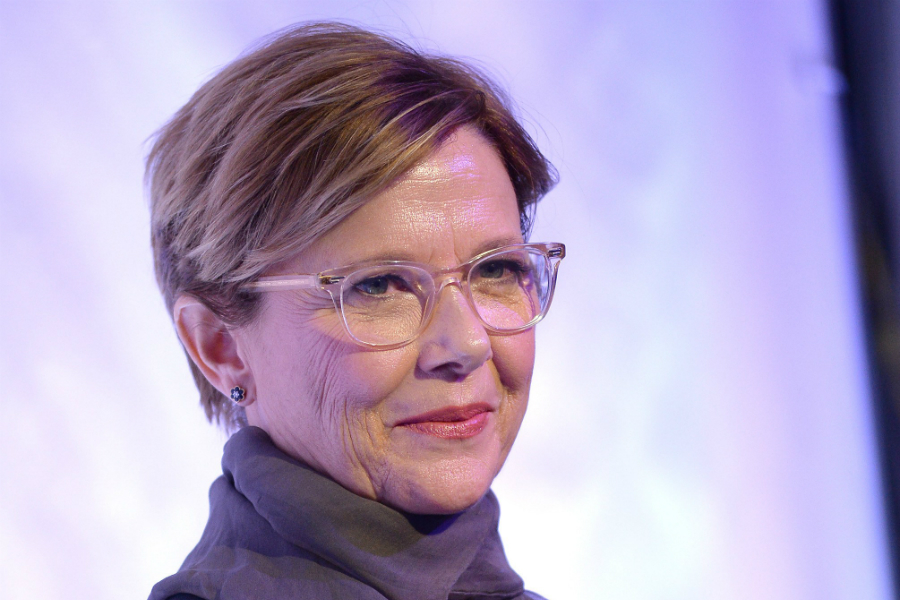
Annette Bening (20th Century Women) also joined the cast of Captain Marvel, marking the first time she has appeared in a superhero project. Her specific role was not revealed, though THR states: “Scientist is said to be in her job description.” Lashana Lynch rounds out the main cast as Danvers’ friend and fellow Air Force pilot Maria Rambeau.
Meet #Marvel‘s newest star! ???? Get your first look at exclusive images from @CaptainMarvel: https://t.co/BQdswjEYhe #CaptainMarvel pic.twitter.com/liTv5aEBjZ
— Entertainment Weekly (@EW) September 8, 2018
Who is directing Captain Marvel?
Anna Boden and Ryan Fleck, the writing/directing team behind such films as Half Nelson and Mississippi Grind. This is certainly not the first time Marvel has plucked indie filmmakers to helm one of their big-budget spectacles, but it strikes me as one of the most intriguing choices to date. Boden and Fleck, who are also listed as writers on the film, have primarily made dramas up to this point. I look forward to what they’ll bring to the MCU formula and the superhero genre as a whole.
Who else worked on the screenplay?
Captain Marvel has had a number of writers over the years, most of them women. In addition to Boden and Fleck, there’s been input from Oscar nominee Meg LeFauve (Inside Out), Nicole Perlman (Guardians of the Galaxy), Geneva Robertson-Dworet (Tomb Raider) and Carly Mensch and Liz Flahive, the co-creators of the Netflix series GLOW.
Who is scoring the movie?
Pinar Toprak announced that she will be composing the musical score for Captain Marvel, becoming the first woman to score a major superhero movie. Her recent credits include TV’s Krypton and the extremely popular video game Fortnite. See her announcement below.
When does Captain Marvel come out?
March 8, 2019.
Watch the first two trailers:
[embedded content]
[embedded content]
