April 4, 2018

No Image

Today in Movie Culture: Deadpool Goes Pink for Charity, 'Ready Player One' Video Game Easter Eggs and More

Here are a bunch of little bites to satisfy your hunger for movie culture:

Charity Promotion of the Day:

Deadpool, whose super powers keep his own cancer at bay, wears a pink version of his suit in a new NSFW promotion for Deadpool 2 and Omaze as he campaigns for his “F**K Cancer” fundraiser:

[embedded content]

Easter Eggs of the Day:

For Wired, author Ernest Cline personally explains every video game referenced in Ready Player One:

[embedded content]

Supercut of the Day:

This video essay from Thomas Flight spotlights the prominence and significance of cars in cinema and how they’re never just simple vehicles for transportation (via Live for Film):

[embedded content]

Bad Movie Analysis of the Day:

Find out the “hidden meaning” of the Stephen King adaptation It from an alien in the future:

[embedded content]

Vintage Image of the Day:

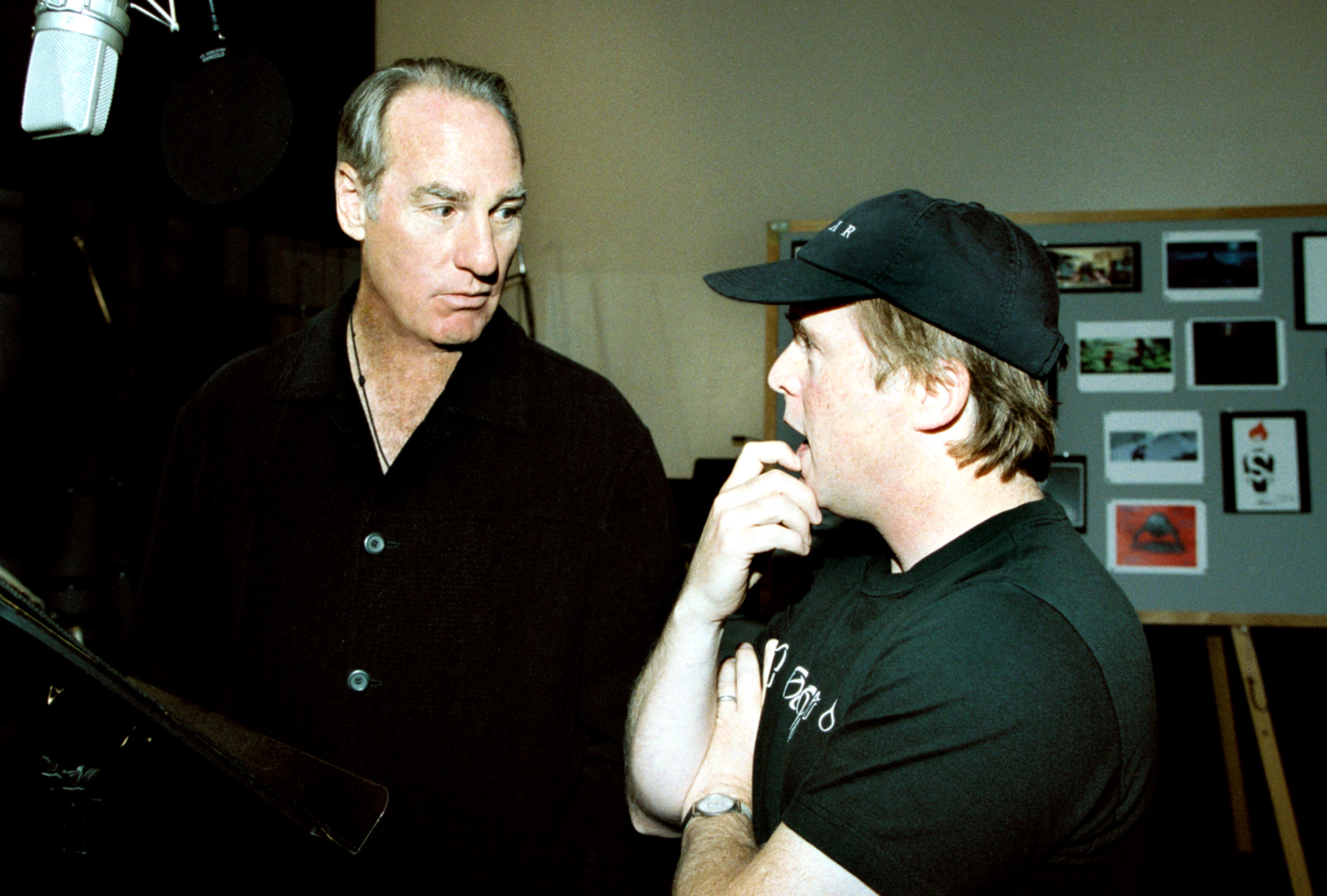
Craig T. Nelson, who turns 74 today, discusses his role as Mr. Incredible with director Brad Bird during the voice recording for Pixar’s The Incredibles in 2003:

Actor in the Spotlight:

Fandor celebrates the physical resilience of Ryan Gosling in this supercut of the actor getting hit in the face in various movies:

[embedded content]

Filmmaker in Focus:

For Little White Lies, Luis Azevedo and the dogs of Isle of Dogs look at other Wes Anderson movies and focus on how dogs die in many of them:

[embedded content]

Behind the Scenes Parody of the Day:

Nerdist made a very authentic-looking (but not real) making-of featurette about the creation of the Thala-Siren creature for Star Wars: The Last Jedi:

[embedded content]

Cosplay of the Day:

Speaking of Star Wars, there’s some good cosplay in this trailer for the upcoming Star Wars fandom series Looking for Leia, and that’s a good enough excuse to share it here:

Six episodes. A galaxy of stories. We’re about to fem-splain #StarWars fandom. Be part of the saga on @seedandspark: https://t.co/JWEqHBz9BP ??? pic.twitter.com/fxVnldhHKx

— Looking for Leia (@LookingForLeia) April 3, 2018

Classic Trailer of the Day:

Today is the 50th anniversary of the release of the Blake Edwards comedy The Party. Watch the original trailer for the Peter Sellers classic below.

[embedded content]

and

Let’s block ads! (Why?)


No Image

Surgeon General Urges More Americans To Carry Opioid Antidote

Surgeon General Jerome Adams is recommending that more Americans be prepared to save people from opioid overdoses.

Chip Somodevilla/Getty Images

hide caption

toggle caption

Chip Somodevilla/Getty Images

As opioid-related deaths have continued to climb, naloxone, a drug that can reverse overdoses, has become an important part of the public health response.

When people overdosing struggle to breathe, naloxone can restore normal breathing and save their lives. But the drug has to be given quickly.

On Thursday, U.S. Surgeon General Jerome Adams issued an advisory that encouraged more people to routinely carry naloxone.

“The call to action is to recognize if you’re at risk,” he tells Morning Edition‘s Rachel Martin. “And if you or a loved one are at risk, keep within reach, know how to use naloxone.”

Police officers and EMTs often have naloxone at the ready. Access to the drug for the general public has been eased in the past few years, too.

The medicine is now available at retail pharmacies in most states without a prescription. Between 2013 and 2015, researchers found a tenfold increase in naloxone sold by retail pharmacies in the U.S.

But prices have increased along with demand. Naloxone-filled syringes that used to cost $6 a piece now cost $30 and up. A two-pack of naloxone nasal spray can cost $135 or more. And a two-pack of automatic naloxone injectors runs more than $3,700.

And while it’s true that naloxone can prevent many opioid-related deaths, it doesn’t solve the root cause of the problem.

So where does this fit into an overall strategy for tackling the opioid crisis?

NPR’s Martin asked Surgeon General Adams about the advisory, and the administration’s broader plan for addressing the opioid epidemic.

Here are interview highlights that have been edited for length and clarity.

On keeping naloxone at home, and using it effectively

We should think of naloxone like an EpiPen or CPR. Unfortunately, over half of the overdoses that are occurring are occurring in homes, so we want everyone to be armed to respond.

We’re working with pharmacies, providers and medical associations to increase training on how to administer naloxone in homes. But overall — and I’m an anesthesiologist who’s administered naloxone many times myself — it’s very safe, easy to use, and 49 of 50 states have standing orders for people to be able to access and to use [naloxone] in the home setting.

On making sure someone treated with naloxone doesn’t overdose again in short order

When a person is having multiple overdoses, I see that as a system failure. We know addiction is a chronic disease, much like diabetes or hypertension, and we need to treat it the same way. We can’t have someone overdose and send them back out onto the streets at 2 a.m., because they’re going to run right back into the hands of the local drug dealer.

If you come in at 3 a.m., having been resuscitated from an overdose, we need to have either an immediate access to treatment available for you, or, what’s working well in many places is a peer recovery coach — someone who’s been through this before and who can speak to you in a language that will resonate, and basically can be with you until you’re in recovery. Those are the kind of systemic changes we need to make sure naloxone is a touch point that leads to recovery.

On pricing and availability of naloxone

President Trump has asked for, and Congress has approved, $6 billion in funding to respond to the opioid epidemic. There are different grants available for states to purchase naloxone, which they can give out for free.

We’re also working with insurers. Ninety-five percent of people with insurance coverage, including Medicare, Medicaid, Tricare and Veterans
Affairs are actually able to get naloxone with little or no copay, and we’re working with them to make that copay as small as possible.

We’re also working with Adapt Pharma and Kaleo [two makers of naloxone available in the U.S.] to try to keep costs low. From an economic point of view, unfortunately, there are so many people who need naloxone that drug companies are going to make their money one way or the other.

On the role of law enforcement in combating the opioid crisis

We are not going to solve this crisis without the involvement of law enforcement. I can also tell you, from visiting many communities, that folks are concerned about public safety aspects. One neighbor is concerned their son is overdosing while another other neighbor is worried their house is getting broken into.

I’m focused on meeting with the attorneys general and meeting with local law officials and making sure that if you’re dealing drugs, you’re going to go to jail. But if you have a substance use disorder, we’re going to give you an option to get treatment, and hopefully become a productive member of society again.

On where federal funding can help

This starts with naloxone — saving lives is one of the president’s key pillars — and then using it as a bridge for treatment. Fifty-million dollars in funding has been allocated specifically for naloxone, and states are eligible for $2 billion dollars in block grants that they can use however they like.

If we can spend money on prevention and more treatment options, making sure we’re providing wrap-around services, I think we’ll find ourselves in a good place. I continue to impress upon folks the importance of partnering, making sure that law enforcement is sitting down with health and education so they all put their money together on a local level. At the end of the day, unfortunately, there will never be enough money in the federal government to do everything that we want to do.

Let’s block ads! (Why?)


No Image

U.S. Farmers Likely Among Hardest Hit By Chinese Tarriffs

China’s retaliatory tariffs hit farmers harder than any other group, especially those raising hogs, nuts and fruit, which rely on exports to keep their business models going.

AUDIE CORNISH, HOST:

We’re going to go to rural Missouri now for another view of the tense trade situation between the U.S. and China. Today, China announced possible tariffs on $50 billion worth of U.S. goods. Like actual tariffs imposed earlier this week, the additional ones now being threatened target farmers, some of America’s most successful exporters. Frank Morris of member station KCUR has been getting reaction.

(CROSSTALK)

FRANK MORRIS, BYLINE: At dawn this morning, farmers at Betty’s Truck near Sweet Springs, Mo., took their coffee with a side of bad news.

JIM BRIDGES: Beans are down 50 cents overnight, and corn is down 14 because of this trade thing with China.

MORRIS: Corn and soybean farmer Jim Bridges, wearing a pair of brown overalls, quickly reckons his potential losses.

BRIDGES: Oh, we’ll see 50 cents, 45 or – about $50,000 of income this year.

MORRIS: China is threatening to slap tariffs on some of the biggest U.S. crops – corn, soybeans, wheat, cotton and beef. But Charles Tuckwillef, sitting next to Bridges in a worn jacket, says it’s too early to accurately tally losses.

CHARLES TUCKWILLEF: It could have an impact on us. Weather probably plays more of a role than a tariff is going to.

BRIDGES: Well…

TUCKWILLEF: We have always survived.

MORRIS: While true, these days, most U.S. farmers survive on exports. They produce far more than Americans can use and selling overseas keeps farm prices from collapsing. China bought more than a billion dollars’ worth of U.S. pork last year. But this week, it slapped a 25 percent tariff on that pork, and that’s being felt here on the farm.

BRENT SANDIGE: We’re loading pigs, whatever, to send them to market right here.

MORRIS: Brent Sandige, here in his hog farm in central Missouri, says he’ll make less on these animals today than he would have last week. But he supports President Trump, and he likes his aggressive negotiating style.

SANDIGE: You know, sometimes you have some short-term pain for some long-term gain.

MORRIS: The current pain is spread pretty wide. China has already placed 15 percent tariffs on farm products grown across a wide swath of the country, including Fresno, Calif., where Ryan Jacobsen runs the farm bureau.

RYAN JACOBSEN: When we talk about the Chinese market, it’s important to recognize that, you know, some of our top exports into there by rank are pistachios, almonds, wine, oranges.

MORRIS: And economically, some California farmers live or die on exports.

RICHARD MATOIAN: Exports represent about 70 percent of our total production.

MORRIS: Richard Matoian with the American Pistachio Growers says that more than half of exported pistachios goes straight to China. China also buys a big chunk of the California almond crop.

MATOIAN: We are generally are free traders. We believe in open and free trade.

MORRIS: And that is something U.S. farmers have in common from coast to coast.

RON PRESTAGE: My name is Dr. Ron Prestage. I’m a veterinarian in Camden, S.C.

MORRIS: Prestage also helps to run one of the country’s largest pork and poultry companies.

PRESTAGE: Do I enjoy being in the crosshairs and caught in the middle in this dispute? And the short answer is no, but I do understand it.

MORRIS: Prestage says U.S. farmers are often the first casualties in a trade war precisely because they are such world-class traders. And economist Chris Hurt at Purdue University says that’s no accident. U.S. farm groups have worked long and hard to chip away at trade barriers, and these tariff fights could upend decades of progress.

CHRIS HURT: And right now, we’re in a trade skirmish but probably not in a war. But the concern is that skirmish could escalate.

MORRIS: And trade war with China isn’t the farmers’ only worry. American producers sell far more to Canada and Mexico combined than they do to China. And if President Trump follows through with his threats to walk away from NAFTA, U.S. farmers could be pinned down in a trade war on two very punishing fronts. For NPR News, I’m Frank Morris in Kansas City.

Copyright © 2018 NPR. All rights reserved. Visit our website terms of use and permissions pages at www.npr.org for further information.

NPR transcripts are created on a rush deadline by Verb8tm, Inc., an NPR contractor, and produced using a proprietary transcription process developed with NPR. This text may not be in its final form and may be updated or revised in the future. Accuracy and availability may vary. The authoritative record of NPR’s programming is the audio record.

Let’s block ads! (Why?)


No Image

Former USA Taekwondo Coach Banned From The Sport For Sexual Misconduct

U.S. coach Jean Lopez and his brother Steven celebrate after Steven defeated Rashad Ahmadov of Azerbaijan, winning him a bronze medal in the 2008 Beijing Olympic Games.

Behrouz Mehri/AFP/Getty Images

hide caption

toggle caption

Behrouz Mehri/AFP/Getty Images

Editor’s note: This story contains a graphic description of sexual behavior.

Jean Lopez, who coached the U.S. Olympic taekwondo team from 2004-2016, has been banned from USA Taekwondo. NPR obtained a copy of a report, issued by the U.S. Center for SafeSport, which has not been made public. According to the report, Lopez had “a decades long pattern of sexual misconduct” and used his status as a respected athlete and coach to “groom, manipulate, and, ultimately, sexually abuse younger female athletes” — including minors.

The Lopez case was one of the first big tests for SafeSport, an entity created in March 2017 to investigate sexual abuse allegations in the 48 athletic governing bodies that operate under the U.S. Olympic Committee.

Lopez and his family have been hugely influential in taekwondo over the past two decades; the Los Angeles Times even dubbed them the sport’s “first family.” Lopez’sbrother Steven is the most decorated athlete in the sport, with two Olympic gold medals, a bronze medal and five world championships. Their other siblings, Diana and Mark, were also Olympians in taekwondo.

That success has come even as multiple athletes have accused both Jean and Steven of assault over the past dozen years, with little response from the sport’s governing body, USA Taekwondo.

Taekwondo athletes Steven (from left), Jean, Diana and Mark Lopez of the United States pose in the NBC Today show studio at the Beijing 2008 Olympic Games. The Los Angeles Times named them the “first family of taekwondo.”

Kristian Dowling/Getty Images

hide caption

toggle caption

Kristian Dowling/Getty Images

The family’s competitive reputation attracted top athletes to the training center Jean Lopez operated in Houston. One of them was Heidi Gilbert. Under Lopez’s tutelage, Gilbert, then 19, won a gold medal in her weight class in the Pan American Games in Quito, Ecuador, in 2002.

But, Gilbert says, that win was overshadowed by what happened immediately afterward. She says she and Diana Lopez, who had also competed in the event, went back to Jean Lopez’s hotel room to celebrate. Gilbert remembers that the two women flexed their muscles in a full-length mirror.

“We were like, ‘Look at my traps; look at my six-pack,’ ” she says. “Jean is like, ‘You girls are so awesome. You guys are going to go to the Olympics.’ “

After Diana left the room, Gilbert says, Jean’s tone quickly changed. She recalls that he threw her onto the bed. At first, she thought they were wrestling. But then, she says, he put her in a fetal position, rubbed his groin against her, and ejaculated into his pants.

Gilbert was shocked. Her first instinct was to blame herself for drawing attention to her body.

“I was like, ‘Oh my God, I was flexing in front of his mirror. I’m an idiot,’ ” she says.

Gilbert says she didn’t speak to Jean Lopez for the remainder of the trip. But she decided to go back to Texas and continue training with him, in part because he had seemed to promise it would not happen again.

“He reassured me,” she says. “He said, ‘Once you move out here, everything is business, and you’re my athlete and I’m going to take care of you.’ “

Gilbert’s own ambition also guided her decision. She had dreamed of being in the Olympics since she was a little girl, and a spot on the the 2004 U.S. Olympic team seemed within her reach.

“You don’t want to believe you’re in a bad situation,” she says. “Because the training is so good, your Olympic dreams are so high, you are honestly willing to sacrifice everything to achieve that.”

She says nothing untoward happened during the following year in Texas. But in 2003, she traveled with Jean Lopez to compete in the World Championships in Germany. At an after-party, he offered her a drink that she believes was drugged. Gilbert says she felt “completely out of it.” Her body went limp, but she was still able to perceive what was happening to her. She remembers Jean Lopez sexually assaulting her in the hotel where they were staying.

After Gilbert returned to the United States, she left the Lopez training facility. Shortly after that, she stopped competing in taekwondo altogether. Today, she runs a taekwondo school with her husband in Southern California.

Jean Lopez did not return emails and phone calls seeking comment. In the past, he has denied any inappropriate behavior.

Gilbert considered going to the police after the second incident, but she assumed they wouldn’t be able to do much since the alleged assaults had happened abroad. She also decided against filing a report with USA Taekwondo, the sport’s national governing body.

In 2006, another athlete, Mandy Meloon, did make public allegations against both Jean and Steven Lopez. Meloon had been a top taekwondo fighter since the mid-1990s, winning bronze medals at two world championships. In her complaint, she alleged that Jean Lopez had inappropriately touched her when she was a minor during an overseas competition in 1997 and had resorted to abusive practices in his coaching.

Meloon had also been in a long-term relationship with Steven Lopezfrom 1999-2006, and she alleged that on several occasions he sexually and physically assaulted her.

Steven Lopez did not return emails and calls seeking comment. Neither Jean nor Steven Lopez has been charged with a crime.

USA Taekwondo dropped Meloon from the national team in April 2007, citing failure to attend practices. Meloon says she had been diligent about training but had suffered a broken cheekbone that forced her to forgo some sessions. She tried to be reinstated through arbitration, but lost her bid.

Neither Jean nor Steven Lopez was publicly reprimanded by USA Taekwondo after the investigation into Meloon’s 2006 allegations.

The entire experience, Meloon says, was deeply demoralizing.

“[The Lopezes] were rewarded and promoted [despite the assault allegations] because Steven won Olympic medals,” she says.

Meloon had a difficult adjustment after she was dropped from the team. She was homeless for a period and spent two years in prison for assaulting a police officer.

Jon Little, an attorney who has specialized in suing Olympic sports’ governing bodies on behalf of people who have suffered sexual assault, says USA Taekwondo has beeneven less proactive about protecting athlete safety than other governing bodies that have come under recent scrutiny for mishandling assault accusations.

“Gymnastics and swimming, when confronted with criminal indictments, generally would take action,” Little says. “Taekwondo did nothing, until very recently.”

In 2015, USA Taekwondo hired an outside attorney, Donald Alperstein, to look intoallegations that surfaced on the Internet against the Lopez brothers and other male athletes in the sport. Alperstein alerted local law enforcement and the FBI to his findings and, in early 2017, turned the case over to the newly created SafeSport organization.

In total, four women have made public allegations against Jean Lopez to SafeSport or the U.S. Congress, which launched its own inquiry into sexual assault in sports earlier this year. At least two former athletes have told SafeSport they were raped by Steven Lopez.

Steve McNally, who has run USA Taekwondo since October of last year, says he wants to restore athletes’ faith in the governing body, and he thinks SafeSport will help. McNally believes USA Taekwondo was inherently ill-suited to conduct criminal investigations against its own members. “I think the SafeSport Center is going to be a great step forward in this area for everybody,” McNally says.

Gilbert spoke with SafeSport last May as part of the investigation. Her allegations, and those of two other athletes, are cited in the organization’s findings against Jean Lopez.

While Gilbert is gratified by SafeSport’s conclusions, she also feels the group could have acted more expeditiously. SafeSport issued the Jean Lopez ban after NPR and other news outlets asked about the status of the investigation last week. The organization has declined to comment on the Steven Lopez case, per its policy on all active investigations.

Meloon agrees that the decision was “a long time coming.” But she hopes it will mark a change in how these cases are handled. “I feel like we made it to the other side,” she says. “It’s like now the system is working.”

Let’s block ads! (Why?)


No Image

My Friendship With Janka Nabay, Genius Of Bubu

Ahmed Janka Nabay in Times Square, 2017.

William Glasspiegel

hide caption

toggle caption

William Glasspiegel

It was 2007 and I was co-producing my first public radio show for the series Afropop Worldwide, focused on the music of Sierra Leone. A BBC reporter had loaned us a plastic bag full of tapes and CDs recently purchased on the street in Freetown. It was my job to listen through the music as research for the program we were to produce.

That was the first time I heard the music of Ahmed Janka Nabay, from a CD he released in the early 2000s in Sierra Leone called Eh Congo. I don’t recall the song that I heard, only the feeling of first hearing his music — like electricity. It wasn’t an introduction to a new song, but a new sound, and I was… perplexed.

Part of what stood out was how relevant his music seemed to the artistic currents flowing around me in New York City; the sub-bass and cheap keyboards fit right in to the indie music landscape of Brooklyn at the time, making it eerily, excitingly contemporary.

[embedded content]
YouTube

On “Good Governance Remix,” Janka sang of women’s rights and good governance, a political message that resonated in part because of the peculiar instrumentation around it – a bass line warbling like detuned keyboard flutes, catchy synthesizer melodies recalling an evening news soundtrack, drum machines that sounded like African techno. His music was off-kilter and on-beat at the same time, his singing sounded more like intonation, like chanting the Koran. Some songs sounded like they were in two different keys at once, weaving this beautiful dissonance. His tempos were bracing with a sense of constant acceleration.

[embedded content]
YouTube

Fascinated, I dug in and discovered that Janka, whom I assumed would be home in Sierra Leone, was actually living not far away, in Philadelphia. I called him, and we decided to meet in the Bronx, where there’s a significant Sierra Leonean immigrant community. It was a rainy evening when we first met. I was standing in front of a shoe store waiting for him to pull up, which he and his friend did, opening car doors that were blaring Janka’s music. I recognized the music and his face from the cover of Eh Congo. I got in, beginning a ride that changed my life and his.

Janka passed away this week in Sierra Leone — the result of a sudden, undiagnosed stomach illness. He had received poor medical care after living a life in poverty, and lacked access to proper medical services. He died much too young.

There was an instantaneous sense of shared joy between us, like long-lost friends brought together from half a world away by sound. Janka radiated a gleefulness, a joy that had propelled him through a life of immense struggle and poverty, right up to the moment he passed away this week at the age of 53. He never really seemed to age.

The author, left, with Nabay, carrying a set of Sierra Leonean bamboo bubu pipes in Brooklyn.

Drew Alt

hide caption

toggle caption

Drew Alt

Janka was having difficulties, he explained, selling his music in the U.S. — he feared no one would believe his incredible, improbable life story: He was a musical star in his home country during the mid-’90s heights of the Sierra Leone Civil War, captured by rebels, his music appropriated as their killing anthem.

Janka told me he released six albums in Sierra Leone. He said his music was called “bubu,” and that the sound was based on an ancient style played on bamboo pipes by rice farmers in the hinterlands of Sierra Leone.

I believed him, and his story became more complicated.

His music, he said, originated from his partial Temne heritage, that he spread a Temne music to all the tribes of Sierra Leone and that America was next on his list. I intuitively trusted him, and had to learn more. Not long after, I became Janka’s manager and dear friend, inspired to help him spread his sounds.

A bubu band plays during Nabay’s funeral, held April 4, 2018.

Michael Thomas

hide caption

toggle caption

Michael Thomas

I shared Janka’s album with a friend of a friend, Dean Bein, the co-founder and manager of True Panther Records. Dean loved it, and agreed to re-release Janka’s music on vinyl and digital, offering Janka his first foothold in the New York music scene. Not long after, the tastemaking magazine The Fader came to my apartment for an interview with Janka, who insisted on wearing his “cultural attire” – a raffia skirt and a headband with cowrie shells embroidered into it – for a rooftop photo shoot. There he was, dancing and singing songs from a history forgotten.

The second volume of Janka’s story was beginning then, the story of an emergent icon in the vibrant New York scene. His sounds bristled with political lyrics, electric instrumentation and an aura of mystery, a vision for African music in Brooklyn that was resolutely futuristic and edgy. As he continued, Janka was able to continue healing from the trauma of the civil war he fled, finding community and communion among artists across cultural boundaries.

He later signed to the New York record label, Luaka Bop, and released two new records that re-imagined bubu music for the world. Alongside his band – known as The Bubu Gang – Janka played the Getty Museum and major festivals across the U.S., and toured Europe. He collaborated with dozens of artists outside his band, as well, from Theophilus London to Sierra Leone’s Refugee All Stars.

Whereas the global market for African music tends to lean towards “adult contemporary,” Janka screamed on stage like he was in a punk band, writing songs that were critical of power, suffused with energy and immediacy.

[embedded content]
YouTube

After being denied citizenship in the U.S., after living here for over 10 years (obviously, a great disappointment for him) he was forced to return home to Freetown. There are tributes to Janka being recorded on Sierra Leonean radio and television, while a bubu band played his funeral, held today in Freetown.

His music survives.


An introduction to Janka Nabay’s work

This website, hosted by a former Peace Corps worker, includes the only recordings of bubu I was able to find online when I first met Janka. It’s not exactly bubu, but it’s an associated style called “tegbe,” which is also a Temne style played on bamboo pipes. Search for tegbe recordings on this page and you’ll hear some of the sounds that first had me believing Janka’s story about an ancient African music that had never been historicized or recorded on albums.

Proving the Bubu Myth is an Afropop Worldwide radio documentary that I produced in 2016, focused on Janka’s life and the history of bubu music in Sierra Leone.

[embedded content]

The final project Janka and I worked on, above, was a short film for his song “Sabanoh,” which features the famous debil masquerades of Sierra Leone, which inspired Janka as a child.

[embedded content]
YouTube

One example of Nabay’s early 2000s sound that knocked me off my feet was “Eh Congo.” Like other Sierra Leonean pop songs dedicated to Queen Elizabeth in earlier epochs, Janka chose to praise another global political icon in this song, while urging the need for international aid during wartime in Sierra Leone. Hearing the name John Kennedy is also a point of curiosity and entry for someone in the U.S. listening to the song for the first time, finding the familiar in the unfamiliar.

[embedded content]
YouTube

Eh Mane Ah” was a song from Janka’s first album with Luaka Bop. You can hear how his sound continued to develop while he was in America, with more robust instrumentation and production. The video features Janka dancing and joking around outside the Getty Museum in Los Angeles. We often thought of Janka’s music as contemporary art.

[embedded content]
YouTube

“Bubu Dub” is an example of Janka’s process of continually building on old songs from his Sierra Leonean repertoire. In the case of “Bubu Dub,” this beat was originally recorded in the ’90s in Freetown. For the release of his newest album on Luaka Bop, Janka recorded on top of that old beat with a new melody, demonstrating how the process of creating a song can stretch decades, if not life times.

[embedded content]

Combination” is a wonderful song capturing Janka Nabay’s spirit. I love the chorus, especially when Janka sings the word “high” in the chorus, which he sings with a paradoxically “low” bass intonation, reminiscent of the bubu flutes that inspired him. “Combination” was a song I used to hear Janka sing in my living room or in jam sessions with friends.

It expressed, lovingly, Janka’s experience and vision, forged from the struggle of a civil war, and then persisting to live a positive life: “We’ve got to jump, jump, jump high. We’ve got to live in combination.”


Wills Glasspiegel is a journalist, filmmaker, artist and scholar from Chicago and New York. He is currently writing about the cultural history of Chicago footwork for a PhD dissertation in African-American Studies and American Studies at Yale. He recently directed the short film I Am the Queen.

Let’s block ads! (Why?)