October 3, 2017

No Image

Today in Movie Culture: Obi-Wan Kenobi 'Star Wars' Spinoff Fan Trailer, a Silly 'Blade Runner' Recap and More

Here are a bunch of little bites to satisfy your hunger for movie culture:

Fan-Made Trailer of the Day:

We’re getting an Obi-Wan Kenobi solo Star Wars movie, so Alex Luthor shows us what its trailer could look like:

[embedded content]

Movie Recap of the Day:

Before you see Blade Runner 2049 this weekend, you need to watch this dubbed parody recap of the original:

[embedded content]

Movie Takedown of the Day:

Also in honor of the sequel’s release, Honest Trailers reminds us how boring the original Blade Runner is:

[embedded content]

Actor in the Spotlight:

And for Fandor, Jacob T. Swinnery traces Ryan Gosling’s career from his Mousketeer days up to the new Blade Runner:

[embedded content]

Vintage Image of the Day:

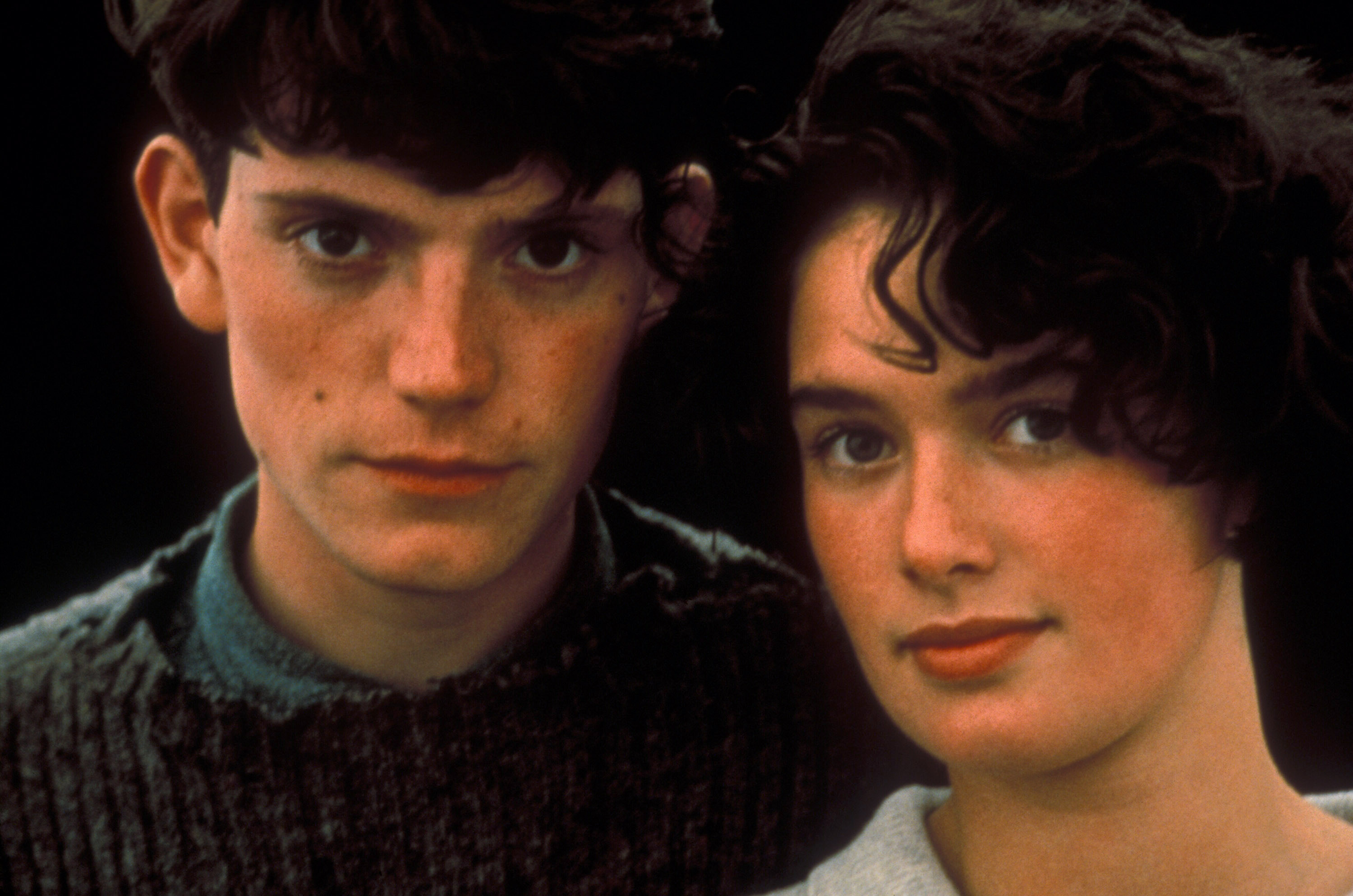
Game of Thrones star Lena Headey, who was born on this day in 1973, made her movie debut in 1992’s Waterland. Here she is looking baby faced opposite Grant Warnock in a publicity image:

Movie Comparison of the Day:

In this video, Jinky shows the visual similarities between Wonder Woman and Sucker Punch with side by side examples:

[embedded content]

Reworked Movie of the Day:

Given the claim that Frank Booth’s gas in Blue Velvet was meant to be helium, Philipp Acker presents an even more disturbing version of David Lynch’s film:

[embedded content]

Movie Food of the Day:

With the latest edition of Binging with Babish, learn to make the “cailles en sarcophage” from Babette’s Feast:

[embedded content]

Cosplay of the Day:

The family that cosplays together stays together and in this case trains their dragon together:

Family portrait from @japanimanga (MOUNTAINS!)??

Photo @PYulice ??Thank you!

Astrid: @_Cyrile_
Hiccup: Jessica Ao Cosplay
Stoick: meh :3 pic.twitter.com/ft5guL0kbc

— Dudus ?? MondoCon (@DudusArrrt) October 3, 2017

Classic Trailer of the Day:

Today is the 30th anniversary of the releasee of Kathryn Bigelow’s Near Dark. Watch the original trailer for the cult classic below.

[embedded content]

and

Let’s block ads! (Why?)


No Image

Mokoomba On Mountain Stage

Zimbabwean six-piece Mokoomba makes its debut on Mountain Stage, recorded live at the Culture Center Theater in Charleston, W.Va. Regarded as one of the best touring acts from Africa, the young Afro-fusion band sing in unison in Tongan and Luvale as they mix together funk, ska and pop influences. As host Larry Groce puts it, “That’s the way music works the best: when you don’t categorize. You just bring it and let it hang out.”

Mokoomba’s self-produced third album is Luyando, translated to mean “mother’s love” in Tongan, and available now on Outhere Records. A band that deserves to be seen live, Mokoomba features Mathias Muzaza on lead vocals, Trustworth Samende on lead guitar, Abundance Mutori on bass, Donald Moyo on keyboards, Miti Mugande on percussion and Ndaba Coster Moyo on drums.

SET LIST

  • “Kumukanda”
  • “Muzwile”
  • “Mabemba”
  • “Kulindiswe”

Let’s block ads! (Why?)


No Image

Equifax And Wells Fargo Apologize To Congress; Lawmakers Not Buying It

Former Equifax CEO Richard Smith testifies about the company’s massive data breach before a House Energy and Commerce subcommittee on Tuesday.

Chip Somodevilla/Getty Images

hide caption

toggle caption

Chip Somodevilla/Getty Images

When corporate chief executives appear before Congress, they come braced for battle, but hope for gentle treatment.

Tender handling is not what they got on Tuesday. Not from Republicans. Not from Democrats.

Not when they were representing Wells Fargo and Equifax — two huge companies that recently have harmed Americans.

“At best, you were incompetent. At worst, you were complicit. And either way you should be fired,” Sen. Elizabeth Warren, D-Mass., told Wells Fargo CEO Tim Sloan.

Sloan was testifying before the Senate Banking Committee, trying to explain the scandals that continue to plague his company.

In another hearing at the same time, the former CEO of Equifax, Richard Smith, was telling a House Energy and Commerce subcommittee about how his company managed to expose the sensitive, private information involving more than 145 million Americans.

The scope of Equifax’s failure to protect people’s privacy was “unprecedented,” subcommittee chairman Bob Latta, R-Ohio, said. The breach was “also unique because of the sensitivity of the information stolen — including full nine-digit Social Security numbers,” Latta said.

Smith, who stepped down last week from Equifax, started by saying: “I’m truly and deeply sorry for what happened.”

He then blamed the massive breach on two factors: “human error and technology errors.”

Rep. Frank Pallone, D-N.J., said Congress should pass legislation to protect consumers whose personal data gets stolen in such security failures. “Of course, breaches will continue to occur, but they occur more often when there is no accountability and when no preventative measures are in place,” he said.

Equifax executives were notified of the security breach in July, but waited until August to disclose it.

“Consumers do not have any say in whether or not Equifax collects and shares their data,” Pallone said. “And that’s what makes this breach so concerning. This is unlike any other breaches at stores like Target and Michael’s where consumers could make a choice and change their shopping habits if they were upset with how the companies protected data. That’s simply not the case with Equifax.”

Smith will have many more opportunities to explain it all; he is scheduled to testify at three additional hearings this week.

Meanwhile, back on the Senate side of Capitol Hill, the Wells Fargo CEO was getting clobbered too, and not just by Warren.

The banking giant, which is an NPR sponsor, has been in trouble for more than a year – ever since it revealed that its aggressive sales culture had led to the creation of millions of potentially fake accounts. Since then, other scandals have erupted, mostly involving excessive fees.

Like Smith, Sloan showed remorse.

“I am deeply sorry for letting down our customers and team members,” he said. “I apologize for the damage done to all the people who work and bank at this important American institution. When the challenges at Wells Fargo demanded decisive action, the bank’s leaders acted too slowly and too incrementally. That was unacceptable.”

But senators thought it was worse than unacceptable. Sen. John Kennedy, R-La., asked Sloan: “What in God’s name were you thinking?”

And Sen. Sherrod Brown, D-Ohio, was having none of it. “The changes Mr. Sloan and his team have made are not sufficient to reform a corporate culture that is willing to abuse its customers and employees in an effort to pad its numbers and increase executive compensation,” Brown said.

Let’s block ads! (Why?)


No Image

Many Black Families Watching As 'Take A Knee' NFL Protests Continue

For a week, black NFL players have been under an even brighter spotlight than on any given Sunday and while some families are turning away from the game, others are watching closely.

ROBERT SIEGEL, HOST:

For almost two weeks, black players in the National Football League have been under an intense spotlight during the national anthem, some standing, some kneeling and many of them locking arms with their teammates. The silent protests or demonstrations of solidarity have turned off some fans. But as Tonya Mosley of member station KQED in San Francisco reports, many black families are watching closely.

TONYA MOSLEY, BYLINE: There’s one thing you should know about Rob Hughes. He’s hopelessly devoted to NFL football. His wife, Jwana, jokes it’s his first love.

JWANA HUGHES: Eagles. Since I met him, diehard Eagle fan.

MOSLEY: He has the Comcast RedZone deluxe cable package. It gives him access to every game in the country. On a 60-inch television from the comfort of his living room couch, Hughes even checks his fantasy football online during commercial breaks.

ROB HUGHES: If I could have a TV in my bathroom so I wouldn’t have to actually miss a second, I would (laughter).

MOSLEY: But things have been a little different this season. Hughes pays more attention to the top of the game, the national anthem, what players are kneeling and what players aren’t. As we jump in the car to grab some snacks before his beloved Philly Eagles play the Los Angeles Chargers, Hughes explains how he sometimes puts himself in the players’ shoes.

R. HUGHES: Would I kneel? Would I stand? Would I do the patriotic thing, as I was taught?

MOSLEY: He’s not sure. He supports a player’s right to protest – no question. And he supports that the protest is against police brutality. Last year, he took his 13-year-old son to Colin Kaepernick’s Know Your Rights Camp in Oakland. At the time, Kaepernick was a quarterback for the 49ers, and he was scrutinized for taking the knee throughout the season during the national anthem.

R. HUGHES: It took a whole lot of heart for that dude to do that. I also think to myself, like, I wonder if he thought that all this would come from just that one act.

MOSLEY: Hughes’ son Kelby says Kaepernick’s camp was life-changing. He learned stuff like how to talk to and deal with law enforcement. But most of all, Kelby says he learned that he has the right to know his rights. Now when he sits to watch football with his dad, he’s thinking about a lot more than a touchdown.

KELBY: Every time I see a game, that reminds me of people who have knelt and people who have at least tried to solve our problems in our country.

MOSLEY: Some of the family’s friends are boycotting the NFL by not watching the games. They feel Kaepernick hasn’t been hired for political reasons. But Hughes doesn’t want to do that.

R. HUGHES: You have to also – what? – boycott everybody that supports them. So I’ve got to boycott Visa. I’ve got to boycott Pepsi. I’ve got to boycott all these corporate entities that also do that.

MOSLEY: Other people are boycotting the NFL for allowing the players to protest during the anthem. This frustrates Hughes’s wife, Jwana.

J. HUGHES: It’s not about the flag. It’s about police brutality. That’s the way I take it as.

R. HUGHES: Touchdown. Touchdown.

MOSLEY: This week, the Eagles beat the Chargers. Hughes took note during the anthem as the camera focused on Eagles safety Malcolm Jenkins raising his fist. For NPR News, I’m Tonya Mosley in San Leandro, Calif.

(SOUNDBITE OF PETE ROCK’S “A LITTLE SOUL”)

Copyright © 2017 NPR. All rights reserved. Visit our website terms of use and permissions pages at www.npr.org for further information.

NPR transcripts are created on a rush deadline by Verb8tm, Inc., an NPR contractor, and produced using a proprietary transcription process developed with NPR. This text may not be in its final form and may be updated or revised in the future. Accuracy and availability may vary. The authoritative record of NPR’s programming is the audio record.

Let’s block ads! (Why?)


No Image

For Many Women, The Nearest Abortion Provider Is Hundreds Of Miles Away

For women in rural areas, the nearest abortion provider can be a day’s drive away.

Carlos Ciudad Photos/Getty Images

hide caption

toggle caption

Carlos Ciudad Photos/Getty Images

There’s a clinic that’s right in Kelsey’s town of Sioux Falls, S.D., that performs abortions, but she still drove hours away to get one.

Back in 2015, she was going through a difficult time — recently laid off, had to move suddenly, helping a close family member through some personal struggles — when she found out she was also pregnant.

“I kind of knew right away that this was just not the time or place to have a child. I mentally wasn’t ready, financially wasn’t ready,” she says. “The whole situation really wasn’t very good.”

When Kelsey decided to end her pregnancy, she found herself navigating a maze of legal restrictions, in a part of the country where providers are few and far between. NPR is not using her last name to protect her privacy.

South Dakota has a 72-hour waiting period for abortions and requires women to meet with their doctor in advance of the procedure. Kelsey, a nurse, had recently started a new job and couldn’t take the time off to go to two appointments at the clinic in her city.

She was just a few weeks along, and it was important to her to end the pregnancy early.

“I just knew that I didn’t want to wait on this too long,” she says. “Everybody has their own feelings about what is appropriate for them to have an abortion … how far they want to wait and things like that. I just knew I just wanted to do it.”

She called several providers throughout the region, some hundreds of miles away, before she finally found an appointment in Minneapolis, about a four-hour drive away, on a day she happened to have off work.

Kelsey’s story is similar to that of many women across the country, according to a report released Tuesday by the Guttmacher Institute, a reproductive health research organization that supports abortion rights.

The report, published in The Lancet Public Health, includes an analysis by Guttmacher researchers of the distances women must travel to obtain abortions in the United States. For 1 in 5 women, the report finds, the trip is more than 40 miles one way.

Loading…

The trip is often longest for women in rural areas, with some in South Dakota driving more than 330 miles, according to Jonathan Bearak, a senior research scientist with Guttmacher and lead author of the report.

“I think there’s an unfortunate extent to which access to abortion is a bit contingent on your ZIP code, and that doesn’t need to be the case but it is,” he says.

Bearak says that increasing the use of options like telemedicine to provide medication abortion and reducing legal barriers to the procedure, like cumbersome health regulations on clinics and providers, could help improve access.

Social pressure is another factor that deters some doctors, midwives and nurse practitioners from providing those services, Bearak says.

“I think right now the issue is that it’s hard to do that because there are so many barriers in place to providing that care — not just the patients, but the doctors are affected by stigma,” Bearak says.

In South Dakota, where patients like Kelsey struggle with limited access to abortion services, Planned Parenthood has had to find creative ways to staff its local clinic. There’s no full-time abortion provider there, so Planned Parenthood flies a doctor from Minneapolis to Sioux Falls and back twice each week — first to consult with patients, as required by law, and then to perform the abortions.

Dr. Carol Ball has been making that trip for about a decade. She said local doctors are unwilling or unable to provide abortion services.

“I’ve been told by a supportive physician here that basically providing abortions for a South Dakota physician in Sioux Falls would be — quote unquote — ‘career suicide,’ ” Ball says. “Because I believe that the feeling is that there would be consequences to their practice.”

Ball says many of her patients travel hundreds of miles, some from out of state, to obtain an abortion at the clinic in Sioux Falls.

“It means that they have to find time away from their jobs and find child care for their children and all of the other sort of logistical things that it takes for us to stop and go to a doctor’s appointment,” Ball says. “They have to do that twice.”

Planned Parenthood’s Upper Midwest region has been flying abortion providers in and out of Sioux Falls for more than 25 years. Communications director Jen Aulwes says women there have limited options for abortion services.

“They’re very few and far between. They’re very spread out.” Aulwes says. “There’s, over the years, fewer and fewer clinics that that are providing abortion.”

Let’s block ads! (Why?)