October 2, 2017

No Image

Today in Movie Culture: The Saddest Scenes in Movies, Paul Thomas Anderson's Latest HAIM Video and More

Here are a bunch of little bites to satisfy your hunger for movie culture:

Supercut of the Day:

Appropriate for today, here’s a new supercut by Abi Gol compiling the saddest scenes in the history of cinema:

[embedded content]

Music Video of the Day:

Paul Thomas Anderson directed another music video for HAIM, this one for the song “Little of Your Love”:

[embedded content]

Video Essay of the Day:

With Blade Runner 2049 out this Friday, Kaptain Kristian looks at a beautiful future in Spike Jonze’s Her:

[embedded content]

Video Essay Parody of the Day:

Kentucker Audley is back with another video essay spoof, this one about the 1990 movie Ghost:

[embedded content]

Vintage Image of the Day:

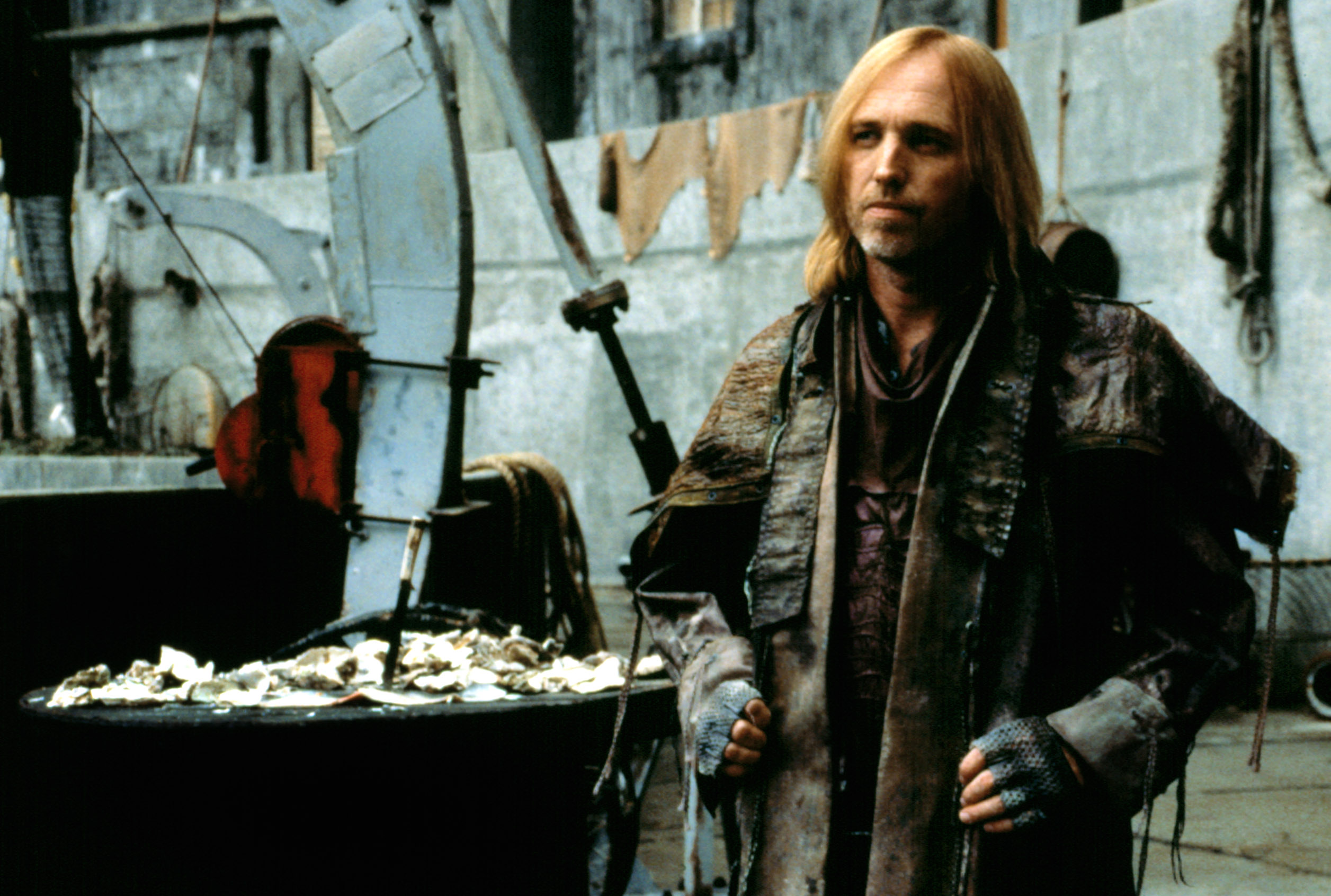
Tom Petty, who was rushed to the hospital last night and is in critical condition today, in one of the best cameos of all time as a post-apocalyptic version of himself in 1997’s The Postman:

Filmmaker in Focus:

For Fandor, Luis Azevedo showcases the monster movies of Bong Joon-ho and the girls that are prominent parts of each:

[embedded content]

Movie Trivia of the Day:

Cracked highlights all the times that Viggo Mortensen almost died making the Lord of the Rings movies:

[embedded content]

Movie Takedown of the Day:

Wisecrack asks “What Went Wrong” with the first Matrix sequel, The Matrix Revolutions, and tries to answer some other burning questions:

[embedded content]

Cosplay of the Day:

Most fans have been cosplaying as Yondu (often mashed with Mary Poppins), but this girl just went for actor Michael Rooker himself (via James Gunn):

@JamesGunn I cosplayed Rooker at DragonCon. How’d I do? pic.twitter.com/hXVl3hNIxD

— ?savannah? (@DisneyBarbie) September 29, 2017

Classic Trailer of the Day:

Today is the 25th anniversary of the release of Gary Sinise’s Of Mice and Men. Watch the original trailer for the classic John Steinbeck adaptation below.

[embedded content]

and

Let’s block ads! (Why?)


No Image

Las Vegas Hospitals Call For Backup To Handle Hundreds Of Shooting Victims

People line up to donate blood at a special United Blood Services drive at a University Medical Center facility to help victims of the mass shooting Sunday in Las Vegas.

Ethan Miller/Getty Images

hide caption

toggle caption

Ethan Miller/Getty Images

Hospitals across the Las Vegas area were inundated Sunday evening when hundreds of people injured in the mass shooting at a country music festival on the Strip arrived at their doors by ambulances and private car.

And hundreds of doctors, nurses, and support personnel were called into work to help handle the patients that were lined up in ambulance bays and hallways, officials say.

Following the shooting, Clark County Sheriff Joseph Lombardo said at least 58 people had died and 515 were injured after a gunman opened fire on thousands of people at a crowded outdoor concert.

While the numbers still may be in flux, they are enormous by any standard.

The University Medical Center of Southern Nevada, the state’s only comprehensive trauma center, received 104 patients, according to spokeswoman Danita Cohen. Four people died and 12 remained in critical condition Monday, Cohen says.

Sunrise Hospital and Medical Center saw 180 people who were injured in the shooting, including 124 people with gunshot wounds, according to Dr. Jeffrey Murawsky, the hospital’s chief medical officer. It’s the closest hospital to the site of the shooting and is a Level 2 trauma center, which means it can provide definitive care for all injured patients.

St. Rose Dominican hospital in nearby Henderson treated another 58 patients, five of whom are in critical condition, according to spokeswoman Jennifer Cooper.

The victims need blood donations, local officials say, and people are lining up to give.

“No one can say they’ve seen anything like this,” Sunrise’s Murawsky told All Things Considered on Monday. “We’ve seen events that have brought us 30 patients at once.”

He said 100 extra doctors were called in to work Sunday night, along with another 100 people including nurses, technicians, and support staff.

“We have a relatively large emergency department. We were able to triage within our emergency department,” he says. “We used the hallway space to see patients, so it’s a lot fuller than it normally would be and it feels a lot more chaotic.”

At University Medical Center, patients were being triaged in the ambulance bays, Cohen told CNN. The hospital has an 11-bay trauma center, with three operating bays, as well as regular surgery suites, which they likely used in this situation.

“We can get patients from an ambulance into the OR [operating room] in one minute,” Cohen says.

As reports of the gunfire emerged shortly after 10:30 p.m. PST Sunday, the city’s trauma centers began calling in extra personnel.

People working in trauma centers train for such emergencies and would know they’re likely to have to report to work as soon as they heard about the shooting on the news or social media. But still, the scale of this incident may have been surprising. “When you think of more than one hundred shooting victims, ballistic injuries, that is an absolute giant number,” says Bruno Petinaux, the chief medical officer and co-chair of emergency management at the George Washington University Hospital in Washington, D.C.

“When you’re talking about a mass casualty incident like this, this is where you call in the backup, and you call in the backup to the backup, and you may have to message the rest of your medical staff that you may need their help,” he says.

Petinaux says trauma centers have incident command structures in place to determine what kinds of people they need. A mass shooting is very different than a chemical incident or a fire.

In Las Vegas on Sunday, calls were likely going out to surgeons first, but not just surgeons. “Surgeons don’t work in a vacuum,” Petinaux says. “We’re now talking anesthesiologists, we’re talking about nurses, we’re talking about even pharmacists coming in. You may need to bring in more cleaners to help clean the OR and turn it around quickly.”

The Southern Nevada Health District, which includes Las Vegas and Clark County, has a 65-page trauma system plan that lays out how emergency responders and hospitals should communicate, work together, and divide responsibilities in a mass casualty situation.

Most major cities have such a plan, says Ian Weston, executive director of the American Trauma Society, which advocates for victims of trauma and the trauma care system.

“Hospitals are prepared to build capacity,” he says. “They’ll get the most critical patients into surgery quickly, they’ll stabilize more in the ER and some will even be treated in the lobby.”

He says hospitals determine exactly how many people they can care for in such a situation, even taking into account how many people they can fit into hallways, at least temporarily.

Let’s block ads! (Why?)


No Image

Facebook Surrenders Russian-Linked Influence Ads To Congress

Facebook has handed over ads linked to Russia’s interference in the 2016 presidential election.

Josh Edelson/AFP/Getty Images

hide caption

toggle caption

Josh Edelson/AFP/Getty Images

Updated at 3:26 p.m. ET

Facebook said on Monday it has given Congress thousands of ads linked with Russian influence operations in the United States and is tightening its policies to make such interference more difficult.

“Many [of the ads] appear to amplify racial and social divisions,” it said.

The social media giant confirmed that it discovered the ad sales earlier this year and gave copies to Justice Department special counsel Robert Mueller, who is investigating Russian interference in the 2016 election.

Facebook had shown the ads to congressional investigators but not turned them over. After complaints by the leaders of the Senate Intelligence Committee, the company decided to give them up after all.

“We are sharing these ads with Congress because we want to do our part to help investigators gain a deeper understanding of Russian interference in the US political system and explain those activities to the public,” said a statement by Joel Kaplan, Facebook’s vice president for global public policy.

The leaders of the Senate and House Intelligence committees, which are investigating Russia’s attack on the 2016 presidential election, have complained that Facebook, Twitter and other online platforms haven’t cooperated as much with their investigations as they wish.

House Intelligence Committee ranking member Adam Schiff, D-Calif., acknowledged receipt of the ads on Monday but said there are still important unanswered questions about the social media campaigns.

“As we fully examine these ads in the coming days, we will be particularly interested in understanding their full reach, in particular to determine what groups and individuals were most heavily targeted and why,” he said.

Schiff said he hopes to release a “representative sampling” of the ads Facebook has turned over as soon as possible.

And both panels want to schedule open hearings with representatives of the companies this month or next, although Facebook and Twitter haven’t said whether they’ll participate.

Representatives from Twitter visited Capitol Hill last week to brief investigators on their findings, but at least one leader wasn’t satisfied: Senate Intelligence Committee Vice Chairman Mark Warner, D-Va., called the session “frankly inadequate.”

Meanwhile, the use of social networks in influence operations continues apace.

Facebook CEO Mark Zuckerberg has vowed that his company will change the policies that made possible some of the influence operations that he, Congress and Robert Mueller are investigating.

To that end, Kaplan said on Monday that the company was rolling out tweaks: Facebook plans to show users more information about the ads they’re seeing, including other messages the buyer is running that target other users.

It also says it plans to better enforce restrictions on “improper” material, require more documentation from buyers of election ads and collaborate with its competitors.

The next milestone in this story could take place on Wednesday, when Senate Intelligence Committee Chairman Richard Burr, R-N.C., and Warner are scheduled to convene a joint news conference in Washington, D.C.

Let’s block ads! (Why?)


No Image

Judge In Canada Intervenes In Custody Battle

Beverly and Donald McLeod divorced after 35 years. The big question: Who would keep the hockey tickets. The couple owns two season tickets to the Edmonton Oilers NHL games.

DAVID GREENE, HOST:

Good morning. I’m David Greene. A judge had to intervene in a custody battle in Canada. Beverly and Donald MacLeod divorced after 35 years. The big question was who would keep the hockey tickets? The couple owns two season tickets to Edmonton Oilers games. Beverley wanted joint custody of the seats, and she won. The judge laid out this plan for how the couple will divvy-up games. They do not have to actually sit together watching hockey. That would have been a stick-ing point. It’s MORNING EDITION.

Copyright © 2017 NPR. All rights reserved. Visit our website terms of use and permissions pages at www.npr.org for further information.

NPR transcripts are created on a rush deadline by Verb8tm, Inc., an NPR contractor, and produced using a proprietary transcription process developed with NPR. This text may not be in its final form and may be updated or revised in the future. Accuracy and availability may vary. The authoritative record of NPR’s programming is the audio record.

Let’s block ads! (Why?)