
September 9, 2017

No Image

As Irma Approaches Miami, Twin Brothers Serve Up Last-Minute Coffee And Croissants
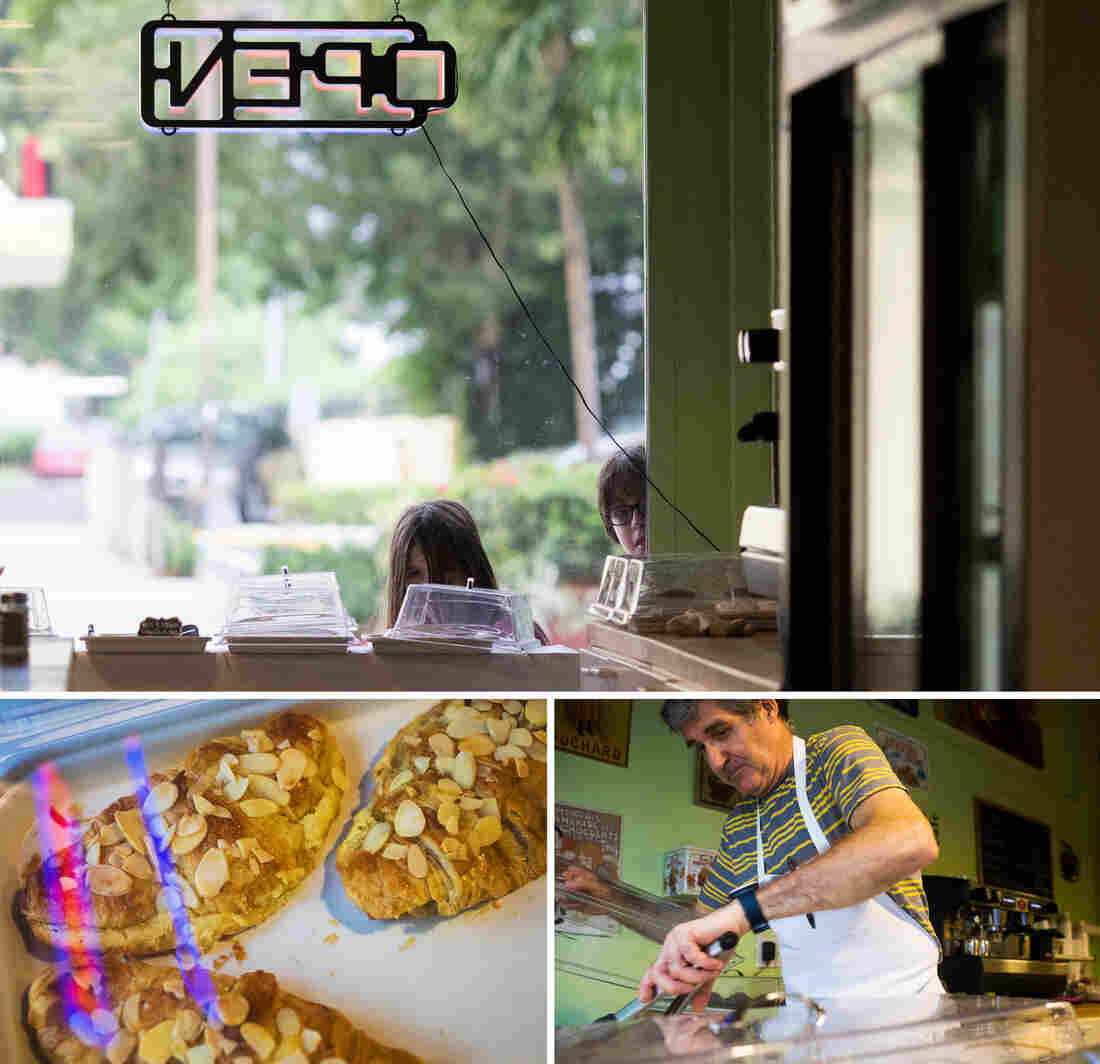
Top: Customers at Café Croissant peek through the front window ahead of the arrival of Hurricane Irma in Miami, Fla., on Saturday. Bottom: Co-owner Pascal Vedel prepares a box of croissants.

Cassi Alexandra for NPR

hide caption

toggle caption

Cassi Alexandra for NPR

Hurricane Irma is expected to bring high winds and heavy rains across Florida as a Category 3 storm, and has been projected to strengthen again before hitting the state. While many people stocked up on supplies and boarded up their windows, a few businesses remained open in Miami on Saturday.

Café Croissant had its bright “open” sign lit, welcoming customers in from the rain. Pascal Vedel, who co-owns the cafe with his twin brother Didier, greets each patron with a smile and offers them coffee. The brothers are originally from Montpellier, in southern France.
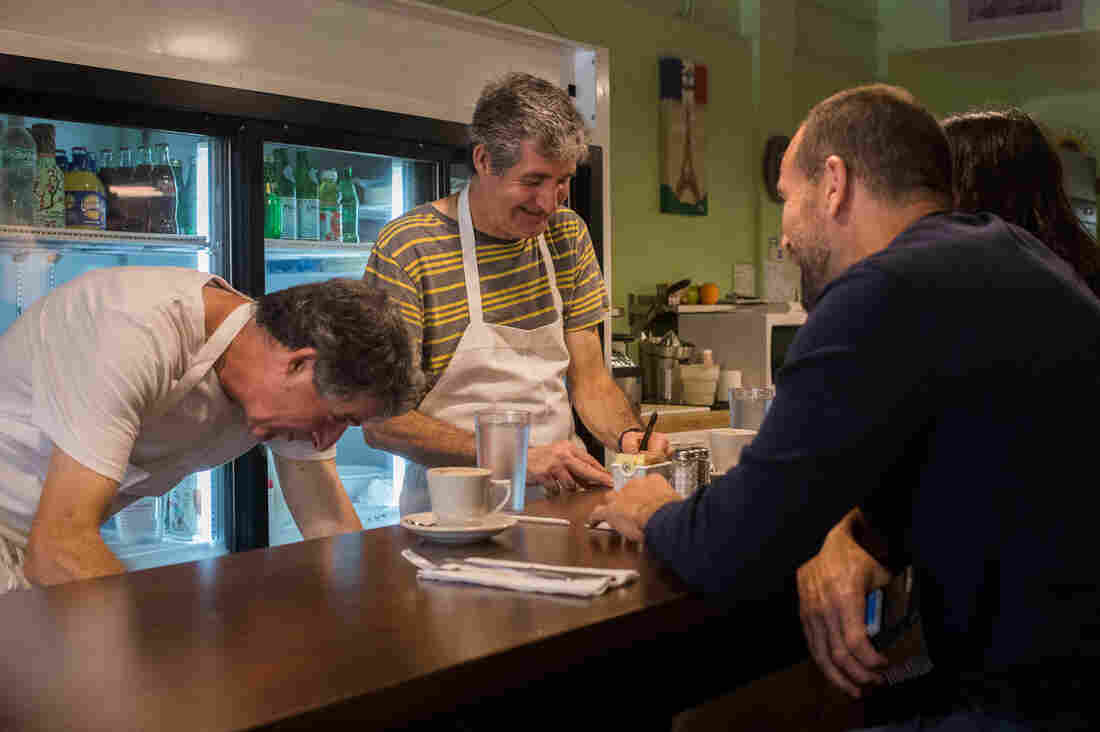
Café Croissant owners and twin brothers Didier (left) and Pascal Vedel serve customers in Miami on Saturday. They opened their doors Saturday morning at 7 a.m. with the plan to stay open until noon unless the weather encouraged them to close earlier.

Cassi Alexandra for NPR

hide caption

toggle caption

Cassi Alexandra for NPR

Didier, who looks nearly identical to Pascal, steps out of the kitchen with a warm plate of food. After visiting Miami 20 years ago, they decided to move to the city because they loved the mix of people.

Hurricane Irma is the strongest storm the twins have experienced while living here.

Hurricane Irma approaches the Miami skyline seen on Saturday morning.

Cassi Alexandra for NPR

hide caption

toggle caption

Cassi Alexandra for NPR

“We have to pray for the best,” Pascal says. “There is going to be a [storm] all the way from Key West to Jacksonville.”

Patron after patron walks through the doors and gushes about the hardworking brothers. They’re especially happy to enjoy their delicious food on such a stormy day.

One of the customers is Elias Smith, 21, a student at University of Miami. He also lives in an apartment above the cafe.
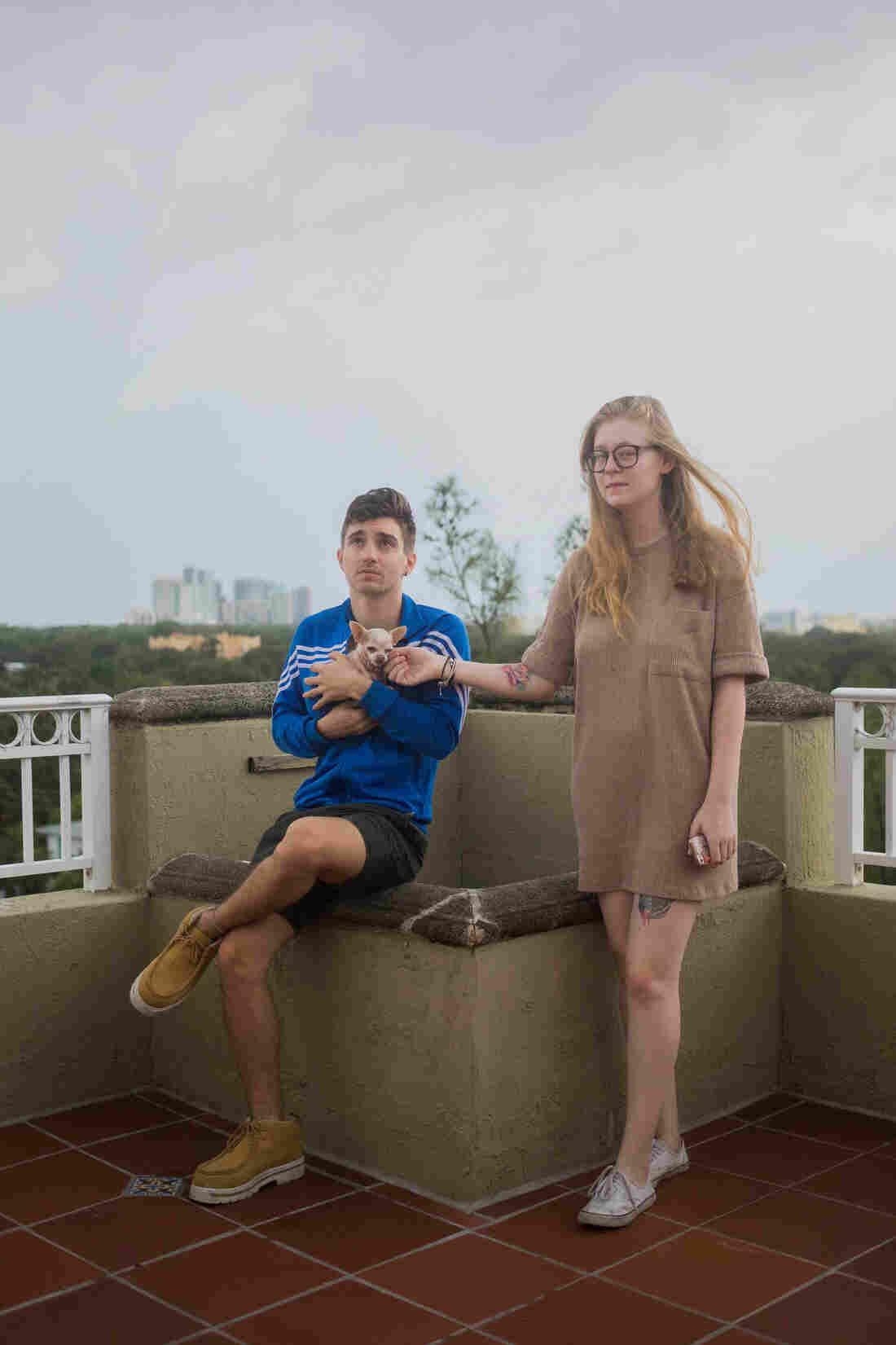
Elias Smith, 21, and Rachel Grunert, 21, are students from The University of Miami. Smith lives above the café and Grunert will be staying with him since her dorm was evacuated.

Cassi Alexandra for NPR

hide caption

toggle caption

Cassi Alexandra for NPR

“There is a magic to this city that no other city I’ve been to has,” Smith says.

Smith stopped in to pick up some food along with Rachel Grunert, 21, a friend from school who’s staying with Smith after she was evacuated from her campus dorm.

“I think people that live in Miami are very strong mindset type of people,” Grunert says. “My hope is that everyone rallies after, to rebuild if necessary.”
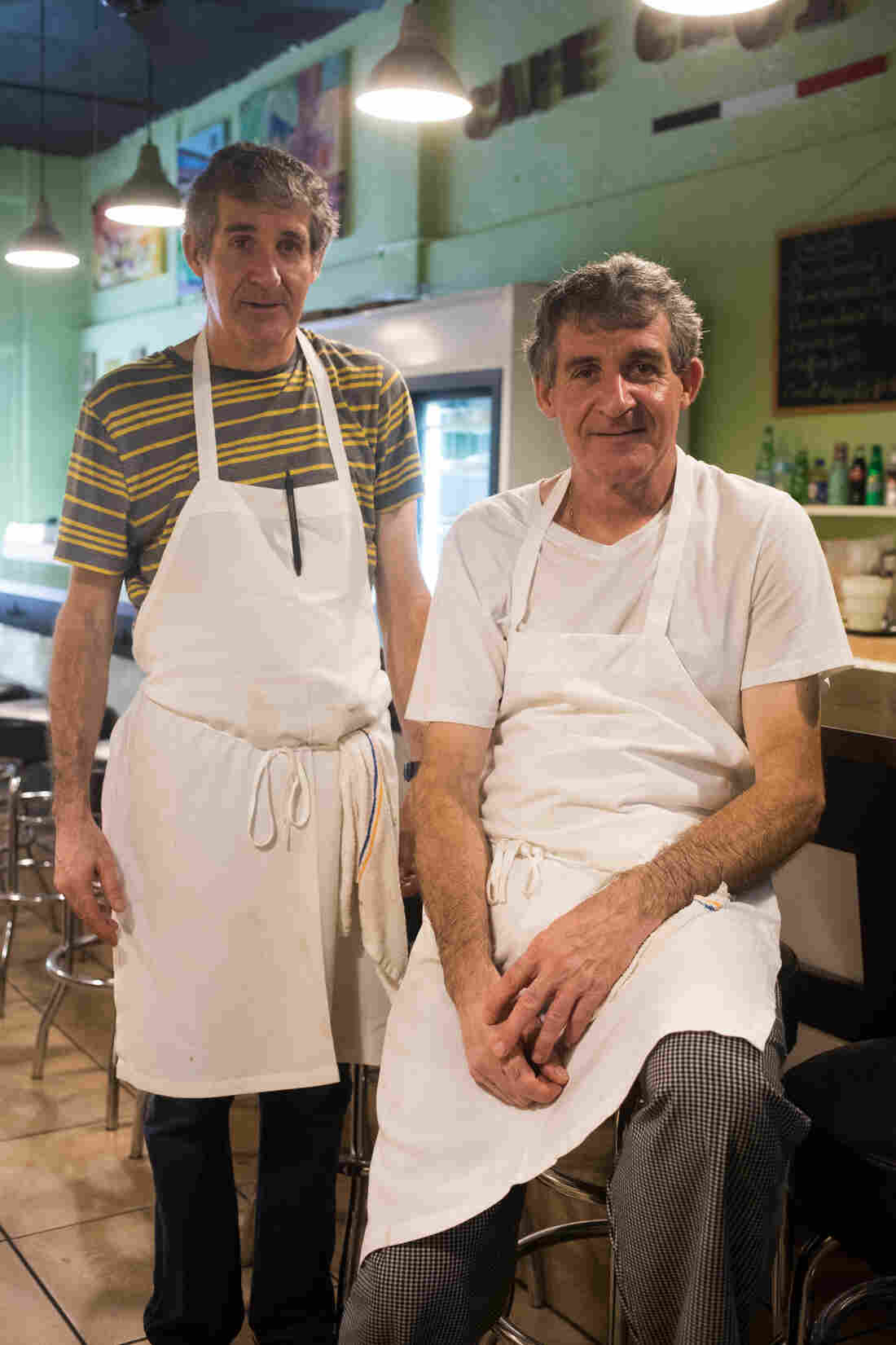
Pascal (left) and Didier Vedel are originally from Montpellier in the south of France. Pascal says he and his brother decided to move to Miami after vacationing here 20 years earlier.

Cassi Alexandra for NPR

hide caption

toggle caption

Cassi Alexandra for NPR

Pascal and Didier opened at 7 a.m., and closed around noon so they could get home before the curfew issued by Miami Mayor Tomas Regalado.

“Have a good day! Be safe,” Pascal says as a customer walks out the door.
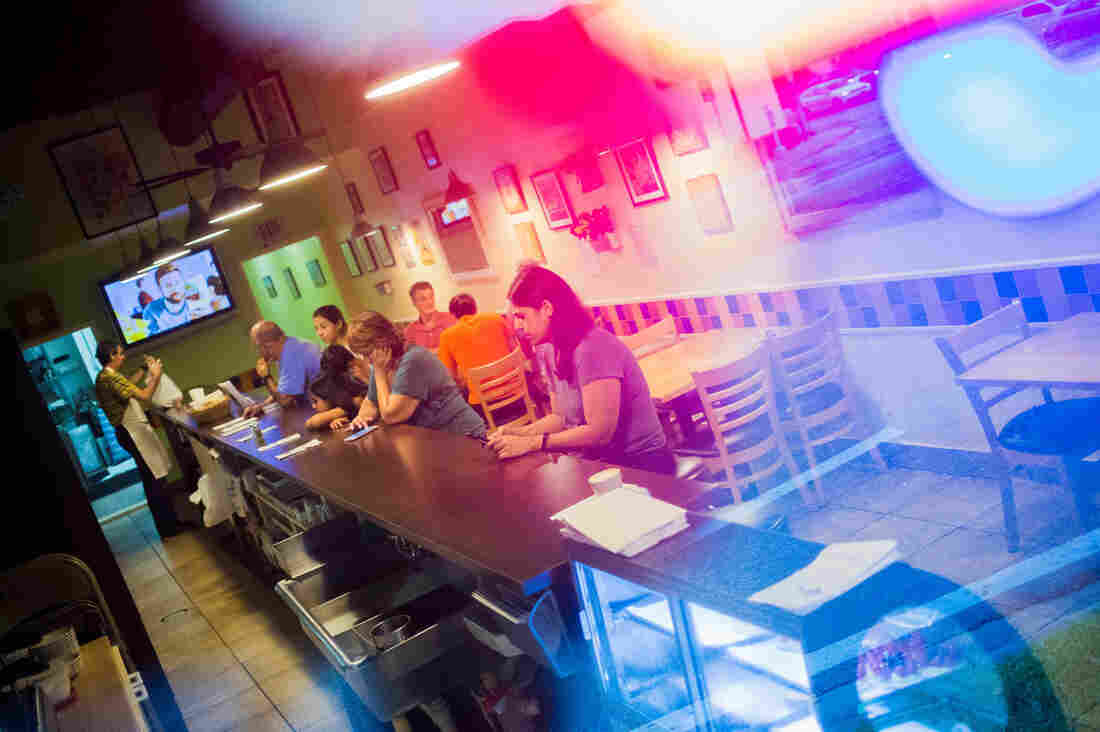
Patrons of Café Croissant enjoy a meal at one of the few restaurants open in Miami ahead of the arrival of Hurricane Irma on Saturday.

Cassi Alexandra for NPR

hide caption

toggle caption

Cassi Alexandra for NPR

Cassi Alexandra is an independent photographer who splits her time between Orlando, Fla., and Brooklyn, N.Y.
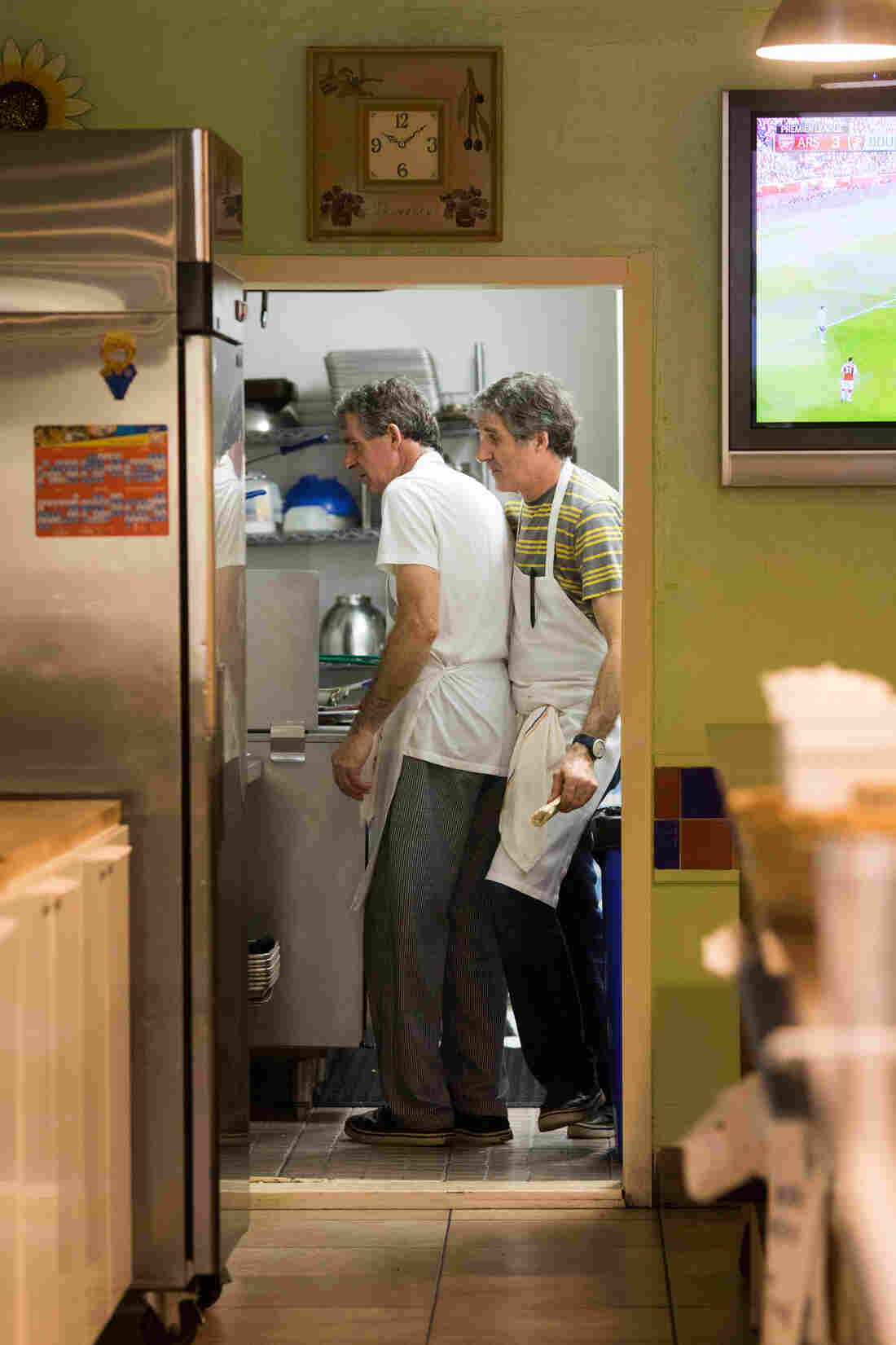
Café Croissant owners and twin brothers Didier (left) and Pascal Vedel prepare food in their kitchen. This is the strongest storm they have experienced while living in Miami.

Cassi Alexandra for NPR

hide caption

toggle caption

Cassi Alexandra for NPR

Let’s block ads! (Why?)


No Image

At U.S. Open Semifinals, 3 Players Break Barriers For African-Americans In Tennis

This year’s U.S. Open tennis tournament saw four Americans in the semifinals. What’s more, three of them are African-American. Katrina Adams, president of the U.S. Tennis Association, talks with NPR’s Michel Martin about the progress made in tennis.

MICHEL MARTIN, HOST:

American tennis fans who like to root for the home team have a lot to celebrate today. Twenty-four-year-old Sloane Stephens won the U.S. Open women’s championship this afternoon. She defeated 22-year-old Madison Keys in the final. All four semifinalists on the women’s side were American. That’s the first time that’s happened since 1985. And here’s something else that made news – 3 of the 4 semifinalists were African-Americans. We wanted to talk a bit more about this big week in American tennis, so we called Katrina Adams. She is the president of the U.S. Tennis Association. We caught up with her yesterday ahead of today’s final match.

Now, it has to be said that you are a barrier breaker yourself. You are the Tennis Association’s first African-American president. You’re also the first former professional player to serve as president and the youngest. But just taking one of those attributes aside, it’s been 60 years since Althea Gibson broke the color barrier at the U.S. Open in 1950. And I just wonder, did it have some special meaning to see not only an all-American semifinal but that three of these players are black?

KATRINA ADAMS: Well, it definitely has a special meaning for me, in particular, to see that three of them are – I mean, we’ve been used to seeing Venus and Serena for years in the semifinals and/or finals against one another. But when you add another element and we’re looking at the next generation beyond them really starting to perform and be on the big stages later in the tournament, it’s truly exciting.

MARTIN: So when the Williams sisters first got big back in the mid-’90s, it was an anomaly, or it seemed like an anomaly for a lot of reasons, but also because of what their pathway to the big stage was. And I wondered if the presence of these three players says anything about the pathway to professional tennis now. Has anything changed?

ADAMS: Well, you know what? It was an anomaly only because of the way that they entered the sport and with their parents coaching them. And they never really competed on the junior level. But you have to look at the generation before that, when you had Leslie Allen and Zina Garrison, Lori McNeil, Chanda Rubin, myself. So we’ve been fortunate to have women of color, in particular, in the game for many years, for decades following Althea Gibson.

But when you look at the success of what Venus and Serena did consistently, that took it to the forefront. And really, those are the only two names that people really remember. But they were also – came at a time where as their success prevailed, you know, they had the media and the posters and. You know, you look at Sloane Stephens and Madison Keys, who each had a poster of one or the other up on their wall at some point. And now, here they are on the same stage. And obviously, we saw Venus Williams lose to Sloane Stephens Stephens in the semifinals.

MARTIN: How does the future of American tennis look to you? I mean, the Williams sisters, you know, as exciting as they still are and as inspirational as they still are to many people, continuing to play at a very high level long after other folks have put down their racquets. But an American man hasn’t won the Open since Andy Roddick in 2003. How does the future look to you?

ADAMS: Well, I think you’ve seen it on the courts here at Arthur Ashe Stadium for the last two weeks. We had five women in the quarterfinals. So 5 of 8 were American. Four were in the semifinals. Two were in the finals. So the future of American tennis looks great. It’s here. It’s moving forward.

Our men are coming. You know, we had Sam Querrey that was also in the quarterfinals of the U.S. Open. And then you have John Isner and Jack Sock, Steve Johnson, Tommy Paul, Francis Tiafoe and so many other names that are all in the top 100 – and Taylor Fritz. And these guys are under 21, under 25. So the future is very bright, and we’re extremely excited about the potential.

MARTIN: Before we let you go, do you still have time to play yourself?

ADAMS: I don’t play as much as I’d like to. I actually have a bum knee right now. But soon, I’ll be back out there on the court.

MARTIN: All right. That’s Katrina Adams, president of the U.S. Tennis Association. It was nice of you to take time out to talk with us. Thanks so much for speaking with us.

ADAMS: Thank you so much for having me.

MARTIN: That was Katrina Adams. We spoke with her yesterday ahead of today’s match. And we want to let you know that 24-year-old Sloane Stephens won the U.S. Open women’s championship this afternoon, defeating Madison Keys in the final.

Copyright © 2017 NPR. All rights reserved. Visit our website terms of use and permissions pages at www.npr.org for further information.

NPR transcripts are created on a rush deadline by Verb8tm, Inc., an NPR contractor, and produced using a proprietary transcription process developed with NPR. This text may not be in its final form and may be updated or revised in the future. Accuracy and availability may vary. The authoritative record of NPR’s programming is the audio record.

Let’s block ads! (Why?)