August 22, 2017

No Image

Today in Movie Culture: Dolph Lundgren's Real 'Creed 2' Training Montage, Bruce Lee Trivia and More

Here are a bunch of little bites to satisfy your hunger for movie culture:

Training Montage of the Day:

Watch Dolph Lundgren get ready for his return as Ivan Drago in Creed 2 from the actor’s Instagram (via Geek Tyrant):

Mashup of the Day:

Horror icons including Freddy Krueger, Pinhead and Pennywise the clown were inserted to the trailer for Stranger Things Season 2 (via /Film):

[embedded content]

Movie Trivia of the Day:

With Birth of the Dragon out this weekend, ScreenCrush shares some trivia about the Bruce Lee classic Enter the Dragon:

[embedded content]

Video Essay of the Day:

Speaking of martial arts movies, here’s Patrick Willems with an essay explaining why Crouching Tiger, Hidden Dragon is great:

[embedded content]

Vintage Image of the Day:

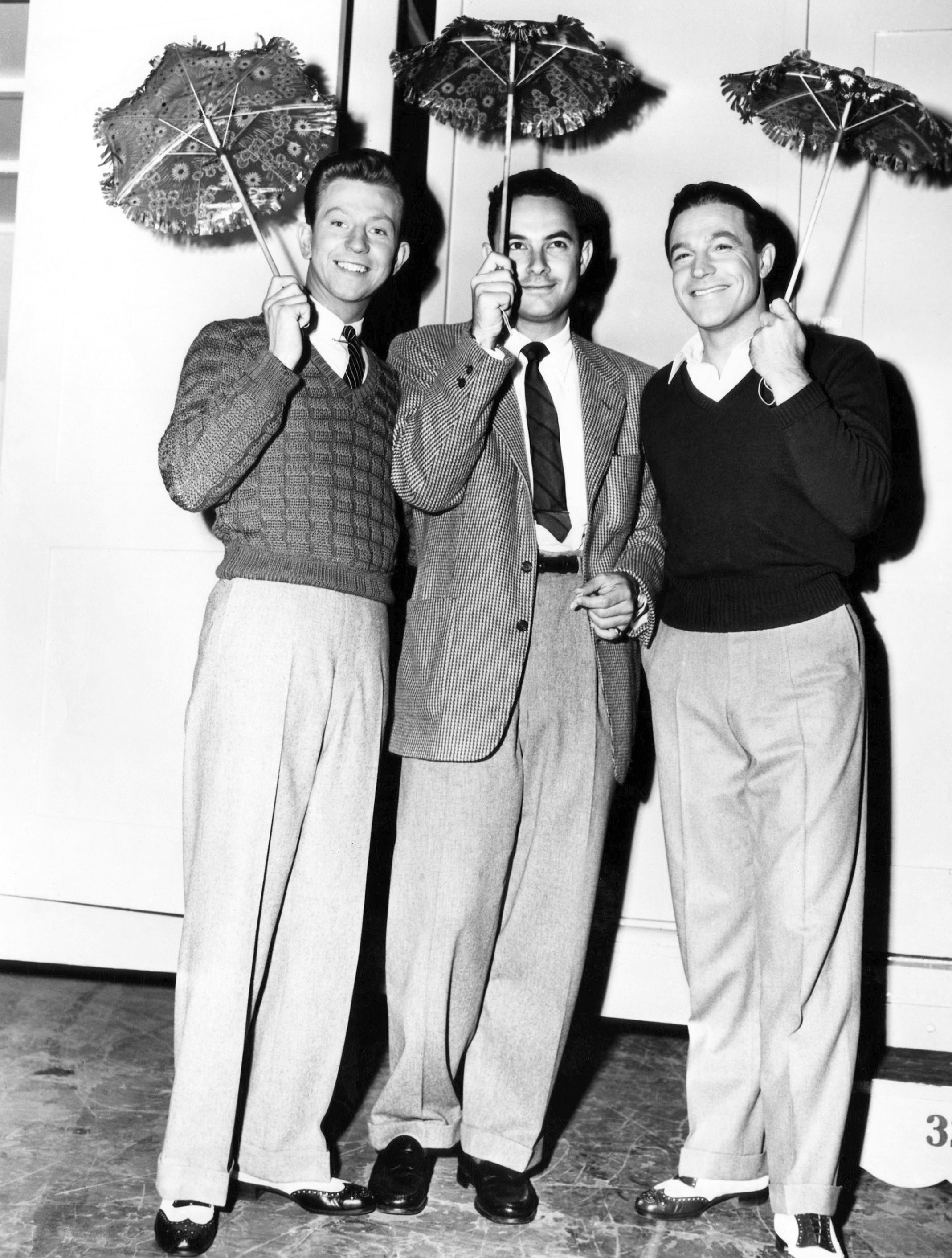
Gene Kelly, who was born on this day 115 years ago, poses with his co-director Stanley Donen and co-star Donald O’Connor on the set of Singin’ in the Rain in 1951:

Filmmaker in Focus:

For Fandor, Matt Novak looks at Alfred Hitchcock’s use of hands in his movies, including Psycho and The Birds:

[embedded content]

Screenwriting Lesson of the Day:

Lessons from the Screenplay explores how to tell a story in reverse with focus on Christopher Nolan’s Memento:

[embedded content]

Remixed Movie of the Day:

Eclectic Method turned the sounds of the Indiana Jones movies into a dance song:

[embedded content]

Cosplay of the Day:

Disney’s Atlantis is not the most popular animated feature, so it’s neat to see this fan pulling off some cool obscure cosplay:

Princess Kida from Atlantis #cosplay done by https://t.co/iAJdc8xmPhpic.twitter.com/U7AT4Uberd

— Cosplay Girls (@CosplayGirIs) August 16, 2017

Classic Trailer of the Day:

Today is the 20th anniversary of the release of Guillermo del Toro’s Mimic. Watch the original trailer for the sci-fi/horror movie below.

[embedded content]

and

Let’s block ads! (Why?)


No Image

Dakota Access Pipeline Owner Sues Greenpeace For 'Criminal Activity'

Greenpeace activists hang a banner from the rafters at a bank shareholders’ meeting earlier this year in Zurich, calling for it to “STOP DIRTY PIPELINE DEALS!” Also on the banner are hashtags supporting Dakota Access Pipeline protesters.

Michael Buholzer/AFP/Getty Images

hide caption

toggle caption

Michael Buholzer/AFP/Getty Images

The developer behind the Dakota Access Pipeline, which for months drew thousands of protesters, has sued Greenpeace and several other environmental groups for their role in delaying the pipeline’s construction. In the racketeering lawsuit it filed in federal court Tuesday, Energy Transfer Partners alleges these groups inflicted “billions of dollars in damage” with their “criminal activity and campaigns of misinformation” against the pipeline.

Greenpeace led a “network of putative not-for-profits and rogue eco-terrorist groups” — including Earth First! and BankTrack, who are also defendants — which disseminated false claims about the pipeline’s impact on the environment and the Standing Rock Sioux tribe’s sacred sites, alleges the lawsuit.

Energy Transfer says the environmental groups, which together it refers to as “the Enterprise,” engaged in racketeering and defamation that ended up increasing the cost of construction by at least $300 million. But the developer — represented by a law firm whose managing partner is Marc Kasowitz, President Trump’s personal attorney — notes the “full extent of damage” must be determined at trial with a jury.

“This is the second consecutive year Donald Trump’s go-to attorneys at the Kasowitz law firm have filed a meritless lawsuit against Greenpeace,” Greenpeace USA General Counsel Tom Wetterer responded in a statement, referring to a similar 2016 lawsuit filed against Greenpeace by Resolute Forest Products.

“It is yet another classic ‘Strategic Lawsuit Against Public Participation’ (SLAPP), not designed to seek justice, but to silence free speech through expensive, time-consuming litigation,” Wetterer added. “This has now become a pattern of harassment by corporate bullies, with Trump’s attorneys leading the way.”

Crude oil began flowing through the $3.8 billion pipeline earlier this summer, roughly half a year after the project was originally intended to be finished. While the pipeline stretches more than 1,000 miles, most of the controversy over its construction focused on its path across the Missouri River in North Dakota, near the Standing Rock Sioux tribe’s reservation.

As NPR’s Camila Domonoske noted, the tribe “argued the route would threaten the tribe’s water sources and sacred sites,” even winning a halt to construction — but only briefly. The decision to deny a permit for the proposed route, which was handed down in the closing months of the Obama administration, was quickly reversed after President Trump entered office.

Energy Partners argues that throughout this fight, the environmental groups it’s suing sought to undermine a legal project with their “calculated and thoroughly irresponsible attacks.”

“They caused enormous harm to our company and to people and property along the pipeline’s route, wreaking havoc in those states,” Energy Transfer spokesperson Vicki Granado said Tuesday. “We have an obligation to our shareholders, partners, stakeholders and all those negatively impacted by the violence and destruction intentionally incited by the defendants to draw a line.”

Let’s block ads! (Why?)


No Image

Governors Preparing Bipartisan Health Care Plan For Congress To Consider

Colorado Gov. John Hickenlooper (left) and Ohio Gov. John Kasich will present a plan that fleshes out a set of principles they wrote about in an op-ed in The Washington Post.

Carolyn Kaster/AP

hide caption

toggle caption

Carolyn Kaster/AP

In the wake of congressional Republicans’ failure to pass a health care bill, two governors from different parties are going to bring their own ideas to Washington.

Staff for Colorado Gov. John Hickenlooper, a Democrat, and Ohio Gov. John Kasich, a Republican, are working on a joint plan to stabilize the country’s health insurance markets. Kasich told Colorado Public Radio’s Colorado Matters that they expect to release it ahead of September hearings in the U.S. Senate. They also intend to get other governors from both parties to sign onto the plan, to show support at the state level.

“We’re getting very close. I just talked to my guys today, men and women who are working on this with [Hickenlooper’s] people, and we think we’ll have some specifics here, I actually think we could have it within a week,” Kasich said in a joint interview with Hickenlooper that aired Tuesday.

The plan will flesh out a set of principles the two men wrote about in an op-ed in The Washington Post, in which they said another one-party health care plan is “doomed to fail,” just like the Republican plans considered this year. In the op-ed, they asserted that the best place to start reform efforts is “to restore stability to our nation’s health insurance system.”

Bipartisan health care hearings, including the one the governors will appear at, are set to begin just after Labor Day when Congress returns from its August recess. Lawmakers will be consumed with a number of deadlines involving government funding, though — sending health care to the back burner.

“I’m not going to get into specifics with you until we have it all ironed out, but it’s not going to be some pie-in-the-sky, way-up-there kind of stuff. There will be things that we will address that will have specific solutions. And one of the things we’re finding out is the states do have some power to do some things unique to them, as long as these insurance markets are going to be stabilized,” Kasich said.

One specific they agree on and would discuss: changing the Affordable Care Act mandate that employers with 50 or more employees provide insurance coverage. The governors say that number is too low, which deters hiring at small companies.

They also agree that the possibility of national single-payer coverage is not on the table in their discussions.

In recent months, Hickenlooper and Kasich have appeared on national television shows to advocate for bipartisan health care reform that includes keeping the Medicaid expansion intact, with both took advantage of in their states. The two governors have even entertained running for the White House on a split ticket.


Interview Highlights With Govs. Hickenlooper And Kasich

On whether they think health care should be a “right”

John Hickenlooper: I come from the school that I think it is a right. I’m not sure how much health care is included in that right, but some basic coverage.

John Kasich: I don’t think that’s that important in this. I mean we want everybody to have health insurance. I mean that’s how I feel. Is it a right or is it a privilege or whatever? I don’t know why that declaration is important … The question is how do you do it, and that’s what we’re working on … Primary care is important. Catastrophic coverage is important. We don’t want anybody to get bankrupted because they get sick.

On what to change about the Affordable Care Act first

Hickenlooper: There are several important things, but the probably top one on our list would be this notion of having some sort of reinsurance [using public money to help insure the sickest people] to make sure the high-cost pool is not causing higher rates for all the people seeking insurance on the private markets … You use reinsurance in almost every type of insurance program to cut off those “hilltops” as we say.

On why this joint effort may gain traction

Hickenlooper: “[The Senate’s health committee] is now holding hearings [starting Sept. 5], and hopefully in those hearings we’ll get a chance to present, hopefully, what by that point a number of both Republican and Democratic governors think look like good ideas.”

The Colorado Matters website has the full transcript.

This story is part of a reporting partnership with NPR, Colorado Public Radio and Kaiser Health News.

Let’s block ads! (Why?)