July 10, 2017

No Image

Today in Movie Culture: 'Spider-Man: Homecoming' Easter Eggs, a Celebration of Costume Designers and More

Here are a bunch of little bites to satisfy your hunger for movie culture:

Easter Eggs of the Day:

Now that you hopefully have seen Spider-Man: Homecoming, check out Mr. Sunday Movies’ amusing look at its Easter eggs, cameos and post-credits scenes:

[embedded content]

Franchise Trivia of the Day:

Ranker offers an animated look at the conventions of Spider-Man movies, most of which Homecoming broke from:

[embedded content]

Fan Theory of the Day:

MatPat of Film Theorists scientifically makes a case that a real Spider-Man would never survive his web-slinging and swinging:

[embedded content]

Movie Science of the Day:

Speaking of Spider-Man and science, Kyle Hill explains how the superhero could still climb walls while wearing his suit:

[embedded content]

Vintage Image of the Day:

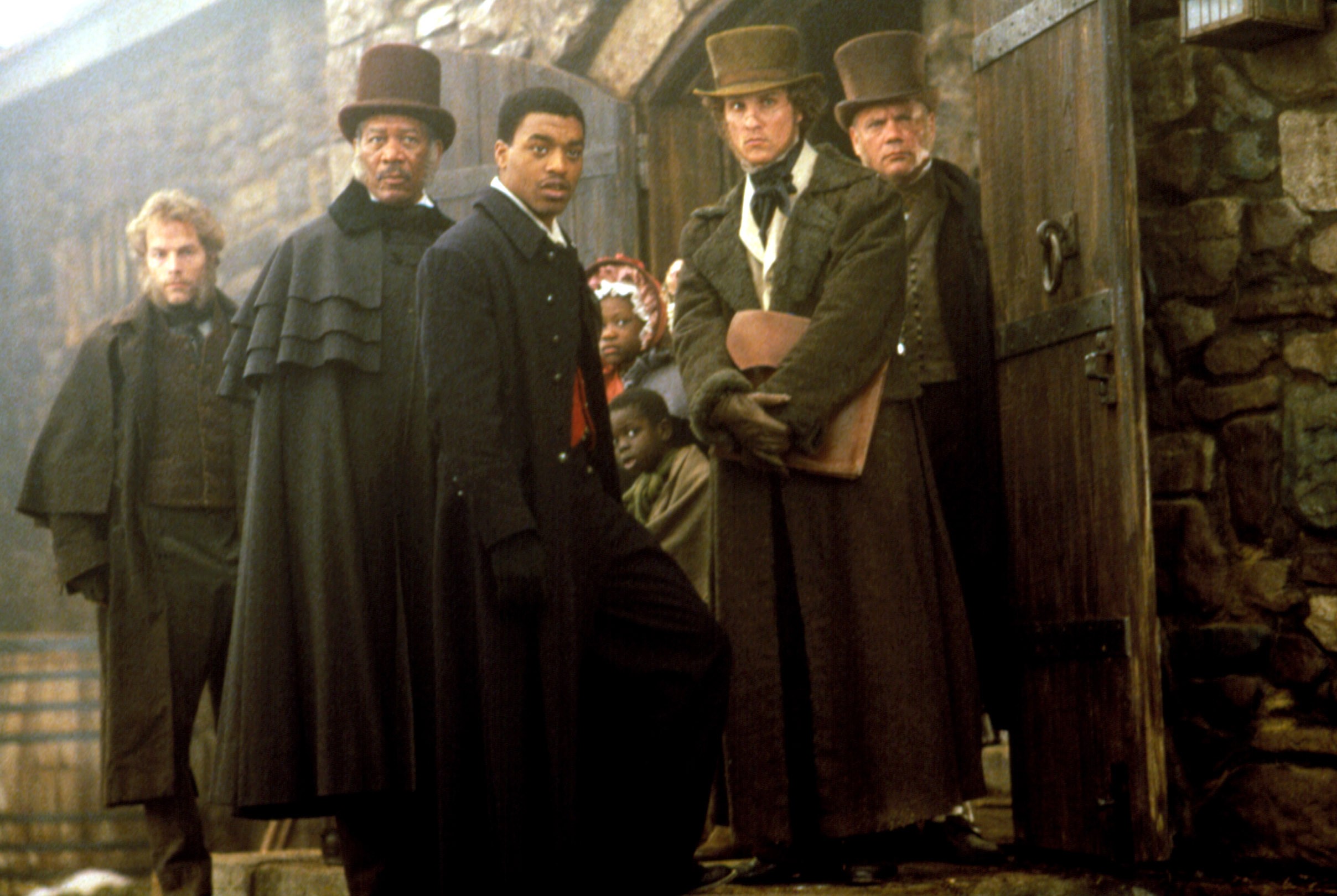
Chiwetel Ejiofor, who turns 40 today, with Morgan Freeman, Matthew McConaughey and others on the set of his film debut, Steven Spielberg’s Amistad, in 1997:

Actor in the Spotlight:

Can you spot when there’s a fake Arnold Schwarzenegger on screen in his movies? This video helps differentiate between the real deal and his CG and stunt double impostors (via Geekologie):

[embedded content]

Filmmaking Lesson of the Day:

Learn about the science of deep focus and the hyperfocal distance from John Hess of Filmmaker IQ:

[embedded content]

Movie Craft of the Day:

The latest video essay from Now You See It celebrates the importance of costume designers, often the “secret heroes” of filmmaking:

[embedded content]

Cosplay of the Day:

Star Wars meets classic literary icons with the inventive cosplay mashup “Edgar Allen Poe Dameron” (via Fashionably Geek):

My Edgar Allen Poe Dameron cosplay #cvg2017pic.twitter.com/aqPQocdMzM

— Beth Grimes (@victrolavixen) July 10, 2017

Classic Trailer of the Day:

Today is the 25th anniversary of the release of Ralph Bakshi’s Cool World starring Brad Pitt and Kim Basinger. Watch the original trailer for the live-action/animation hybrid below.

[embedded content]

and

Let’s block ads! (Why?)


No Image

Doctor Accused Of Molesting U.S. Gymnasts To Plead Guilty To Other Charges

A photo provided by the Michigan Attorney General’s office shows Dr. Larry Nassar, who treated female gymnasts and is accused by many of molesting them. He has agreed to plead guilty to child pornography charges on Tuesday.

AP

hide caption

toggle caption

AP

A plea deal could mean a doctor at the heart of a sexual abuse scandal involving more than 100 girls and women, including top American gymnasts, won’t face federal criminal charges in those cases.

Dr. Larry Nassar, a former team doctor for USA Gymnastics, signed the agreement June 23. He’s scheduled to change his plea from not guilty to guilty on Tuesday morning in a Grand Rapids, Mich., federal court.

According to the agreement, Nassar will plead guilty to three counts relating to child pornography. The document states that between 2003 and 2016, Nassar knowingly possessed thousands of images and videos of child pornography.

He could get up to 20 years in prison on each pornography count.

In return for his guilty plea, federal authorities agree not to further prosecute Nassar “for sexual exploitation and attempted sexual exploitation of children.” That relates to allegations that Nassar molested two minors in his swimming pool in 2015. And he won’t be prosecuted for “interstate/international travel with intent and engaging in illicit sexual conduct in foreign places.” This relates to a period between 2006 and 2013, when Nassar is alleged to have abused some elite U.S. gymnasts competing overseas.

“This affects any federal charge involving [alleged] abuse overseas or at the Karolyi ranch,” says John Manly, a lawyer for many of the plaintiffs. Famed gymnastics coaches Bela and Martha Karolyi have a ranch in Texas that serves as a training site for top U.S. female gymnasts.

Manly says the plea deal would affect about 10 percent of the estimated 119 women who’ve alleged sexual abuse by Nassar — but that would include some of the most prominent plaintiffs, including gymnasts who competed in the Olympics and other major sports competitions.

According to Manly, his clients’ reactions range from sadness to anger.

“The message the federal government is sending, and the U.S. Attorney’s office is sending [with the plea bargain],” Manly says, “is either it didn’t happen or it doesn’t matter. In my view that’s a breach of faith with our athletes.”

The U.S. Attorney’s office in Grand Rapids did not respond to two requests to talk about the Nassar plea deal. NPR also was unable to reach Nassar’s lawyer.

Manly says the plea deal does not affect Michigan state charges of sexual abuse, and a number of cases against Nassar still are moving forward. If Nassar is convicted in those cases, he reportedly could receive a life sentence.

[embedded content]

Nassar worked with female gymnasts in Michigan as far back as the late 1970s. In 1986 he became a member of the USA Gymnastics medical staff, a role in which he attended several Olympic games. In 1993 he earned an osteopathic medical degree from Michigan State University, where he worked from 1997 until last September, when the school fired Nassar amid the emerging allegations of longtime sexual abuse.

Let’s block ads! (Why?)


No Image

New Rule Opens Credit Card Companies, Banks To Class-Action Suits

A federal consumer watchdog agency has issued a new rule that will prevent credit card companies and banks from requiring customers to agree to settle disputes by arbitration rather than going to court.

In a statement released Monday, the Consumer Financial Protection Bureau explained:

“Hundreds of millions of contracts for consumer financial products and services have included mandatory arbitration clauses. These clauses typically state that either the company or the consumer can require that disputes between them be resolved by privately appointed individuals (arbitrators) except for individual cases brought in small claims court. While these clauses can block any lawsuit, companies almost exclusively use them to block group lawsuits, which are also known as ‘class action’ lawsuits.”

CFPB Director Richard Cordray said the current rules “make it nearly impossible for people to take companies to court when things go wrong.” He said the new rules would “stop companies from sidestepping the courts.”

The CFPB has a website and a video explaining the new rule.

[embedded content]
Consumer Financial Protection BureauYouTube

The requirement is set to take effect in 60 days.

The Associated Press notes: “Consumer advocates have been pushing for years for stricter federal regulation of these types of clauses. But the move is likely to face pushback from the banking industry and the Republican-controlled Congress.”

Let’s block ads! (Why?)


No Image

Health Care Debate Heats Up In Mitch McConnell's Home State Of Kentucky

Voters in Kentucky react to the efforts by Senate Republicans to repeal and replace the Affordable Care Act. The Senate bill is extremely unpopular, especially in Kentucky, where Obamacare had great success.

KELLY MCEVERS, HOST:

Congress returns to Washington this week. Senate Republicans are still looking for a way to find 50 votes to pass its version of a bill that would repeal and replace the Affordable Care Act. It hasn’t been easy. The bill is extremely unpopular. NPR White House correspondent Tamara Keith reports from Kentucky, a state that was one of Obamacare’s greatest success stories.

TAMARA KEITH, BYLINE: Kentucky’s senior senator, Mitch McConnell, is trying to guide the GOP health care bill through the Senate. But even in his solidly Republican home state, McConnell’s effort to repeal and replace the Affordable Care Act isn’t universally popular.

(SOUNDBITE OF ARCHIVED RECORDING)

UNIDENTIFIED SINGER: (Singing) Oh, health care blues, I ain’t…

KEITH: Last night, more than 2,000 people gathered in a convention center in Covington, Ky., for a rally to fight the GOP health care bill organized by Vermont Senator and former presidential candidate Bernie Sanders. Brian Friedel drove 90 minutes from Kentucky’s capital in part to send a message to McConnell.

BRIAN FRIEDEL: Basically fight for our health care rights. That’s pretty much what I’m doing here.

KEITH: Last week he went to McConnell’s office to protest, but the majority leader wasn’t there. Friedel is 49 years old and has been only marginally employed for years.

FRIEDEL: I used to do construction. And then I hurt my neck, so I can’t do that anymore.

KEITH: He got insurance through Medicaid expansion a couple of years ago. Under the Affordable Care Act, states could choose whether to expand who was covered by the health insurance program for the poor. Kentucky opted in. But for Friedel, it wasn’t a magical fix to all that ails him. It took a while to get connected with a primary care physician and actually see a doctor. Those are the kinds of challenges Republicans often point to in critiquing Obamacare. The GOP bill would phase out the expansion of Medicaid that brought coverage to more than 400,000 Kentuckians. And Friedel is afraid of what would happen if he loses insurance again because his blood pressure is through the roof.

FRIEDEL: I don’t know. Maybe I have a heart attack and die. But how many other people that have even more strenuous conditions than I are going to have to die as a result of this?

KEITH: This morning at a nearby shop called Covington Coffee, I asked Joe Nagle if he had any thoughts about the GOP health care bill, and the thoughts tumbled out fast. Nagle has been mostly unemployed for more than a decade and about two years ago, without insurance, found himself in the emergency room.

JOE NAGLE: And as soon as I got there, you know, they came in and registered me right away. As I was laying there, getting my liquids, they had me hooked up. That was September 1, 2015. It was a watershed day for me.

KEITH: The health insurance he registered for is Medicaid. Nagle says it changed his life.

NAGLE: Since then, I’ve had everything I need. I mean I don’t take advantage of it. But when I need to see a doctor, I get there, and that’s because of the Affordable Care Act. I wish people could get the kind of care I get.

KEITH: Drea Holbert was dropping in for coffee on her way to work. She voted for President Trump, but now she has mixed feelings about the health care debate underway in Washington. She gets insurance through her employer.

DREA HOLBERT: So I pay, like, a hundred and almost $40 every two weeks out of my paycheck for me and my three kids to have health care. And it’s not even that good of health care.

KEITH: She says her aunt’s family got coverage through Obamacare, and it’s worse.

HOLBERT: And it’s really hard for them to find doctors that actually accept it.

KEITH: But Holbert doesn’t like what she’s hearing about the GOP health care bill.

HOLBERT: I don’t think that’ll work either. I think hopefully they can take a look at what, like, Canada is doing and even Cuba.

KEITH: A single-payer, government-run system like that isn’t under serious consideration in Washington right now. But it’s not clear what, if anything, McConnell and Senate Republicans will be able to agree on. Tamara Keith, NPR News, Covington, Ky.

Copyright © 2017 NPR. All rights reserved. Visit our website terms of use and permissions pages at www.npr.org for further information.

NPR transcripts are created on a rush deadline by Verb8tm, Inc., an NPR contractor, and produced using a proprietary transcription process developed with NPR. This text may not be in its final form and may be updated or revised in the future. Accuracy and availability may vary. The authoritative record of NPR’s programming is the audio record.

Let’s block ads! (Why?)