April 25, 2017

No Image

Cherokee Nation Sues Wal-Mart, CVS, Walgreens Over Tribal Opioid Crisis

Tops to prescription bottles are pictured inside the Wal-Mart pharmacy.

Robert Sullivan/AFP/Getty Images

The Cherokee Nation is suing top drug distributors and pharmacies — including Wal-Mart — alleging they profited greatly by “flooding” communities in Oklahoma with prescription painkillers, leading to the deaths of hundreds of tribal members.

Todd Hembree, attorney general for the Cherokee Nation, says drug companies didn’t do enough to keep painkillers off the black market or to stop the overprescription of these powerful narcotics, which include OxyContin and Vicodin. “They flooded this market,” Hembree says. “And they knew — or should’ve known — that they were doing so.”

Walgreens, CVS Health and Wal-Mart are all named in the suit, along with the nation’s three largest pharmaceutical distributors: AmerisourceBergen, McKesson and Cardinal Health. They act as middlemen between pharmacies and drugmakers, distributing 85 to 90 percent of the prescription painkillers that some see as fueling a growing opioid epidemic in the U.S.

When reached for comment, one of the defendants, Cardinal Health, sent a statement to NPR saying the suit was a mischaracterization of facts and a misunderstanding of the law. “We believe these lawsuits do not advance the hard work needed to solve the opioid abuse crisis — an epidemic driven by addiction, demand and the diversion of medications for illegitimate use.”

But the Cherokee Tribe says these companies regularly filled large, suspicious prescriptions within the Cherokee Nation’s 14 counties in northeastern Oklahoma. It also says the companies turned a blind eye to patients who doctor-shopped and presented multiple prescriptions for the same medication. Oklahoma, where 177,000 tribal members live, leads the nation in opioid abuse. Almost a third of the prescription painkillers distributed in that state went to the Cherokee Nation.

“There are safeguards that are supposed to be followed — federal laws — that they turn a blind eye to because their profits are much more important to them,” Hembree says. “We were being [overrun] by the amount of opioids being pushed into the Cherokee Nation.” A spokesperson for Walgreens told NPR the company declines to comment on pending litigation. CVS Health said in a statement, “We have stringent policies, procedures and tools to ensure that our pharmacists properly exercise their corresponding responsibility to determine whether a controlled substance prescription was issued for a legitimate medical purpose before filling it.” The other companies did not immediately respond to requests for comment.

Nowhere has the country’s opioid crisis hit harder than in Indian Country. Compared with other racial and ethnic groups in the U.S., American Indians have the highest rate of drug-induced deaths in the country. The use of OxyContin by American Indian high-schoolers is double the national average.

The lawsuit estimates opioid abuse led to over 350 deaths within the Cherokee Nation between 2003 and 2014.

Cherokee babies are often born with an opioid addiction resulting from their mothers’ use of prescription painkillers throughout the pregnancy. Some spend their first moments on earth suffering through withdrawals. “They will have shakes, they will cry, and a lot of these children go on to have developmental and cognitive issues,” Nikki Baker-Limore, executive director of child welfare for the Cherokee Nation, says. “These children are born and they don’t even have a chance the second they come out of the womb.”

Several studies suggest that high rates of addiction in Indian Country stem from the violence and cultural destruction brought down upon Natives over the past 200 years. Because both trauma and resilience are remembered in our DNA, the genocide and forced removal of Cherokee and other tribes from their homelands by the U.S. government during the early 19th century has resulted in generational trauma.

Cherokee Nation claims in the suit that drug companies are making money off a vulnerable population and ignoring epidemiological and demographic facts. While this is the first time an Indian Nation has sued top drug distributors and pharmacies, it’s not the first case of its kind in the country.

The city of Everett, Wash., recently filed suit against Perdue Pharmaceuticals, the maker of OxyContin, for allowing its drug to saturate the black market. West Virginia, one of the hardest hit places in the nation’s opioid epidemic, settled with Cardinal Health for $20 million last year. Soon after, the federal government slapped Cardinal Health and McKesson with multimillion-dollar fines for failing to report suspicious orders of controlled substances to the Drug Enforcement Agency.

“Legal action is one of the only effective measures we have against pharmaceutical companies and distributors,” Adriane Fugh-Berman, an associate professor in the Department of Pharmacology and Physiology at Georgetown University, says. Fugh-Berman has served as an expert witness in several cases against pharmaceutical companies. “Companies don’t like lawsuits,” she says. “It’s a great way to get information into the public domain.”

But the Cherokee Nation’s lawsuit is different from other cases in a fundamental way: It was filed in tribal court. By doing so, lawyers for the Cherokee Nation say they hope to gain quicker access to internal corporate records. However, Hembree says they expect the defendants will file a motion to move the case into federal courts.

“We’re ready for that jurisdictional battle and we look forward to trying this case in Tahlequah, Okla.,” Hambree says, referring to the Cherokee Nation’s headquarters. The suit seeks billions of dollars in damages, and Hambree hopes it will help change the behavior of drug distributors and pharmacies.

“I can’t put Cardinal Health and McKesson and Amerisource in jail, but I can make them responsible for the damages they’ve incurred,” he says.

Even if the tribe is successful, Fugh-Berman says a change in behavior isn’t going to cure the opioid crisis in Indian Country and the U.S. in general. “It’s just one piece in this whole fabric of how to stop the opioid epidemic,” she says.

But curing that one piece could really make a big difference in the Cherokee Nation, according to Baker-Limore. She says the tribe has the infrastructure to provide recovery and rehab services. “Somebody needs to stop letting these opioids be so readily available,” she says. “We’re a small-town community. It’s hitting us hard.”


Nate Hegyiis a reporter for Montana Public Radio. Follow him on Twitter: @natehegyi

Let’s block ads! (Why?)


No Image

Wearing A Hijab, A Young Muslim Boxer Enters The Ring

16-year-old Amaiya Zafar (left) spars in the Circle of Disclipline gym in Minneapolis earlier this month. USA Boxing has granted Zafar a religious exemption to fight in one bout while wearing hijab.

Sarah O’Keefe-Zafar

hide caption

toggle caption

Sarah O’Keefe-Zafar

In November, young boxer Amaiya Zafar traveled from Minnesota to Florida to fight her first competitive bout.

But before Zafar even had her gloves on, officials called off the fight – they told the 16-year-old she had to remove the hijab she wore or forfeit the match. A devout Muslim, Zafar refused, and her 15-year-old opponent was declared the victor.

USA Boxing, the sport’s national governing body, has dictated that athletes fight in sleeveless jerseys and shorts no longer than the knee. Zafar adds long sleeves, leggings, and a sporty hijab to the uniform.

The organization appears to be shifting its policy, and last week it granted Zafar a religious exemption to compete wearing the hijab so she can fight this weekend in Minneapolis.

USA Boxing, in an email to NPR, says it is “in the process of amending our domestic competition rules specifically to accommodate the clothing and grooming mandates of our boxers’ religions. … USA Boxing will consider exemptions on an individual basis per USA Boxing’s policy for non-advancing domestic competitions.”

This weekend will be Zafar’s first competitive match, three and a half years after she took up the sport.

Her dad had suggested she might enjoy fencing. But Zafar had other ideas.

“I would rather get punched in the face than have someone stick swords at me,” she told him.

“Okay, then box,” he replied.

At 13, she started working out in her garage, learning the punches, and studying fight videos. And once she set foot in a real boxing gym, she says, “I was like dang, that’s it. I’m in love.”

But it’s hard to find girls her age and weight to box. And then there’s the uniform issue.

USA Boxing had previously cited safety reasons in barring Zafar from wearing the hijab in competition. In 2015, Michael Martino, who was then the organization’s executive director, told Minnesota Public Radio:

“There’s a safety issue involved. If you’re covering up arms, if you’re covering up legs, could there be preexisting injury? And then if someone got hurt during the event, the referee wouldn’t be able to see it.” …

“We have 30,000 amateur boxers in the United States,” Martino said. “So if you make allowances for one religious group, what if another comes in and says we have a different type of uniform we have to wear? You have to draw a line some place.”

[embedded content]

In this National Geographic video from January, Amaiya Zafar doesn’t pull any punches.

National GeographicYouTube

Zafar said USA Boxing had never given her a reason why she couldn’t wear the hijab. She pointed out that in training, male boxers routinely wear long sleeves, pants, and hats as they strive to make weight.

She thinks the episode in Florida was one of the reasons USA Boxing granted her the exemption, which is expected to be formally adopted in June.

Her opponent in that match, Aliyah Charbonier, thought the forced forfeiture was unfair, and she gave the prize belt to Zafar.

“It’s not really a distraction for me what she’s wearing,” Charbonier told The Washington Post. “She still had on gloves and headgear. I felt really bad for her. They didn’t give her a chance to fight. … It wasn’t right.”

“[Charbonier] giving [the belt] to me – it showed that what happened wasn’t fair, and we’re not going to let it slide, together, as girls in sport,” Zafar says. “That really showed USA Boxing that I’m not just some girl that wants to fight one time. I’m in this for real.”

The 2020 Olympics in Tokyo are three years off, and Zafar has her sights set on competing in the 115-pound category. “I think it’s definitely in reach,” she says. “There’s not a lot of girls that box, especially in my weight class.”

To get there she would need AIBA, boxing’s international governing body, to change its rules to allow the hijab. “I hope that they will, and I think that they don’t lose anything,” she says. “I feel like they gain something by letting me [compete], because it’s making the sport more inclusive.”

Other governing bodies have recently modified their policies to account for the religious needs of athletes. The Council on American-Islamic Relations, which said in a statement that it welcomed USA Boxing’s religious exemption, notes that soccer’s FIFA and the International Weightlifting Federation have lifted their bans on religious headgear, including hijabs.

“The [international] rule has to change eventually,” says Zafar. “Even if I don’t get to compete in the next Olympics, I’m still young enough to compete in the one after that, and the one after that. … I’m only 16, so it’s not like my time is almost up. But if I don’t get a chance to compete, the little girls that I’m coaching right now — they’ll get a chance.”

So is she ready for her first bout this weekend? “I’m pretty confident,” she says. “I’ve been working for years, so I think I’m as ready as I’ll ever be. … I’m just really excited.”

Let’s block ads! (Why?)


No Image

Changes To Federal Insurance Plans Could Hurt Families Of Chronically Ill Kids

Roughly 2 million of the kids covered by the Children’s Health Insurance Program have a chronic health condition, such as asthma.

LSOphoto/Getty Images/iStockphoto

hide caption

toggle caption

LSOphoto/Getty Images/iStockphoto

Kids with chronic conditions are especially vulnerable to health insurance changes, relying as they often do on specialists and medications that may not be covered if they switch plans. A recent study finds that these transitions can leave kids and their families financially vulnerable as well.

The research, published in the April issue of Health Affairs, examines the spending impact of shifting chronically ill kids from the Children’s Health Insurance Program (CHIP) to policies offered on the marketplaces established under the federal health law. The out-of-pocket costs to these children’s families would likely rise — in some cases dramatically — following a change to marketplace coverage, the study finds.

The research comes at a time when health insurance issues are on the front burner in Congress. Republican lawmakers are pushing for fundamental changes to the marketplaces and to the Medicaid program. At the same time, Congress must soon decide whether to extend CHIP when its funding ends in September.

Together the state-federal Medicaid and CHIP programs insure 46 million low-income children. CHIP covers kids whose family income is low, but too high to qualify for Medicaid.

The eligibility levels vary by state. Half of states set the upper income eligibility limit at 255 percent of the federal poverty level or higher (about $52,000 for a family of three). Both programs provide comprehensive coverage for children with little or no out-of-pocket cost to families.

Since passage of the Affordable Care Act in 2010, some policy analysts have advocated moving children who are enrolled in CHIP into marketplace plans and dismantling the CHIP program. But earlier evaluations found, as does this study, that CHIP coverage is better and cheaper than marketplace coverage, said Joan Alker, executive director of the Georgetown Center for Children and Families.

CHIP is much smaller than Medicaid, with more than 8 million children enrolled. Roughly 2 million have one of six chronic health conditions, including asthma, attention deficit hyperactivity disorder, diabetes, epilepsy, mood disorders and developmental disorders such as autism, according to the study.

Using data compiled from state CHIP programs and marketplace plans for 2016 and health care use data from the federal Medical Expenditure Panel Surveys from 2008 to 2013, researchers simulated the annual out-of-pocket costs for children with these six chronic conditions if they were enrolled in CHIP versus one of the plans sold on the marketplaces operated by the federal government.

The spending differences were stark. For every chronic condition and at every income level, cost sharing was higher for children enrolled in marketplace plans than for those in CHIP.

Take the case of asthma, the most common condition that researchers modeled. For a child with asthma, whose family income was between 100 and 150 percent of the federal poverty level (about $20,000 to $30,000 for a family of three), annual out-of-pocket spending on deductibles and copays would be $284 in a marketplace plan, compared with $27 in CHIP — a difference of $257.

At higher incomes, the out-of-pocket spending differences were greater. Families with incomes between 251 and 400 percent of the federal poverty level (about $51,000 to $81,000 for a family of three) would pay $1,227 out-of-pocket annually if they were enrolled in a marketplace plan but just $84 in the CHIP program — a difference of $1,143 for the year.

“The lowest income families were relatively well protected by cost-sharing reductions” in marketplace plans, said Amy Davidoff, who is a senior research scientist in the Department of Health Policy and Management at the Yale School of Public Health and one of the study’s co-authors.

Those cost-sharing subsidies (which reduce a plan’s deductible, copayments and coinsurance) are available to marketplace customers with incomes up to 250 percent of the federal poverty level (about $51,000 for three people).

These Obamacare subsidies are now the subject of a lawsuit, however, and their fate is unclear.

As family income rises, the gap between the out-of-pocket costs for the two different types of coverage increases and becomes quite substantial, Davidoff said. “For these families, it would be huge barrier,” she said.

The deductible — the amount that people have to pay on their own before insurance covers most services — was a significant factor in the cost differences. The average deductible in marketplace plans for families with incomes between 251 and 400 percent of poverty was $3,126. None of the CHIP programs for families at that income level had deductibles, the study found.

Noting that CHIP has a history of strong bipartisan support, Alker said she is hopeful that federal lawmakers will extend the program.

“I think it would be very hard for Congress to let CHIP expire,” she said, “and put those children into the marketplace, when according to their leaders it’s about to fold.”

Kaiser Health News is an editorially independent news service that is part of the nonpartisan Henry J. Kaiser Family Foundation. You’ll find Michelle Andrews on Twitter @mandrews110.

Let’s block ads! (Why?)


No Image

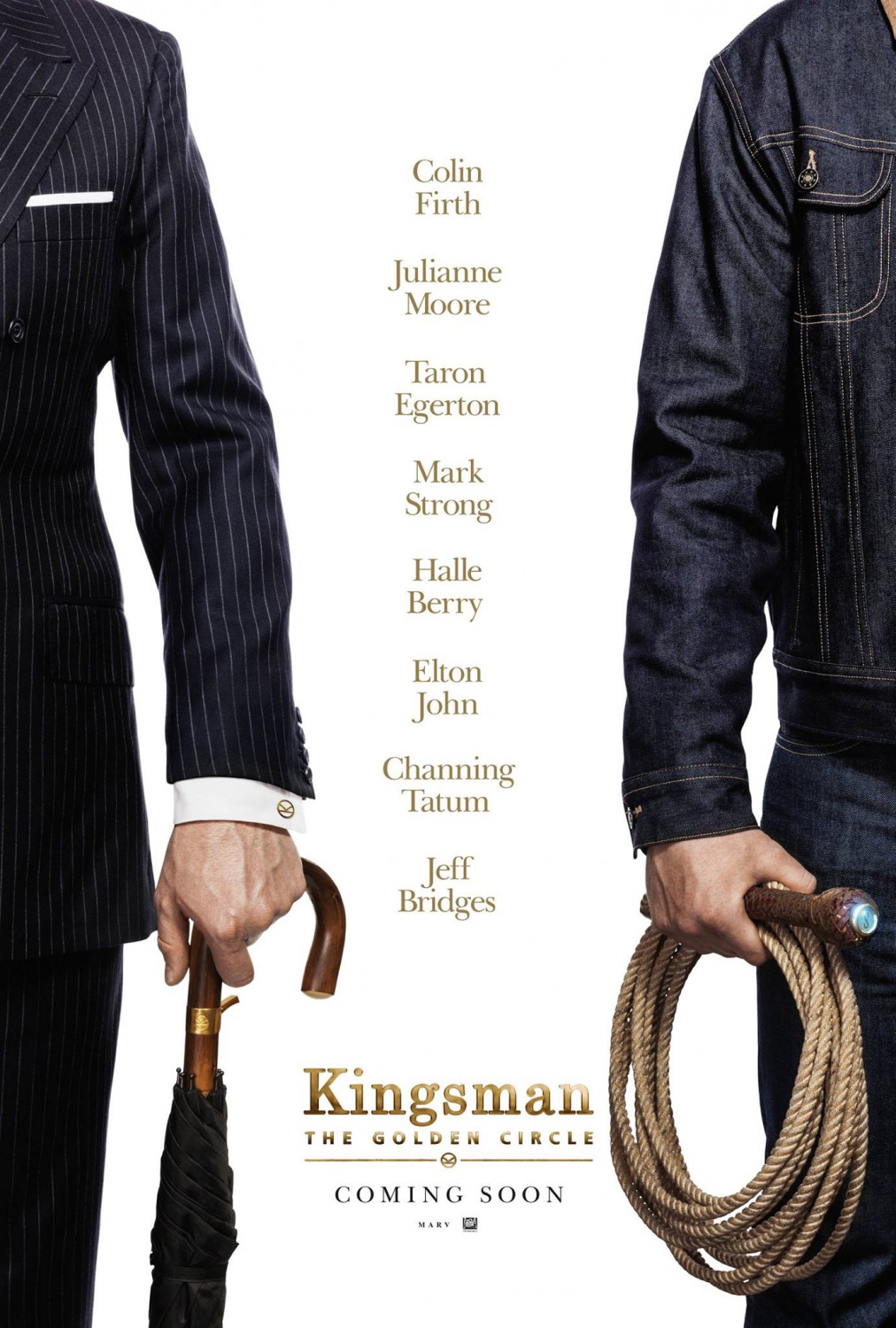
The Smashing First Trailer for 'Kingsman: The Golden Circle' Teases Channing Tatum and Halle Berry

Kingsman: The Golden Circle

Nearly two years ago, Matthew Vaughn said he would only make a sequel to Kingsman: The Secret Service if the screenplay was good enough. That was not a disingenuous statement.

The original movie was inspired by a six-issue comic book series by Mark Millar and Dave Gibbons. Vaughn and Jane Goldman collaborated on the script, which used the premise and then invented new characters and scenarios. In the past, Vaughn has declined to make sequels to movies he has directed, so the fact that he and Goldman wrote a script that he wanted to direct suggests that he must have impressed himself.

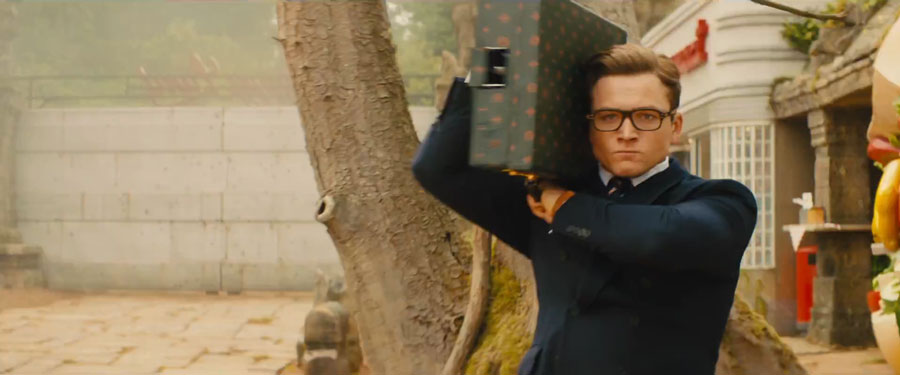
Kingsman: The Golden Circle features the return of stars Taron Egerton and Mark Strong. Colin Firth is also returning, which is a surprise for anyone who saw the first installment, though we don’t know in what capacity and what type of role it will be.

Watch the smashing first trailer below.

[embedded content]

As expected, the action is frenzied and fun. The independent, international intelligence agency known as Kingsman has suffered the destruction of their headquarters and also learned that the world is being held hostage. They must band together with a spy organization in the U.S. known as Statesman in order to save the world from an enemy they hold in common.

Joining the fun this time around are Julianne Moore as a villainous character, Halle Berry as the head of the CIA and Channing Tatum as a cowboy spy, along with Pedro Pascal, Vinnie Jones, Jeff Bridges and Sir Elton John.

Kingsman: The Golden Circle will open in theaters on September 29.

Kingsman: The Golden Circle

Let’s block ads! (Why?)


No Image

A New Generation Of Kashmir Rappers Vents Its Rage In The Valley

Guitarist Ali Saifudin (right) collaborates with local rapper Mu’Azzam Bhat.

Syed Shahriyar

hide caption

toggle caption

Syed Shahriyar

Rap music has found an outlet in Kashmir, the border state between India and Pakistan.

The Muslim-dominated Kashmir Valley, tucked in the Himalayas, might not seem the most likely venue for this music. But Roushan Illahi, Kashmir’s leading rapper, says the guns, soldiers and protracted conflict provide the “street reality” that hip-hop is meant to capture.

India and Pakistan have fought three wars over the territory, which bristles with Indian security forces. For months, Kashmiris have come out in the thousands, shedding their fear of batons and bullets. The simmering anger that has burst to the surface has also been expressed in music.

The song “Dead Eyes” addresses the eye injuries that thousands of Kashmiris sustained in the past year, when security patrols fired pellet guns during anti-military demonstrations:

In the broad daylight I got blind
To light darkness, I will abide
I will pelt stones against innocent felony
Yeah, I lost my eyes while fighting tyranny

Aamir Ame, 23, co-wrote the track with two other budding rappers. He says it was his “first political song, an example of survival.” Released Jan. 26 on the occasion of India’s 68th Republic Day, it went viral.

Aamir Ame co-wrote the viral hit “Dead Eye,” a tribute to Kashmiris whose eyesight was damaged by pellet guns used by security forces to quell demonstrations. He calls it his first “political” song.

Syed Shahriyar

hide caption

toggle caption

Syed Shahriyar

Illahi, whose stage name is MC Kash, understands the appeal. At 27, this brooding son of a poet is credited with ushering rap into the Valley with the song “I Protest,” which pulsates with defiance:

I protest!
Against the things you’ve done
I protest!
For a mother who lost her son
I protest!
I will throw stones and never run
I protest!
Until my freedom has come
I protest!
For my brother who’s dead
I protest!
Against the bullet in his head

Illahi published the song online in 2010, at the height of a major Indian army crackdown, when scores of civilians were killed in clashes with military security forces. It has become an anthem of dissent.

“When I came out in 2010, I was very blunt, I was very direct,” Illahi says. “And that’s what another tenet of hip-hop or rapping is. If you talk to any one of us, there is a lot anger. That anger stems from this hopelessness that nothing is going to change or nothing is going happen to Kashmir or that people are still going to get killed. And it’s bound to give birth to dissent.”

“It Shapes … Your Personality”

Many of the Valley’s hip-hop artists were born in the 1990s, when Amnesty International says there were “grave human rights abuses committed by security forces as well as armed opposition groups.” The organization “recorded more than 800 cases of torture and deaths in the custody of army and other security forces in the 1990s,” and it says “there were hundreds of other cases … of enforced disappearances from 1989 to 2013.”

I ask 24-year-old musician Ali Saifudin whether growing up amid all the violence has made his music a form of political expression. He says he wouldn’t go so far as that.

“It’s just a natural sentiment, the sentiments on the streets,” Saifudin says. “I see news of young men being shot, and I feel anger inside me … I put all those feelings into a song.”

A guitarist, Saifudin says he’s been influenced by the music of Neil Young, Bob Dylan and Bob Marley. (He says it was Google that introduced him to their music.) Today, he collaborates with local rapper Mu’Azzam Bhat, also 24, who says he’s watched political turmoil firsthand for as long as he can remember.

“I have seen protests on the streets, and I have seen guys picking up stones and fighting the occupation, fighting the armed forces. That’s what I’ve seen from my childhood up to this point,” Bhat says. “It shapes … your personality.”

In a Srinagar café that is the meeting ground for Kashmiri artists, Saifudin and Bhat give me an impromptu performance of their song “The Time Is Now.” Saifudin says it echoes the sentiments of Bob Marley’s “Get Up, Stand Up.” It goes:

Put your lungs out,
Go on and scream
For that’s how you’ll be heard
This ain’t the time to sleep

Now wake up!
Open your eyes!
Take a deep breath
And realize
The time to talk is over
It is time to do
With whatever you got
You got to make it through

Enough with all the silence
The crimes and violence
The war outside
And the war inside us…
Anger is our voice,
Rage drives us
And we can’t be controlled
There is a beast inside us.

The music of these two master’s students in journalism and mass communication reflects the alienation from the Indian state that many young Kashmiris feel. They find inspiration in everyday experiences: Several weeks back, Bhat says, they were puzzling over the lyrics to this song when they were stopped by police.

“They just ordered us out of the car, they started frisking us and for no reason,” he says. “We were just young guys hanging out. … So that’s when these lyrics came: ‘These men in uniform are as cold as they come / And they will fill your mind with fear, psych you out and hit you up.’ It’s actually a real event that happened to us, and that’s what getting reflected in our music.”

The audience for much of this music is online. Musicians say venues in Kashmir are controlled by the state, and that disqualifies most rappers from performing their non-conformist work in public.

In the song “The Time Is Now,” Bhat raps about picking up guns and setting off bombs. “And it goes without saying I’m not talking literal bombs here,” he says. “What I’m saying is that if you have a pen, and you can write, drop lines that are equivalent to bombs.”

For all of the conflict they have witnessed in their young lives, Bhat and Saifudin evince no cynicism. “I know I am angry,” Saifudin says, “but I have to direct my anger in a proper manner. It should be reflected in my music … but not be all about rage.

“You have to understand,” he goes on, “that we don’t like violence, we don’t support violence. … Nobody wants to pelt stones or stage protests for the heck of it. … It’s for a dignified life … and that is the ultimate goal.”

“You Have To Make Your Own Space”

Roushan Illahi, aka MC Kash, says he’s “proud” of young musicians who are “keeping alive the memories of the Kashmiri people through their music.” Illahi champions “a de-militarized Kashmir” and insists Kashmiris need to be able to “talk and feel free of any harassment or repercussions.”

Illahi’s studio was raided in 2010, an episode he calls “nothing serious.” But this taciturn artist no longer directly talks against the military establishment — he self-censors. “In Kashmir,” he says, “you have to make your own space, and then rely on your luck that you won’t get arrested.”

[embedded content]
YouTube

Today, Illahi’s dissent is subtler. He has most recently teamed up with a rock musician in a piece called “Like A Sufi” that is part dreamy, part heart-pounding. The song captures the mysticism of Sufis, who make up a sect of Islam. But the subtext of the Kashmiri conflict is hard to miss in the opening lines: “I await you / All the fallen / In the garden of remembrance / Like a Sufi.”

The lyrics follow through:“Break free of the chains … Twirling freedom, like a Sufi.”

Let’s block ads! (Why?)