Here are a bunch of little bites to satisfy your hunger for movie culture:
Video List of the Day:
With the Toronto International Film Festival kicking off today, Kevin B. Lee and Fandor Keyframe present a countdown of the best TIFF premieres of the past decade:
[embedded content]
Cosplay of the Day:
One of the best cosplayers of this year’s Dragon Con mashed up two favorite superhero movie characters of 2016, Deadpool and Suicide Squad‘s Harley Quinn (via Collider):
Supercut of the Day:
We’ve seen enough Batman movie kill counts, so now it’s time for love with this supercut of all 60 of his kisses on the big screen (via io9):
[embedded content]
Vintage Image of the Day:
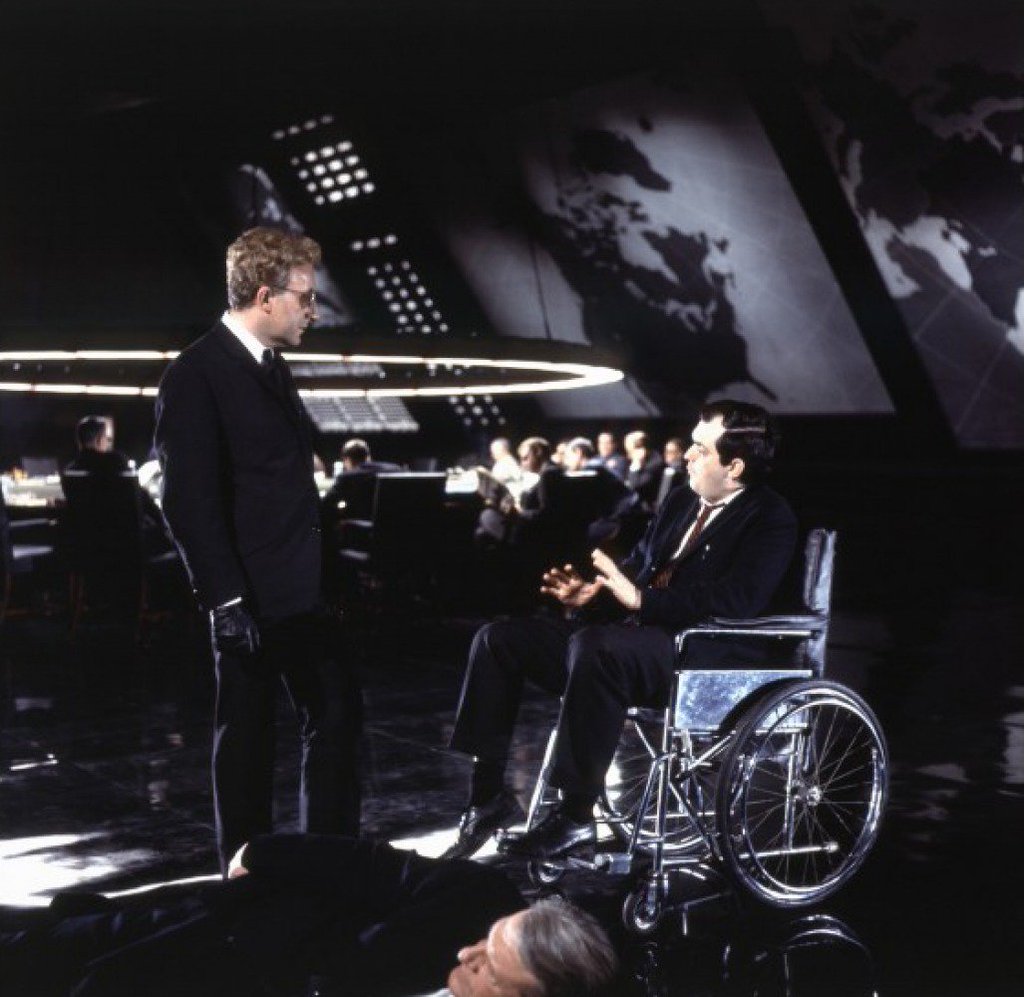
Peter Sellers, who was born on this day in 1925, looks on as Stanley Kubrick shows him how to play the title characters of Dr. Strangelove or: How I Learned to Stop Worrying and Love the Bomb in 1963:
Funny Movie Review of the Day:
The Onion‘s Peter K. Rosenthal reviews Sully with focus on how it doesn’t ignores the tragedy for the geese involved in the story:
[embedded content]
Mashup of the Day:
Funny or Die highlights how many characters Tom Hanks has played involving airports and airplanes and captains by mashing his movies up for a new version of Sully:
Actor in the Spotlight:
Also in honor of Tom Hanks starring as hero Chesley Sullenberger in Sully, Fandango and MovieClips present a supercut of the actor saving the day:
[embedded content]
Filmmaker in Focus:
Speaking of Tom Hanks movies about saving the day, The Nerdwriter looks at Saving Private Ryan and how Steven Spielberg constructs a battle scene:
[embedded content]
Fan Art of the Day:
Paul Feig is another filmmaker in focus today, as one of his fans got a tattoo of his face, a unique kind of director tribute (via Paul Feig):
Today is the 10th anniversary of the release of Hollywoodland. Watch the original trailer for the movie that first put Ben Affleck in a DC superhero suit below.
The Daldykan River in Siberia has recently turned red, and the cause is not yet known. Liza Udilova / Greenpeacehide caption
toggle captionLiza Udilova / Greenpeace
Alarmed Russians are sharing photos on social media of a Siberian river that has suddenly and mysteriously turned blood red.
Russian authorities are trying to determine the cause of the ominous change to the Daldykan River, located above the Arctic Circle and flowing through the mining town of Norilsk. Photos posted on Facebook by the Association of the Indigenous Peoples of the Taimir Peninsula clearly show the river has turned a vivid red.
[embedded content]
As National Geographic reported, two major theories are emerging to explain the change. “The first is that the red color comes from the large quantity of iron that occurs naturally in the ground in that region,” National Geographic said. “The second is a chemical leak.”
Russia’s Ministry of Natural Resources and Environment said in a statement that it suspects the latter explanation: “According to our initial information, a possible reason for the pollution of the river might be a break in the pipeline” belonging to a local factory, which is owned by the nickel and palladium giant Norilsk Nickel.
The ministry did not specify what kind of chemical may be leaking into the river. According to the BBC, the government daily Rossiiskaya Gazeta suggested that the pipeline could be leaking waste copper-nickel concentrate.
[embedded content]
Despite the numerous social media posts and the government statement confirming the red color, Norilsk Nickel maintains everything is normal with the river. “The waters show the natural tone; the river and its mainstream are in regular condition, which goes against the information about any color changes due to an alleged case of large-scale river pollution,” Norilsk Nickel said in a statement. It included photos such as this one, which it said were taken yesterday morning:
The company, Norilsk Nickel, released photos of the river it says were taken Wednesday, claiming it is in “regular condition.” Norilsk Nickelhide caption
toggle captionNorilsk Nickel
The company added that it has “strengthened the environmental monitoring in the area of the river and adjacent production facilities” and would test samples from the river this week.
This isn’t the first time the river has changed color, according to multiple news outlets. The Guardian reported that some social media users said it had also happened in June. “Periodically there are accidents when these pipes break and the solutions spill and get into the Daldykan — that’s why it changes colour,” Denis Koshevoi, a Ph.D. candidate studying pollution in the area, told the newspaper.
“Incidents such as the polluting of the waters of Daldykan River is a common occurrence in the Russian Arctic because of a consistent irresponsible attitude towards environmental standards,” Vladmir Chouprov, head of the energy program of Greenpeace Russia, said in a statement. “The Arctic ecosystem is extremely vulnerable; scars of human impact need decades or even centuries to amend.”
Area residents don’t drink this water, as CNN reported. The network quoted the state news agency, saying “the river isn’t connected to the public water supply and the incident doesn’t pose an immediate threat to the residents’ well-being.”
[embedded content]
The area has a tragic history, as NPR’s Michele Kelemen reported from Norilsk in 2000. “Norilsk began as part of the gulag archipelago. Stalin sent prisoners there to extract the mineral wealth of Russia’s frozen north,” she said. “Workers lived in desolate, brutal prison camps. Only after 1956 did Soviets begin to go to Norilsk voluntarily to take high-paying mining jobs.”
Michele described what it looked like during her visit: “As far as the eye can see there are cranes, polluting smokestacks from the smelters and rusty pipes winding through the trashed landscape of this Arctic city.”
Nearly half of Americans 12 and older take sedatives, stimulants, painkillers or tranquilizers. Izabela Habur/Getty Imageshide caption
toggle captionIzabela Habur/Getty Images
Almost half of all Americans take prescription painkillers, tranquilizers, stimulants or sedatives, according to results of a federal survey released Thursday. The prevalent use of these drugs could help explain why millions of Americans end up misusing or abusing them.
Last year, for the first time, the government’s National Survey on Drug Use decided to ask the people it interviewed about all uses of prescription medicines, not just inappropriate use. The survey found that 119 million Americans age 12 and over took prescription psychotherapeutic drugs. That’s 45 percent of the population.
Of those, about 19 million Americans didn’t follow a prescription. Most misuse involved people who acquired the drugs from friends or family. More than a third had a prescription but took those drugs excessively. And about 5 percent bought drugs from a dealer or stranger.
All told, 16 percent of all prescription drug use was actually misuse, according to the report.
There’s no question that these drugs help alleviate pain and suffering for millions of Americans. But it’s also clear that the system encourages overuse.
“Any of us go to the doctor and feel like we don’t get our money’s worth if we don’t come out with a prescription, right?” Kim Johnson told Shots. She is director of the Center for Substance Abuse Treatment at the federal Substance Abuse and Mental Health Services Administration.
“Just like any drug, the more it’s out there, the more it’s available, the more likely it is to be abused,” she said. And many of these drugs pose an additional risk because of their physical effects, including in some cases their addictive properties.
The Centers for Disease Control and Prevention is trying to reform prescribing practices, particularly for opioid drugs, to reduce the overuse of these pain medications. The new survey also documents the dire need for affordable and accessible treatment options.
“One in 12 people aged 12 or over needed treatment for substance use disorder, yet nearly 90 percent of those people didn’t get specialty treatment that could have helped them toward recovery,” said Kana Enomoto, SAMHSA’s principal deputy administrator, at a news conference.
That need for treatment pertains not just to prescription drug abuse but to street drugs such as heroin.
“We need to expand access to treatment and we need to do it now,” said Michael Botticelli, director of the White House Office of National Drug Control Policy. “Because, like every other disease, people who want treatment should be able to get it. And it should not be dependent on where they live or how much money they have.”
President Obama’s budget for fiscal year 2017 called for more than $1 billion to expand access to drug treatment, but Congress has not acted on it.
American Margaux Isaksen smiles during the women’s fencing in the Modern Pentathlon on Aug. 19 at the Rio Olympics. She finished fourth in London in 2012 and 20th in Rio. “It makes you feel sort of worthless,” Isaksen says of her performance. She calls this current period a “post-Olympic depression.” Rob Carr/Getty Imageshide caption
toggle captionRob Carr/Getty Images
The Rio Olympics are in the rear-view mirror. Thousands of athletes have returned home to resume their lives. But for many, this post-Olympic period can be a rough one, with depression and anxiety haunting them after the games.
That depression can affect both stars and lesser-known athletes alike.
Swimmer Michael Phelps, the most decorated Olympian of all time, has talked candidly about his downward spiral after the 2012 London games that led to a DUI arrest and time in rehab.
“I still remember the days locked up in my room, not wanting to talk to anybody, not wanting to see anybody, really not wanting to live,” he told NBC’s Bob Costas during the Olympics last month.
Phelps has been something of a savior to his friend and fellow swimmer Allison Schmitt. She also suffered profound depression after the London Olympics and has become an outspoken advocate for mental health treatment, especially for elite athletes.
Consider that these athletes have spent years, maybe decades, building to the all-consuming goal of making the Olympics.
Now, it’s over. All of the buildup, the hype and media attention, the extreme adrenaline rush of competition, have come to a crashing halt.
“You work so hard,” says Karen Cogan, sports psychologist with the U.S. Olympic Committee. “You put everything into it, and for some athletes, their performance is over in a matter of seconds, literally. And then it’s done, and now what?”
Fencer Kelley Hurley (left) with teammate Kat Holmes at the Olympics in Rio in August. “You feel a little empty” after the games, says Hurley, expressing a sentiment felt by many athletes who prepared for years. Melissa Block/NPRhide caption
toggle captionMelissa Block/NPR
That’s what fencer Kelley Hurley, 28, is asking herself.
I talked with her a couple of weeks ago as she was packing up to leave the athletes’ village in Rio, heading back home to San Antonio. Her epee team finished fifth.
“You feel a little empty,” she said. “Everything that you did all came up to one point, and now it’s over and the new chapter begins, and where to start writing?”
This was Hurley’s third Olympics. Now, she’s wondering if she should try for a fourth.
“Should I do school or make new friends, because I lost them all in the last four years, when I haven’t had time to hang out with any of them,” she says, ruefully.
Hurley hopes that, with the Olympics behind her, she can finish her masters in public health at the University of Texas, San Antonio.
Like Hurley, many athletes have put their lives outside of sport on hold. Some have delayed or taken time off from college. They’ve likely missed out on important family events, like weddings and funerals.
Now they’re reckoning with the future.
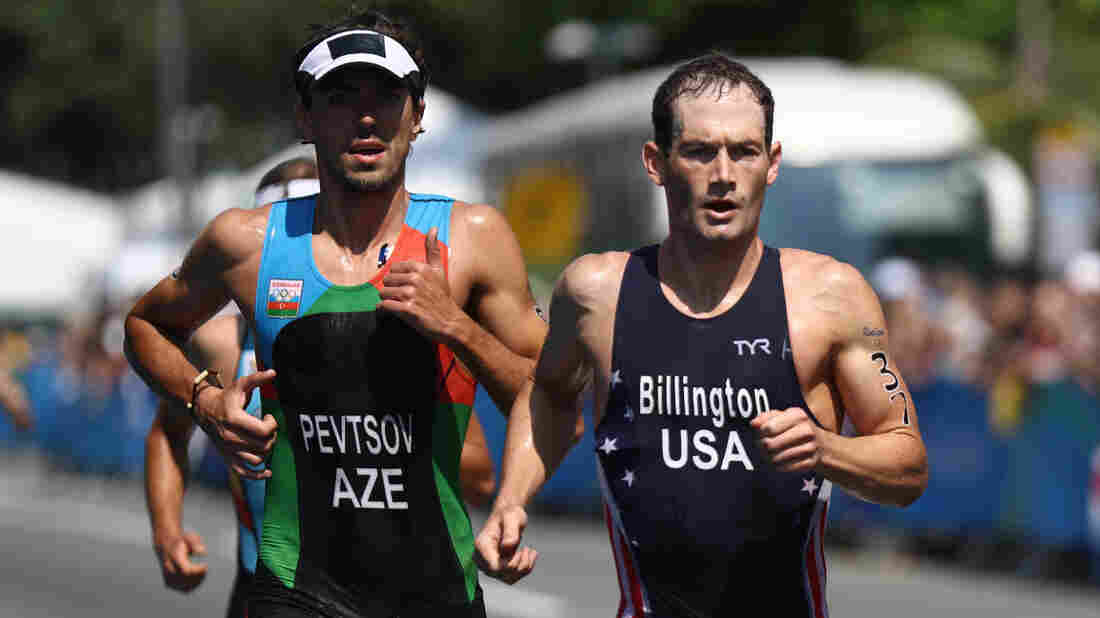
For triathlete Greg Billington, 27, of San Diego, becoming an Olympian was a driving goal for nearly 20 years. Ever since he started swimming around age 8, he wanted to qualify for an Olympic team. Posters of Olympic gold medal backstroker Lenny Krayzelburg hung on his bedroom walls.
So when Billington qualified to compete in Rio, he considered it the absolute pinnacle of achievement.
“It kind of changes who you are,” he says. “You’re trying to become the best version of yourself that exists. There’s nothing that quite grips your imagination like qualifying for an Olympic team does, so that’s what makes it hard to replace.”
U.S. triathlete Greg Billington competes in the Olympics in Rio on Aug. 18. He finished 37th. “Currently nothing fills that void,” Billington, 27, says of the post-Olympic period. He plans to seek a spot on the U.S. team in 2020. Bryn Lennon/Getty Imageshide caption
toggle captionBryn Lennon/Getty Images
In the end, Billington didn’t have a good triathlon in Rio. He finished 37th. Now that he’s home in California, he says the transition has been tough.
“Currently nothing fills that void. It’s just a little empty part and that’s OK for a little while, as long as it gets filled before it starts to fester,” he says.
Billington says he’ll pursue qualifying for the 2020 Tokyo Olympics.
“I think there’s definitely more I can get out of myself in triathlon,” he says. After he retires, he’s interested in going to business school.
For some athletes, retiring from sport can bring its own set of problems.
“Their identity is so wrapped up in being an athlete and in their sport,” Cogan, the psychologist, says. “All of a sudden they don’t have that identity in the same way. So who are they going to be? What is the identity going to be? That sometimes is a big struggle.”
If they’re starting over in a new career, many athletes discover with a shock that they’re not among the best any more.
And even for athletes who made the medal podium, they come down from the ultimate high, an explosion of endorphins.
That success can bring its own set of pressures: can I possibly match that again?
Adam Krikorian, who has coached the U.S. women’s water polo team to gold medals in the past two Olympics, says apart from the medal itself, it’s the shared intense journey that proves impossible to replicate.
“You build this incredible bond, and all of a sudden it’s over,” he says. “They’re gonna go the rest of their life looking to try to emulate this experience. And many of them are gonna have a hard time finding something that’s going to equal that passion and that energy and that love.”
Cogan often counsels athletes disappointed in their Olympic performance, who get stuck replaying part of their competition constantly in their mind, wishing they could have a do-over.
That’s the case for Margaux Isaksen, 24, who competes in modern pentathlon, an event that combines shooting, fencing, swimming, horseback riding, and running.
At the London Olympics in 2012, she finished fourth — so close to a medal.
“I just remember thinking, wow, if I had run a second faster, or I’d got one extra fencing touch, then I would have a medal. And I just came home and I felt so defeated and so sad,” says Isaksen, who lives in Fayetteville, Ark.
This summer in Rio, Isaksen was competing five weeks after surgery for a stress fracture in her leg, and she finished 20th.
“It makes you feel sort of worthless,” she says. “It’s a really strong word, but that’s kind of how I feel right now. I really feel like I’ve let myself down, let my coaches down, and that’s hard. And then you don’t know if you want to put yourself through that again.”
Isaksen calls this period “post-Olympic depression.”
She’s finding some relief with yoga, and spending time outside. She’s also been bolstered by some tough love from her mother.
“She told me right after Rio just how proud she was. She gave me a big hug. And then she just said, ‘You know what, Margaux? There’s so much more to life than sport.’ And she said, ‘Just think about everything that’s going on in the world, all the suffering. And just think for a minute about how lucky you are that this seems like the biggest tragedy in your life right now.'”
Isaksen continues: “When you think about that and you put it in perspective, all of my so-called problems? It really doesn’t seem like anything at all.”
Being an elite athlete is a self-absorbed endeavor, Isaksen admits. Sometimes, she says, you just need a smack in the face to bring you back to reality.