
August 8, 2016

No Image

Lilly King Puts Exclamation Mark On Big Day For U.S. Swimming

Gold medal winner Lilly King, right, seen here celebrating with her U.S. teammate and bronze medalist Katie Meili, won the 100m breaststroke over her rival, Russia's Yuliya Efimova.

Gold medal winner Lilly King, right, seen here celebrating with her U.S. teammate and bronze medalist Katie Meili, won the 100m breaststroke over her rival, Russia’s Yuliya Efimova. Adam Pretty/Getty Images hide caption

toggle caption Adam Pretty/Getty Images

The meeting was highly anticipated, and it didn’t disappoint — particularly from Lilly King’s point of view. One day after King spoke bluntly about rival Yuliya Efimova’s doping offenses, she beat Efimova to win a gold medal in the women’s 100m breaststroke at Rio’s Summer Olympics.

“I’m proud to be competing clean and doing what is right,” King said after the race. “But I need to respect the IOC’s decision” — referring to the announcement over the weekend that Efimova would be allowed to compete.

King’s time of 1:04.93 set an Olympic record, as she gave the U.S. its first gold medal in the past 16 years in women’s breaststroke. She won just after teammate Ryan Murphy had netted his own gold medal and Olympic record in the men’s backstroke.

Efimova, the Russian who has been sanctioned for cheating, trailed just behind King at the finishing line and narrowly edged King’s teammate, Katie Meili, who won bronze.

The win set off a new round of questions for King concerning her feelings about athletes who’ve been caught doping. When asked if she felt track star Justin Gatlin should be on Team USA in Rio, King didn’t mince words, saying “Do I think somebody who has been caught for doping should be on the team? No, I don’t.”

When it was time for Efimove to address the media, she said she had paid a price for her actions.

“I made mistakes and I was banned for six months,” she said. “The second time was not my mistake.”

For King and Meilli, the result set off a celebration that King would later cite as part of the reason she didn’t make a point to congratulate Efimova.

“If I’d been in Yulia’s position, I’d not want to be congratulated by someone not speaking highly of me,” ,” King said, adding, “If she was wishing to be congratulated, I apologize. She had a fantastic swim and I always look forward to racing her. I was just in the moment with Katie.”

Efimova was asked whether she regrets competing in the Olympics, given the boos that greeted her name in Rio.

“I am just happy to be here. For me it was very hard to swim today and this is three weeks it’s been like crazy,” she said. “Now I feel really happy as after everything it is a good time and it’s the best I can do right now.”

King’s win came moments after the U.S. had just earned another gold medal, this one courtesy of Ryan Murphy’s win in the backstroke at the Olympic Aquatics Stadium in Rio’s Barra da Tijuca district. And like King, Murphy also shared his moment with a teammate: bronze winner David Plummer.

For all of the American swimmer’s we’ve mentioned above, this is their first Olympics – just as it was for Kathleen Baker, who won the silver medal Monday in the women’s 100-meter backstroke.

Murphy won in 51.97 seconds, setting a new Olympic standard and updating a mark that had last been set by Matt Grevers at the 2012 London 2012 Summer Olympics. He also continued a streak of U.S. dominance in the backstroke, which Americans have won in the past six summer Olympics.

Let’s block ads! (Why?)


No Image

Today in Movie Culture: 'Star Wars' vs. 'Star Trek,' An Alien Reviews 'Batman v Superman' and More

Here are a bunch of little bites to satisfy your hunger for movie culture:

Mashup of the Day:

Darth Vader and Kylo Ren get together to fight Kirk and Spock in ScreenRant’s fan trailer for Star Wars vs. Star Trek:

[embedded content]

Bad Film Analysis of the Day:

See what an alien from the future thinks of Batman v Superman: Dawn of Justice in the latest Earthling Cinema:

[embedded content]

Movie Parody of the Day:

Bobby Canavale, Rose Byrne and Jason Sudeikis star in Stoplight, Last Week Tonight‘s fake trailer for a Spotlight parody about the death of journalism (via Screen Crush)

[embedded content]

Cosplay of the Day:

A group cosplaying as the Suicide Squad characters maybe looking at some reviews of the movie and getting ideas for their next mission? See more pics of the group at Fashionably Geek.

Short Film of the Day:

If you like the Netflix series Stranger Things, you’ll want to check out this 2007 horror short from its creators, the Duffer Brothers, titled Eater (via The Playlist):

[embedded content]

Collaboration of the Day:

Here’s another must-see short film, this one from the minds of Walt Disney and Salvador Dali called Destino (via Nameless.tv):

[embedded content]

Vintage Image of the Day:

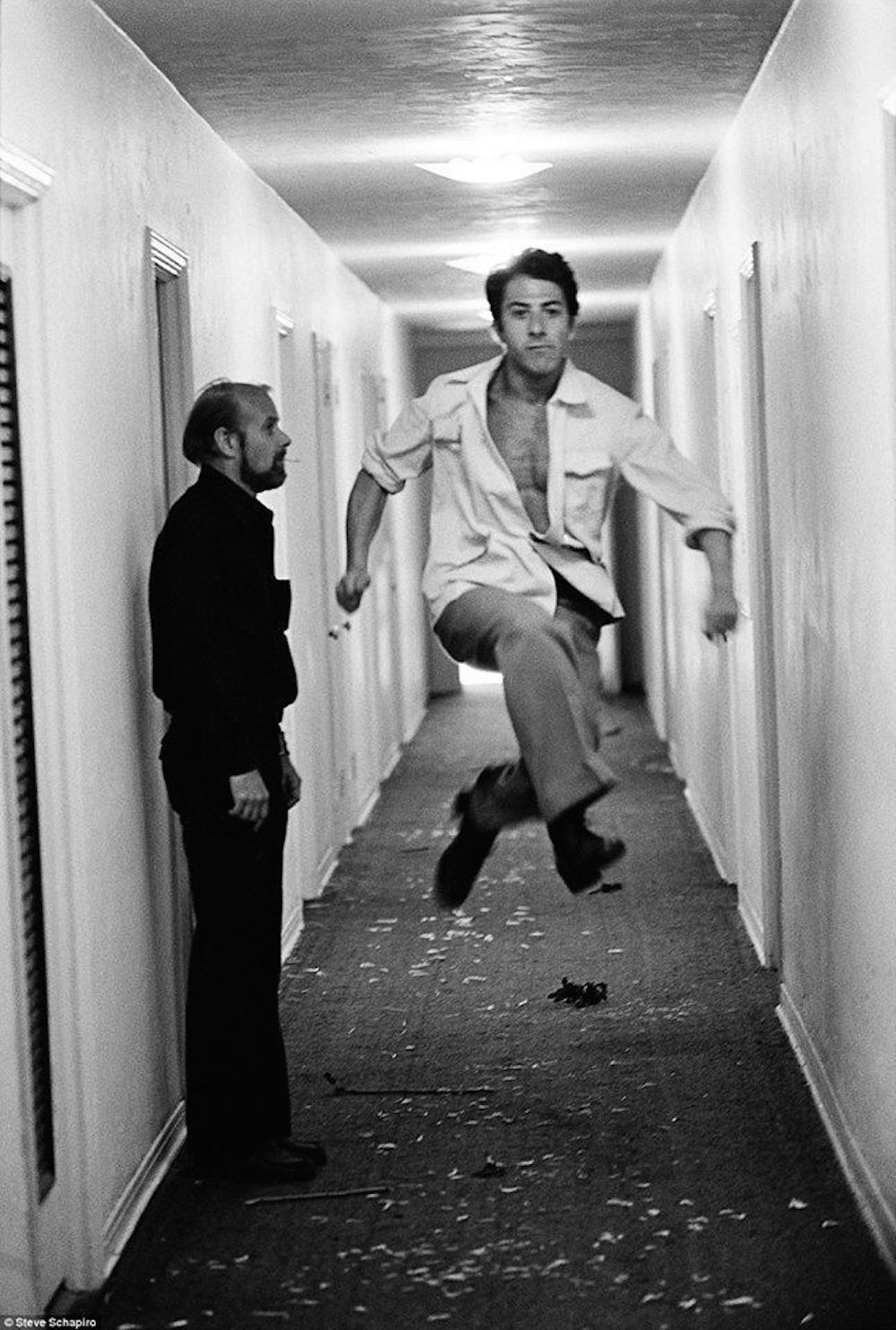
Dustin Hoffman, who turns 79 today, takes a leap on the set of Lenny with director Bob Fosse looking on in 1974:

Actors in the Spotlight:

Vanity Fair got the next generation of stars, including Douglas Booth, Lily Collins, Kieth Stanfield and Elizabeth Debicki, to share what inspired them to become actors:

[embedded content]

Genre Study of the Day:

Now You See It uses clips from Lights Out (and the short it’s based on), Poltergeist and other movies to show what makes a movie scary:

[embedded content]

Classic Trailer of the Day:

Today is the 30th anniversary of the release of One Crazy Summer. Watch the original trailer, presented by Bobcat Goldthwait, below.

[embedded content]

and

Let’s block ads! (Why?)


No Image

Vail Resorts To Buy Canada's Whistler Blackcomb For $1.06 Billion

Norwegian skiers compete in the 2010 Olympics in Whistler, British Columbia, Canada. The Whistler Blackcomb resort is being acquired by Vail Resorts of the U.S.

Norwegian skiers compete in the 2010 Olympics in Whistler, British Columbia, Canada. The Whistler Blackcomb resort is being acquired by Vail Resorts of the U.S. Matthias Schrader/AP hide caption

toggle caption Matthias Schrader/AP

Colorado-based ski-industry giant Vail Resorts has inked a $1.06 billion deal to acquire Whistler Blackcomb in Canada, one of the largest and most visited ski area in North America.

Vail operates ski areas and mountain resort properties in five states and Australia and has long eyed an expansion into Canada. A competitor and site of the 2010 Winter Olympics, Whistler has been a perennial profit winner too. In the last fiscal year, an estimated two million skiers visited the resort generating a record $241 million in revenue, according to the resort.

Beyond the bookkeeping, for skiers and snowboarders, Whistler is considered to be one of the choicest destinations in the world. It’s massive: more than 8,000 acres of terrain including three glaciers. Top to bottom, the two combined mountains of Whistler and Blackcomb also boast more than a mile long vertical drop, the altitude giving the resort some of the longest ski seasons in the business.

“Whistler Blackcomb is one of the most iconic mountain resorts in the world with an incredible history, passionate employees and a strong community,” said Rob Katz, Vail’s CEO, in a written statement.

Whistler CEO Dave Brownlie predicted the merger would make both resorts stronger and more appealing to skiers and guests, calling it “the most exciting and transformative investment in Whistler Blackcomb’s history.”

Facing declining snowfall and season pass sales in recent years, ski resorts have sought to partner and share revenue from ticket sales and other promotions, as well as merge in some cases, to cope. Vail acquiring one of its long-time competitors is significant, yet not all that surprising to industry analysts.

The company’s expansions have been particularly aggressive of late and not without controversy.

In 2014, Vail’s purchase of Park City Mountain Resort in Utah prompted opposition from local skier advocacy groups. In Colorado, the company is a frequent target of environmentalists, who criticize Vail’s terrain expansions into what they consider critical wildlife habitat, notably a 2012 dust-up over Breckenridge ski area’s “Peak 6” expansion.

If they get government approval, the companies hope to finalize the deal this fall.

Let’s block ads! (Why?)


No Image

In Boston's 'Safe Space,' Surprising Insights Into Drug Highs

Tommy, a repeat patient at the Supportive Place for Observation and Treatment in Boston, says the room has saved lives.

Tommy, a repeat patient at the Supportive Place for Observation and Treatment in Boston, says the room has saved lives. Jesse Costa/WBUR hide caption

toggle caption Jesse Costa/WBUR

Some arrive on their own, worried about what was really in that bag of heroin. Some are carried in, slumped between two friends. Others are lifted off the sidewalk or asphalt of a nearby alley and rolled in a wheelchair to what’s known as SPOT, or the Supportive Place for Observation and Treatment, at the Boston Health Care for the Homeless Program.

Nine reclining chairs have been full most days, especially during peak midday hours. It may be the only room in the country when patients can ride out a heroin or other high under medical supervision.

“It’s a safe place to be,” says Tommy, 39, who’s been using heroin for at least 21 years. “It’s a lot safer than being out on the street, possibly walking into traffic. I might OD if I was alone out there.”

Tommy is looking for a job and housing, and we’ve agreed not to use his full name. He’s one of 180 people who’ve come to this former conference room to ride out an opioid or other drug high since SPOT opened in late April. Nurses have logged almost 900 visits. At least half of the patients have come more than once.

If the person can speak, a nurse will ask what they took before settling them in a chair, wrapping a blood pressure cuff around one arm and placing an oxygen monitor over a finger.

“The monitors are really convenient,” Dr. Jessie Gaeta, chief medical officer for BHCHP, says as she pulls the Velcro edges of a blood pressure cuff apart. “It takes a lot of the guessing out of understanding how far someone is into an overdose syndrome.”

Gaeta coined the term “overdose syndrome” to describe what’s happening to patients in this room. In many cases, she is surprised by what she’s seeing.

“A classic opiate overdose is characterized by a person who stops breathing,” Gaeta says. “They have central nervous system depression. So it’s mostly respiratory depression and respiratory arrest.”

But Gaeta says about 75 percent of her SPOT room patients show something different. “What we’re seeing in this room is more depression of heart rates and blood pressures as actually the primary — sometimes the only — abnormalities,” Gaeta says. So the patient may be unconscious with low blood pressure, but have nearly normal breathing.

Dr. Jessie Gaeta, chief medical officer of the Boston Health Care for the Homeless Program, stands at a setup where heroin users would be monitored while riding out a high.

Dr. Jessie Gaeta, chief medical officer of the Boston Health Care for the Homeless Program, stands at a setup where heroin users would be monitored while riding out a high. Jesse Costa/WBUR hide caption

toggle caption Jesse Costa/WBUR

Patients tell Gaeta they may start the day with heroin or another opioid and then, a few hours later, take pills that will enhance the high.

“People are talking about that a lot here,” Gaeta says, “about the layering of this cocktail of medications and that’s really reflected in the vital signs that we’re seeing, which is not indicative of pure opiate overdoses. I’m not sure that we’d have seen that without doing this kind of monitoring.”

Gaeta describes a typical combination or cocktail of four drugs: heroin or another opioid, clonidine (which lowers blood pressure), Klonopin (to control for anxiety) and gabapentin (used to treat seizures or nausea).

The observations are just a snapshot based on a small number of addiction patients in one area of Boston. But what Gaeta is seeing in is reflected in overdose death reports and is changing the way she and her staff respond to these patients who look like they are falling into a deep sleep. To boost sinking blood pressures, for example, they’ve brought IV fluid equipment into the room. They are going through many more tanks of oxygen than expected.

Dr. Barbara Herbert, president of the Massachusetts chapter of the American Society of Addiction Medicine, says she’s never heard anyone use the term overdose syndrome. “But I think it’s a great phrase, and I suspect it will move into more conversations. Because we created a safe space, can now think about what’s in front of us with more science than we could before we had this,” she says. “So while all of us knew this cocktail could produce overdose, few of us have ever had the opportunity of seeing people after they use and monitoring their blood pressure or their heart rate. So, this is an unexpected positive for us, coming to understand the disease better from that safe space.”

SPOT nurse April Donahue says some patients in the room appear so sedated that they don’t respond when she speaks loudly in their ear or raps on their sternum. But, she says, some of those people, “have rock solid vital signs, better than mine.” So, she says, “What you see subjectively looking at someone and what their vital signs are, don’t always match up.”

If Donahue weren’t monitoring the vital signs, she says she’d be racing to inject naloxone, the drug that reverses the effects of opioids. But Donahue found she can sometimes avoid using naloxone, which is very harsh on the body, by giving patients oxygen or fluids to keep patients alive.

The facility is going through many more tanks of oxygen than expected because of what medical staff are learning about what's going on in the body while people are high.

The facility is going through many more tanks of oxygen than expected because of what medical staff are learning about what’s going on in the body while people are high. Jesse Costa/WBUR hide caption

toggle caption Jesse Costa/WBUR

The nurses speak to each patient about addiction treatment. Getting patients into treatment is their top priority after keeping people safe while high.

“I think what’s struck me the most is the gratitude — just to get out of that environment, even for a little while, to get off the street and be cared for,” Donahue says. “I mean, so many of our participants don’t have anyone who’s caring for them.”

It’s one reason Tommy is becoming a repeat client. “This is just a great start,” Tommy says. “I think it will slow down a lot of overdoses and could save a lot of lives. It will save a lot of lives in the long run.”

And Tommy knows. He went into respiratory failure a few weeks ago while at SPOT and was brought back with naloxone.

This story is part of a reporting partnership with NPR, WBUR and Kaiser Health News.

Let’s block ads! (Why?)